
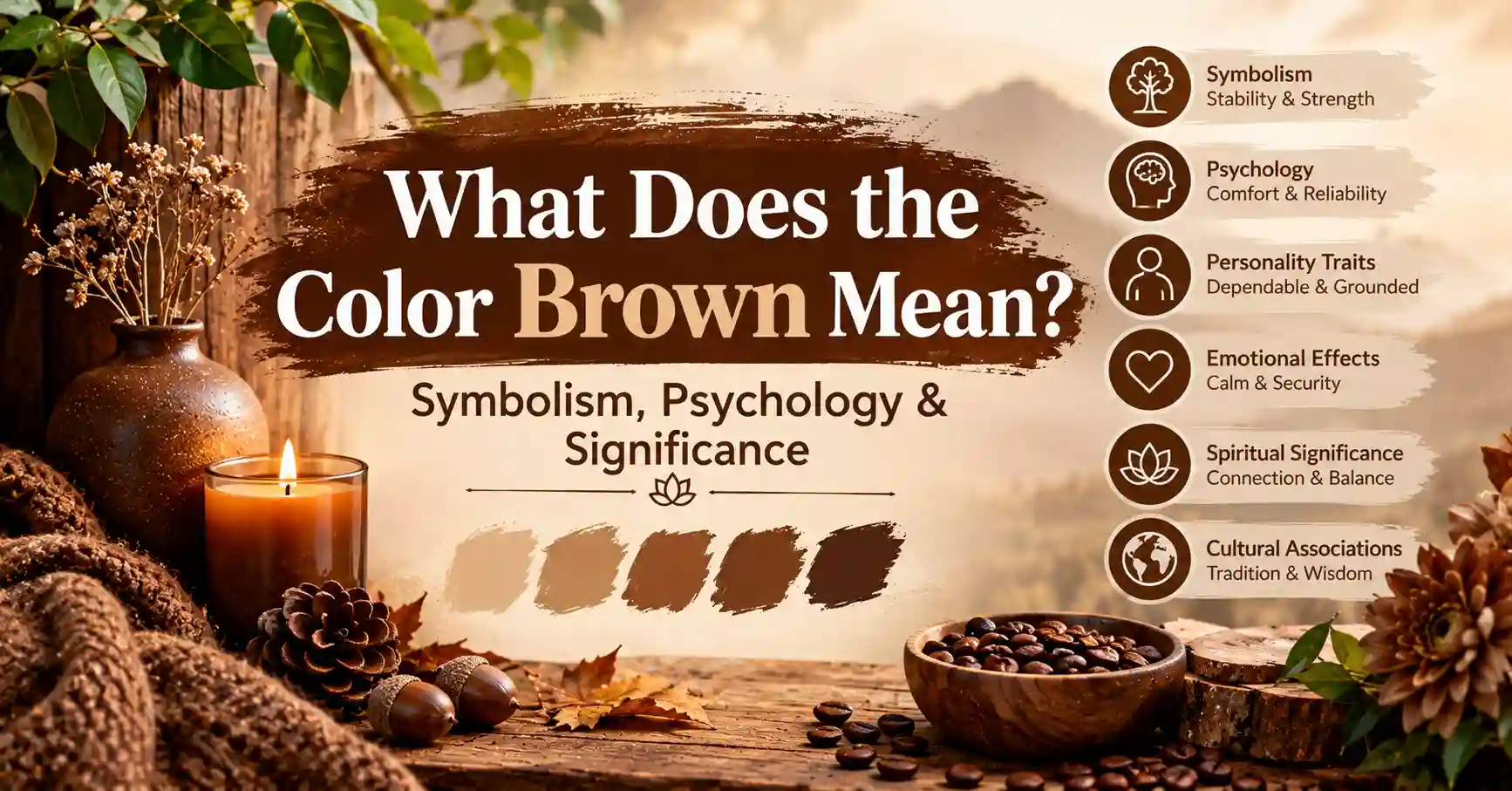

What Does the Color Brown Mean? Brown is the color of soil, wood, coffee, and warm bread. It sits in tree trunks, leather bags, and old library shelves. Few colors feel so familiar and so quietly present.
People often ask what does the color brown mean, and the answer is richer than expected. Brown can point to stability, comfort, and honesty. It can also point to dullness, heaviness, and routine. That range makes brown color meaning worth a closer look.
This guide covers the full picture. You will learn what brown symbolizes, how brown color psychology shapes mood, and how cultures and religions read this shade. You will also see brown in nature, history, branding, fashion, dreams, and astrology.
General Brown Color Meaning & Symbolism
Brown is the color of the earth beneath our feet. It feels solid, warm, and dependable. It rarely demands attention, yet it supports almost everything around it.
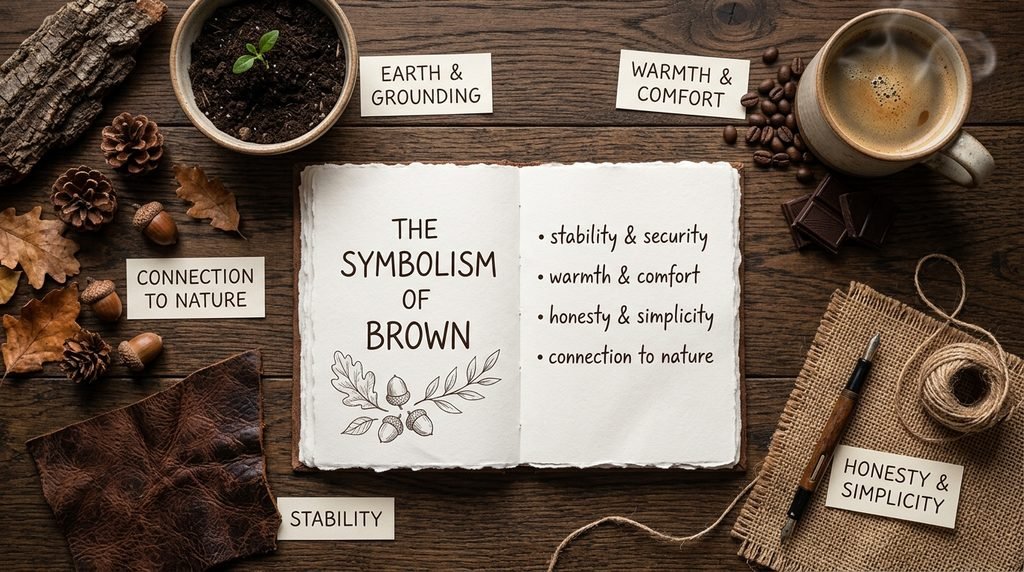
When people ask what brown symbolizes, the answer often centers on stability. Brown also stands for comfort, simplicity, and honesty. It feels like a sturdy table or a worn leather chair.
Core Psychological Associations of Brown
The core brown color meaning is tied to grounding and reliability. Brown feels natural and unpretentious. It suggests a person or place that is steady and real.
Most people connect brown with a few main ideas:
- Stability and security
- Warmth and comfort
- Honesty and simplicity
- Connection to nature
Positive Meanings of Brown
At its best, brown stands for loyalty, patience, and quiet strength. It helps people feel safe and at ease. It also suggests humility and a down-to-earth outlook.
Brown is often used where comfort matters most. Cafés, cabins, and cozy living rooms lean on it for this reason. In these settings, the meaning of brown is welcoming and calm.
Negative Meanings of Brown
Brown has a heavier side too. It can suggest boredom, rigidity, or a lack of excitement. Some people see it as plain or old-fashioned.
Brown can also link to dirt, decay, or mud. Too much brown in a space can feel dull or weighty. The meaning of brown depends on the shade and the setting around it.
What Brown Represents Overall
Brown represents the steady foundation under life. It is not flashy, but it holds things together. That quiet reliability is its greatest strength.
This dual nature explains why brown can feel cozy in one place and drab in another. A warm chocolate brown feels rich and inviting, while a gray-toned brown feels flat. Few colors shift so much with a small change in tone.
Brown Color Psychology: How the Color Affects Mind and Body
Brown color psychology looks at how this shade shapes thoughts and feelings. It has been studied less than colors like red or blue. Still, its effects are described fairly consistently in design and marketing.
What we can say is that brown tends to feel grounding. It lowers the sense of rush and pressure. Here is how it plays out.
Brown Color Psychology and Mood
Brown is often linked to comfort and security. Many people feel relaxed in rooms with warm wood and earthy tones. It creates a sense of shelter, like a quiet cabin on a rainy day.
Brown can also feel serious and practical. It lacks the playful spark of brighter colors. This steady tone supports focus, but too much can feel heavy.
Brown and the Brain and Nervous System
Strong claims about brown changing heart rate or brain activity are not well proven. It is safer to say brown feels emotionally calming and familiar. Its effect comes mostly from what we connect it with, like earth, wood, and food.
Brown is also a muted, low-brightness color. It does not overstimulate the eye the way vivid colors can. For contrast, red leans toward urgency, while brown leans toward steady calm.
Why Humans React Warmly to Brown
Human reactions to brown likely have deep roots. Soil gave us food, and wood gave us shelter and fire. These were basic needs for survival.
Over time, brown became tied to safety and nourishment. Bread, coffee, and chocolate add to that warm feeling. That gentle message still shapes how we feel about brown today.
Brown Color Meaning in Different Cultures
Brown color meaning changes from place to place. A shade seen as humble in one region may signal tradition or mourning in another. Still, most cultures link brown to the earth and everyday life.

Below is a tour of how brown is read around the world. Keep in mind that every region holds many traditions, so these are broad patterns.
Brown Meaning in Western Culture
In Western countries, brown often stands for reliability and simplicity. It is common in workwear, leather goods, and natural products. It is also tied to autumn, harvest, and cozy seasons.
Brown has mixed feelings attached to it, too. Some see it as plain compared to bright colors. Even so, brands use it to signal honest, no-nonsense quality.
Brown Meaning in Eastern Cultures
In much of Asia, brown connects to earth, craft, and humility. It often appears in pottery, wood carving, and traditional dress. Here are a few examples:
- China: Brown and earthy yellow tones relate to the earth element in traditional thought. They suggest stability and the center of things.
- Japan: Muted browns are prized in traditional design. They reflect a love of simple, natural beauty and quiet taste.
- India: Earthy browns appear in clay art and natural dyes. They link to humility, simplicity, and a life close to the land.
Brown Meaning in African Cultures
Brown holds strong meaning across Africa, and the message varies by region. Mud-cloth, known as bogolanfini in Mali, uses earthy browns made from natural dyes. These designs often tell stories and mark identity.
Earth-toned clay is also used in building, pottery, and ceremony. In these settings, brown ties people to land, family, and ancestors.
Brown Meaning in Middle Eastern Cultures
In the Middle East, brown is tied to desert landscapes, clay architecture, and trade. Mud-brick buildings blend with the land and keep interiors cool. Brown leather, wool, and woven goods have long been part of daily life.
Brown also appears in coffee culture, which holds a warm social role. Sharing coffee is a sign of welcome. In these places, the meaning of brown blends hospitality with tradition.
Brown Meaning in Latin American Cultures
In Latin America, brown connects to earth, farming, and handmade craft. Terracotta pottery, adobe homes, and woven goods are common. Cacao and coffee, both brown, also shape local life and trade.
Brown shows up in festivals and folk art alongside brighter colors. It acts as a grounded base for bold designs. It represents roots, heritage, and community.
Cultural Contrasts in Brown Color Meaning
One contrast is between honor and dullness. Many traditional cultures treat brown as a respected color of earth and craft. In fast-moving fashion, it can be seen as plain.
Another contrast is between comfort and mourning. In some regions, brown tones appear in modest or mourning dress. In others, brown is simply cozy and warm. These shifts show that brown color meaning is shaped by culture.
Brown Meaning in Religion & Spirituality
Brown plays a quiet but real role in faith and ritual. Many traditions link it to humility, simplicity, and the earth. Its plain tone suits ideas of modesty and devotion.
Different traditions use it in different ways. Here is what brown symbolizes in several of them.
Brown in Christianity
In Christian tradition, brown is tied to humility and poverty. Some monastic orders, such as the Franciscans and Carmelites, wear brown robes. The color reflects a simple life and rejection of luxury.
Brown can also stand for the earth and the idea of “dust to dust.” In this setting, the meaning of brown blends modesty with reflection on mortality.
Brown in Hinduism and Buddhism
In Hinduism, earthy browns and saffron-brown tones appear in the clothing of ascetics. They suggest simplicity and detachment from material things. Clay and earth are also used in many rituals and idols.
In Buddhism, brown and maroon-brown robes are worn by monks in several traditions. They reflect humility, discipline, and a life close to the basics.
Brown in Islam
Brown does not have a specific doctrinal role in Islam. Its meaning is mostly cultural and practical. Earth tones appear in traditional clothing, mosque architecture, and clay buildings.
Brown also relates to the earth, which holds a respected place in many teachings. In daily life, it carries a feeling of modesty and calm.
Brown in Other Spiritual Traditions
Many nature-based traditions treat brown as a sacred color of the earth. It stands for grounding, growth, and the cycle of life and death. Clay, soil, and wood are often used in ritual objects.
Some modern spiritual practices also link brown to stability and protection. These ideas are belief-based and vary widely between groups.
Brown Chakra and Aura Meaning
In chakra teaching, brown is not a main chakra color. It is often linked loosely to the root chakra, which relates to grounding and safety. A balanced root is said to bring a steady, secure feeling.
In aura reading, a brown aura is sometimes tied to practicality and a strong need for stability. Believers also say it can show a person who feels stuck or overly cautious. These ideas come from spiritual belief, not scientific testing.
Brown Color Meaning in Nature
Nature is full of brown, and it is often the base of the landscape. Soil, bark, and fallen leaves all carry it. That constant presence shapes how we read brown.
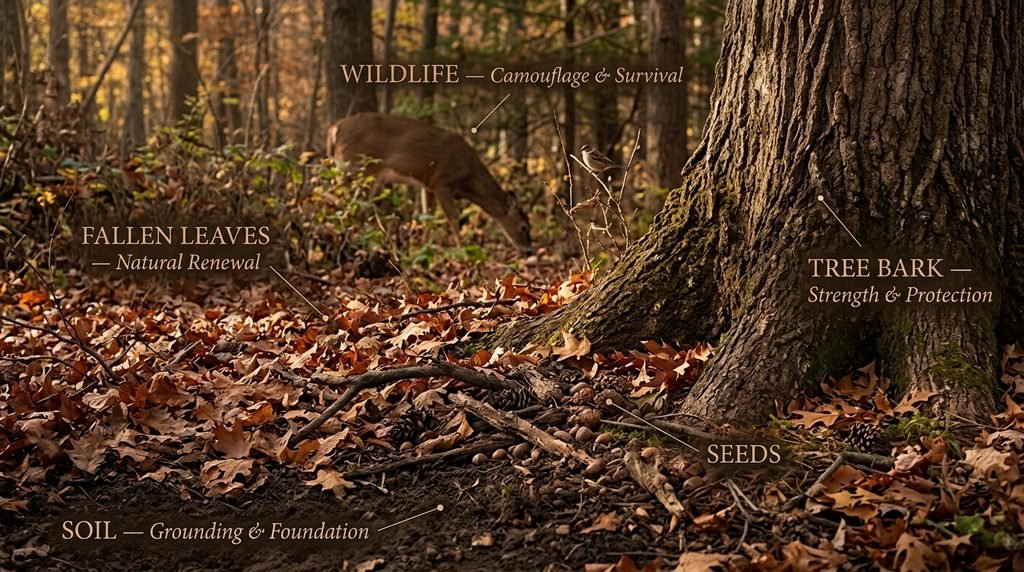
Looking at brown in the wild helps explain why humans see it as grounded and nourishing.
Where Brown Appears in Nature
Brown shows up in the ground, in trees, and in many animals. It also appears in seeds, nuts, and ripe grains. It marks both life and the end of a season.
Here are a few familiar examples:
- Soil, mud, and clay
- Tree bark and wooden branches
- Bears, deer, and sparrows
- Autumn leaves and harvested grain
- Coffee beans and cacao pods
Symbolic Meaning of Brown from Nature
Brown in nature stands for foundation and renewal. Soil may look plain, yet it feeds every plant. Dead leaves turn brown, then break down to feed new growth.
Brown also works as camouflage for many animals. This adds a sense of quiet protection and blending in. It is a color of survival and patience.
Brown Color Meaning in History
Brown has a long and practical history. People have used earth pigments since the earliest days of art. Its story is tied to craft, labor, and everyday life.
Following brown through time shows why it became a symbol of simplicity and honest work.
Historical Significance of Brown
Early humans used natural earth pigments in cave art. Browns and ochres made from clay and minerals were easy to find. They are among the oldest colors ever used for painting.
Later, artists used pigments like sienna and umber. These names come from Italian places and became staples in painting. They gave artists a rich range of warm, earthy tones.
Brown, Class, Labor, and War
Brown cloth was cheap and easy to dye, so ordinary workers often wore it. Peasants, farmers, and monks used plain brown garments. This tied brown to modesty and hard work.
Brown also appeared in military life. Many armies used brown or khaki uniforms for camouflage. The color suggested duty and practicality instead of show.
Famous Moments Tied to Brown
The word “khaki” comes from a Persian and Urdu term for dust or earth. British forces in India adopted khaki-colored uniforms in the 1800s. The idea spread to armies around the world.
Brown also shaped trade through coffee, tea, and chocolate. These goods moved across oceans and changed daily habits. Brown became tied to comfort, conversation, and global exchange.
Shades of Brown and Their Meanings
Not all browns feel the same. A warm chocolate can feel rich, while a gray-brown can feel dull. Small changes in tone shift the whole mood.
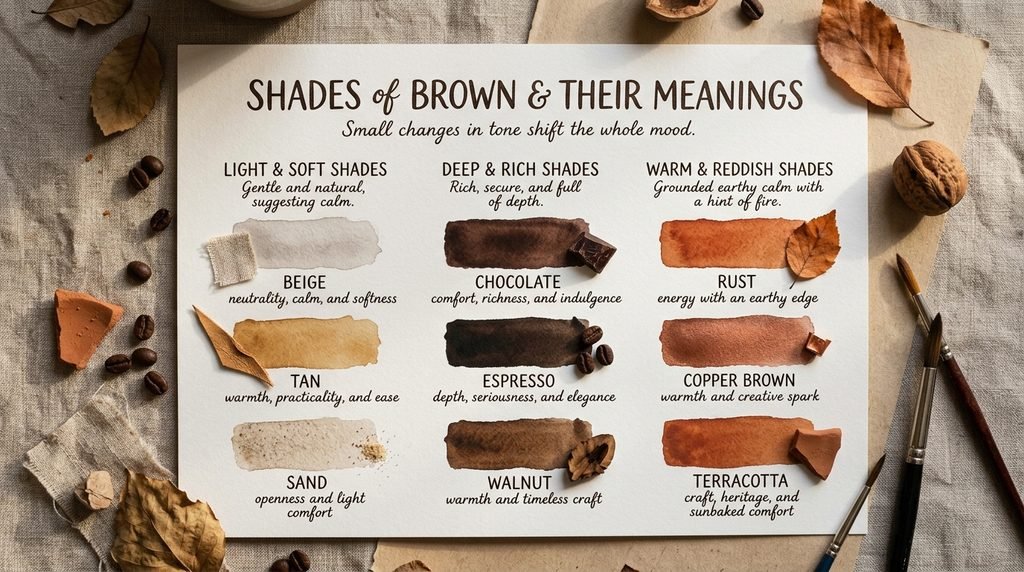
Here are the main families of brown and what each tends to communicate.
Light and Soft Brown Shades
Light browns feel gentle and natural. They suggest calm and simplicity. They are common in relaxed, earthy design.
- Beige: neutrality, calm, and softness
- Tan: warmth, practicality, and ease
- Sand: openness and light comfort
Deep and Rich Brown Shades
Dark browns feel rich and secure. They carry weight without feeling cold. They suit cozy and classic settings.
- Chocolate: comfort, richness, and indulgence
- Espresso: depth, seriousness, and elegance
- Walnut: warmth and timeless craft
Warm and Reddish Brown Shades
Reddish browns blend earthy calm with a hint of fire. They feel lively but still grounded. They suit autumn looks and rustic style.
- Rust: energy with an earthy edge
- Copper brown: warmth and creative spark
- Terracotta: craft, heritage, and sunbaked comfort
Brown Color Meaning in Branding & Marketing
Brown is a smart choice for brands that want to feel honest and dependable. It stands out less than red, but it builds quiet trust. Choosing brown sends a down-to-earth signal.
Let’s look at why companies rely on brown and what it says to buyers.
Why Brands Use Brown in Logos
Brown suggests reliability, simplicity, and natural quality. It feels honest and unpretentious. Brands in food, coffee, and delivery often use it for this reason.
Brown also links directly to products like chocolate and coffee. This makes brown color psychology useful for brands that want to feel warm and trustworthy.
Famous Brands That Use Brown
Several well-known brands lean on brown. The color helps them feel steady and approachable. A few examples include:
- UPS
- Hershey’s
- M&M’s (in its brown packaging elements)
- Starbucks (in many store designs and packaging)
- Louis Vuitton (in its classic monogram canvas)
What Brown Communicates to Consumers
Brown tells customers that a brand is solid, honest, and caring about quality. It suggests comfort and long-lasting value. That is why it suits coffee, chocolate, and delivery services.
Brands that want energy or urgency usually pick red meaning instead.
Brown Color Meaning in Fashion & Design
Brown is a warm and flexible color in both clothing and homes. It can feel casual, classic, or luxurious. Its range makes it a lasting favorite.

The key is choosing the right shade and texture.
What Wearing Brown Signifies
Wearing brown often signals warmth, reliability, and quiet confidence. Light browns feel relaxed and friendly. Deep browns feel refined and grounded.
Brown also suits natural fabrics like leather, suede, and wool. These textures add richness and make brown look intentional, not dull.
Brown Meaning in Interior Design
In interiors, brown adds warmth and a sense of shelter. Wood furniture, leather sofas, and earthy walls create a cozy feel. It works well in living rooms, studies, and dining spaces.
Too much dark brown can make a room feel heavy. Designers often add cream, green, or soft lighting to keep it fresh. This keeps the space warm without feeling closed in.
Style Tips for Using Brown
Brown is easy to work with and pairs well with many colors. A thoughtful mix keeps it from feeling plain. Try these simple ideas:
- Pair brown with cream or white for a soft, clean look
- Add navy or olive green for a rich, natural palette
- Mix textures like leather, linen, and wood
- Use brown accessories to ground a bright outfit
Brown Color Meaning and Personality
Many people feel a quiet bond with brown. They may not know why, but it just feels right. Color preference can offer a light look at personality.
Keep in mind that this is a fun guide, not a scientific test.
Personality Traits of People Who Love Brown
People who love brown are often described as dependable and warm. They tend to be practical and loyal. They may also value home, family, and routine.
Common traits linked to brown lovers include:
- Reliability and loyalty
- Practical thinking
- Warmth and friendliness
- A love of comfort and tradition
What Choosing Brown as a Favorite Color Reveals
A favorite color of brown may suggest someone who values stability. They may prefer honest, simple things over flashy ones. They often enjoy cozy spaces and close relationships.
It can also point to a calm, grounded nature. Brown lovers may be good listeners who stay steady in a crisis. That quiet strength is part of brown’s charm.
Brown Color Meaning in Dreams
Dream meanings are personal, and no single answer fits everyone. Still, brown often appears when the mind thinks about stability or roots. It can show up as soil, wood, animals, or clothing.
Here are the common ways people read brown in dreams.
Positive Meanings of Brown in Dreams
Brown can point to grounding, security, and growth. Rich brown soil may reflect a fresh start with strong roots. It can suggest you are building something steady.
Some people see brown in dreams as a sign of comfort and home. It may hint that you need rest or a return to simple things.
Cautionary Meanings of Brown in Dreams
Brown can also stand for feeling stuck or weighed down. Muddy brown might reflect confusion or worry. It may be your mind’s way of asking you to clear things up.
Brown can suggest boredom or routine too. If a dream feels dull, it may point to a need for change. Pay attention to how the dream made you feel.
Brown Color Meaning in Astrology, Tarot & Numerology
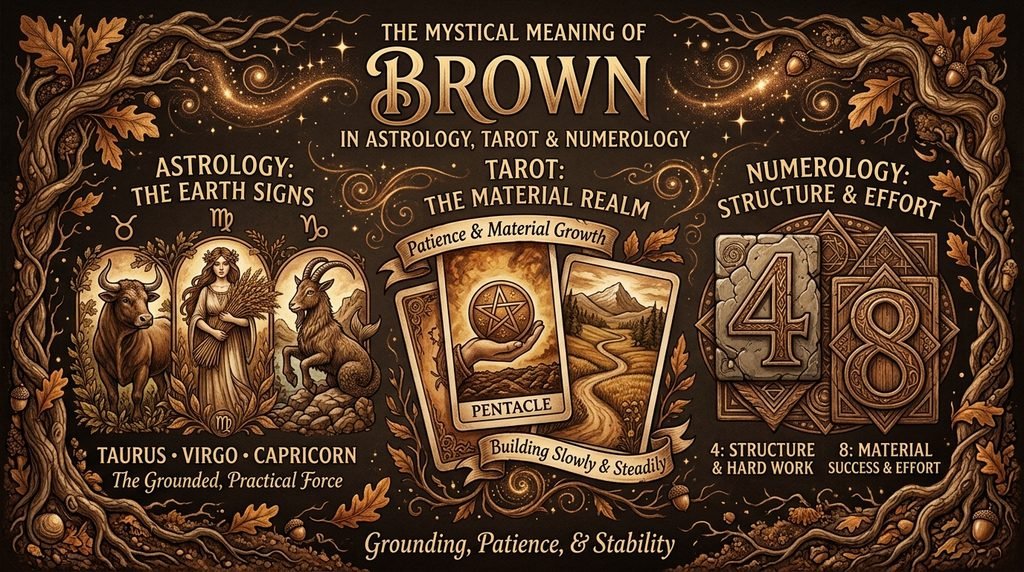
Brown appears in several mystical systems tied to earth and stability. It is linked to grounding, patience, and practical effort. Keep in mind these are belief-based traditions, and sources may differ.
Here is how brown is commonly used in each.
Brown and Zodiac Signs
Brown is most often linked to the earth signs: Taurus, Virgo, and Capricorn. Taurus values comfort, Virgo values order, and Capricorn values steady effort. All three fit brown’s grounded nature.
The link is loose but common in color astrology.
Brown in Tarot Symbolism
Brown appears in tarot art through soil, wood, and animals. It usually stands for stability, material life, and patience. The Pentacles suit often uses earthy tones for these themes.
Brown paths and fields also appear on cards about work and growth. In tarot, brown says “build slowly and steadily.”
Brown in Numerology
Numerology has no single agreed system for colors. Some sources link brown to the number 4, which stands for structure and hard work. Others link it to the number 8, tied to material success and effort.
Because sources differ, treat this as a matter of personal meaning.
Interesting Facts & Trivia About the Meaning of Brown
Brown has plenty of surprising stories behind it. Some come from science, while others come from language and culture. These facts show how much this color has shaped daily life.
Surprising Science Facts About Brown
Brown is not a spectrum color like red or blue. It is made when orange or red light is dim and surrounded by brighter colors. In simple terms, brown is a dark orange our eyes read differently.
Brown eyes get their color from melanin, the same pigment found in skin and hair. More melanin in the iris means a darker shade. This is why brown is the most common eye color worldwide.
Surprising Cultural Facts About Brown
The word “brown” comes from an old English word for dark or dusky. It was used long before the color had a clear place in the rainbow. It is a very old word in many languages.
Brown is also tied to food culture more than most colors. Coffee, chocolate, bread, and roasted nuts are all brown. This helps explain why brown feels so cozy and familiar.
Frequently Asked Questions
These are the questions people search most often about brown. Each answer is short and clear.
What does the color brown mean spiritually?
Spiritually, brown stands for grounding, humility, and connection to the earth. It is loosely linked to the root chakra. It encourages stability and a simple, steady life.
What does brown symbolize in general?
Brown symbolizes stability, comfort, honesty, and nature. It can also suggest dullness or heaviness. Its meaning depends on shade and context.
What is brown color psychology in simple terms?
Brown color psychology says this shade feels warm, safe, and dependable. It supports a sense of comfort and routine. Too much brown can feel heavy or plain.
Why do brands use brown in their logos?
Brands use brown to feel honest, reliable, and natural. It links well to coffee, chocolate, and delivery. It builds quiet trust instead of loud excitement.
What does wearing brown say about you?
Wearing brown often signals warmth, reliability, and calm confidence. Deeper browns feel polished, while lighter ones feel relaxed. It suggests someone grounded and down to earth.
What does brown mean in a dream?
Brown in a dream often points to stability, roots, or home. It can also suggest feeling stuck or weighed down. The details and your feelings matter most.
Conclusion:
The Lasting Meaning of What Does the Color Brown Mean
What does the color brown mean comes down to grounded warmth. It carries comfort and routine, humility and strength, often in the same shade. Few colors feel so steady and so close to everyday life.
From cave paintings to coffee cups, brown has always supported the world quietly. Its power lies in making us feel safe and rooted. The next time you notice brown around you, take a moment to appreciate what it holds up.
[…] is a deep, dark red with a touch of brown. It feels rich, calm, and grounded. The maroon color meaning is tied to maturity, strength, and […]
[…] is a soft, sandy neutral that sits between white and brown. It feels warm, calm, and quietly confident. The beige color meaning is tied to simplicity, […]