
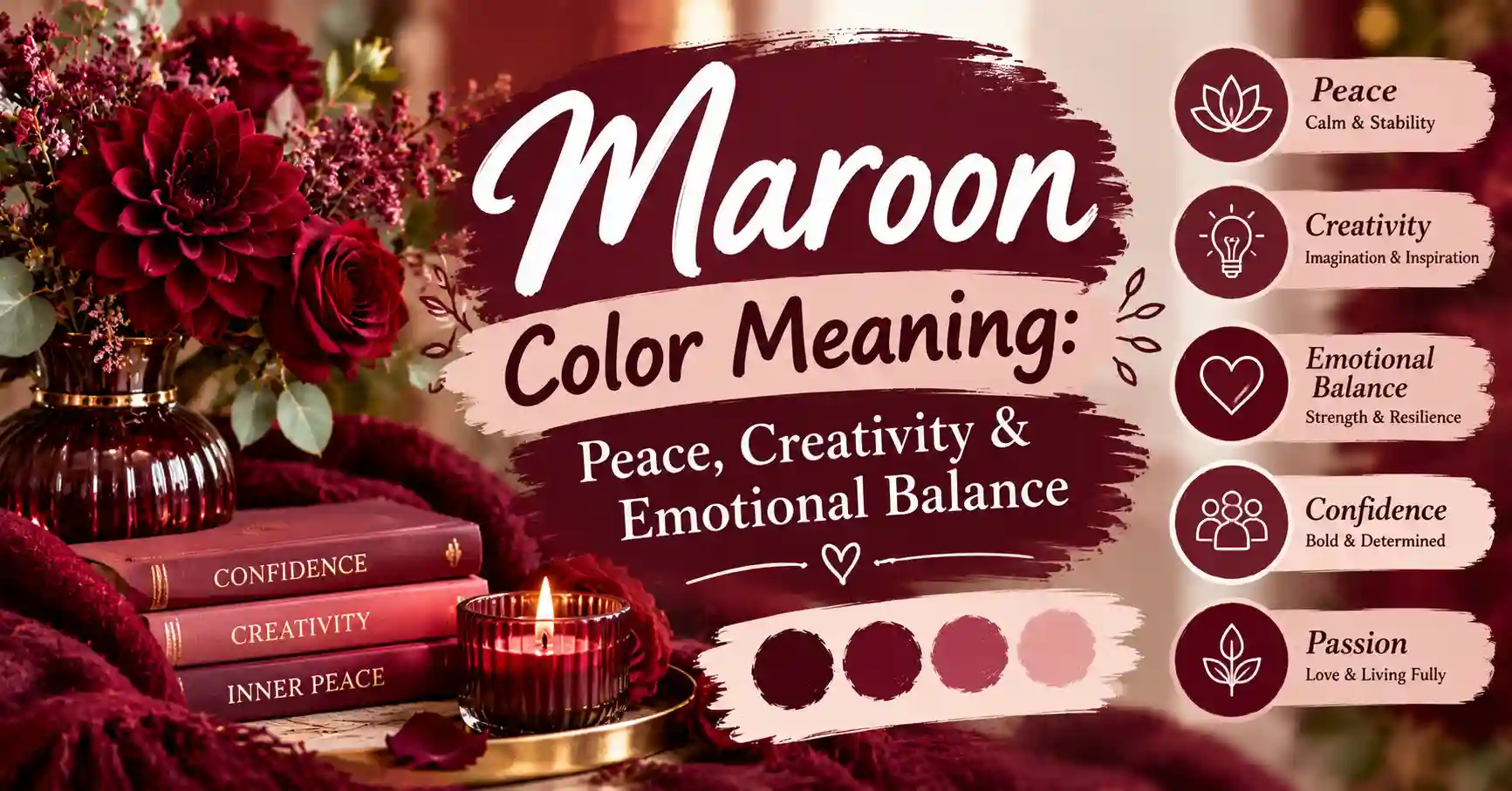

Maroon is a deep, dark red with a touch of brown. It feels rich, calm, and grounded. The maroon color meaning is tied to maturity, strength, and quiet confidence.
Think of ripe wine grapes, autumn leaves, or a velvet curtain. Maroon looks warm without being loud. It carries red’s passion, but more softly and steadily. This article explores the full maroon color meaning, from psychology and culture to history and branding. By the end, you’ll see why this shade feels both comforting and powerful.
2. General Meaning & Symbolism
Maroon is made from red with a dark, earthy tone mixed in. That shift changes everything. Bright red feels urgent and fiery. Maroon feels settled and thoughtful. This is why the meaning of maroon is so different from the meaning of red.

Most people link maroon with depth, ambition, and emotional maturity. It suggests someone who has experience and stays composed. It also carries a sense of tradition and quiet pride.
Maroon as a Symbol of Strength and Resilience
Maroon is often tied to endurance and inner strength. It doesn’t flash or shout. Instead, it stands firm. The color feels like a person who has been through hard times and stayed steady.
This is part of what maroon symbolizes in everyday life. It points to determination, loyalty, and calm power. These qualities make it a favorite for schools, teams, and traditional groups.
Maroon as a Symbol of Warmth and Depth
Maroon also feels warm and protective. Its dark red tone suggests comfort, like a cozy room or a heavy blanket. It invites people to slow down and settle in.
At the same time, maroon has emotional depth. It hints at feelings that are strong but controlled. That mix of warmth and seriousness gives maroon its unique charm.
3. Psychology of Maroon
Maroon color psychology sits between passion and calm. Red raises energy and speeds up the pulse. Brown adds stability and comfort. Maroon blends both, which creates a mood that is warm, focused, and steady.
Because it is darker than red, maroon feels less aggressive. It gives a sense of seriousness without tension. Many people find it reassuring and mature.
Maroon and Emotional Balance
Maroon helps balance strong emotions. It carries red’s heat, but the brown undertone cools it down. This makes the color feel controlled rather than explosive. It suggests feelings that are deep but well managed.
That balance is why maroon works well in spaces meant for conversation and reflection. A maroon accent can add warmth without stirring up stress. It supports a calm, grounded mood.
Maroon and Creativity
Maroon also supports quiet creativity. It feels rich and artistic, like an old library or a theater curtain. The color invites imagination without overwhelming the senses.
Writers, designers, and artists often enjoy it for this reason. It sets a thoughtful mood. Ideas can grow slowly in a maroon-toned space. That steady creative energy fits well with maroon color psychology.
4. Maroon in Different Cultures
Colors carry different meanings around the world. Maroon is no exception. Its meaning shifts with tradition, religion, and national identity. Looking at several cultures shows how rich this shade really is.

In some places, maroon signals dignity and pride. In others, it connects to learning and discipline. The maroon color meaning grows deeper once you see these differences.
Maroon in Western Cultures
In Western countries, maroon is linked to tradition, education, and refined taste. Many universities and sports teams use it as their main color. It suggests loyalty, heritage, and serious purpose.
Maroon also shows up in formal fashion and classic interiors. It feels elegant but not flashy. People often pair it with gold or cream for a rich, timeless look.
Maroon in Eastern Cultures
In Tibetan Buddhism, monks wear maroon robes. The color represents humility, discipline, and a life of simple devotion. It has become one of the most recognized spiritual colors in the world.
Maroon also holds national meaning in some places. The flag of Qatar uses a deep maroon shade, often linked to the country’s history and pride. These examples show how maroon can stand for faith, identity, and heritage.
5. Maroon in Religion & Spirituality
Maroon carries a calm spiritual weight. Its deep red tone connects to life energy, while its dark shade adds humility and seriousness. For this reason, the maroon color meaning appears often in robes, rituals, and sacred spaces.

Many traditions use dark reds to express devotion and sacrifice. Maroon feels more private and reflective than bright red. It suggests faith that is steady and lived every day.
Maroon in Buddhist Traditions
Tibetan Buddhist monks and nuns wear maroon robes as a sign of simplicity and discipline. The shade is humble but dignified. It reflects a life focused on inner growth rather than outward show.
The color is also tied to compassion and grounded practice. Many people associate maroon with deep, steady meditation. This spiritual use has made maroon a symbol of calm devotion.
Maroon in Other Spiritual Ideas
In energy-based spiritual systems, dark reds are often linked to the root chakra. This center is said to relate to safety, stability, and survival. Maroon is seen as a grounding color that supports a sense of security.
Some practitioners use maroon candles, cloths, or stones during meditation. These views are symbolic rather than scientific. Still, they add a meaningful layer to what maroon symbolizes in spiritual life.
6. Maroon in Nature
Maroon appears in nature in subtle, beautiful ways. It is not as bright as red or as common as green. Because of that, it often feels special when we notice it. Nature uses maroon for ripening, protection, and display.

Understanding these natural examples adds a real-world side to the maroon color meaning. It shows that this shade is not just a design choice. It is part of the living world.
Maroon in Plants and Foods
Many dark fruits and plants show maroon tones. Beets, red cabbage, plums, and deep red grapes all carry this rich shade. Autumn leaves, especially on oak and maple trees, often turn maroon before they fall.
Dark pigments in plants can protect them from strong sunlight. They also signal ripeness to animals. This mix of beauty and function mirrors maroon’s calm yet meaningful nature.
Maroon in Earth and Sky
Maroon also appears in soil, clay, and rock. Red earth in many regions has a deep maroon tint. Sunsets can fade into dark reddish tones just before night.
These moments feel quiet and grounded. They connect maroon to the earth itself. That link explains why the color feels stable and secure.
7. Maroon in History
Maroon has a long and interesting past. Dark red shades have been used in cloth, paint, and decoration for thousands of years. Over time, the word “maroon” came into common use to describe this deep tone.
Looking at history makes the maroon color’s meaning clearer. It shows how a dark red became a sign of status, tradition, and pride.
Maroon in Early Use
The name comes from the French word for chestnut, which has a similar dark reddish-brown color. Early dyes for deep reds came from plant roots and insects. These dyes were valued and often costly.
Dark red fabrics were common in rich homes and formal clothing. They suggested wealth and seriousness. Maroon inherited some of that dignified feeling.
Maroon in Modern Times
In recent centuries, maroon became popular for schools, clubs, and sports teams. It gave them a strong yet classic identity. Many institutions still use it today to show heritage and unity.
In modern design, maroon has also become a trend color. It appears in fashion, home décor, and branding. This shows how timeless the shade has become.
[Image caption: Deep maroon robes of Tibetan monks have made the color a global symbol of humility and devotion.]
8. Shades of Maroon and Their Meanings
Not all maroons look the same. Some lean toward brown. Others lean toward purple or bright red. These small shifts change the maroon color meaning in subtle ways.
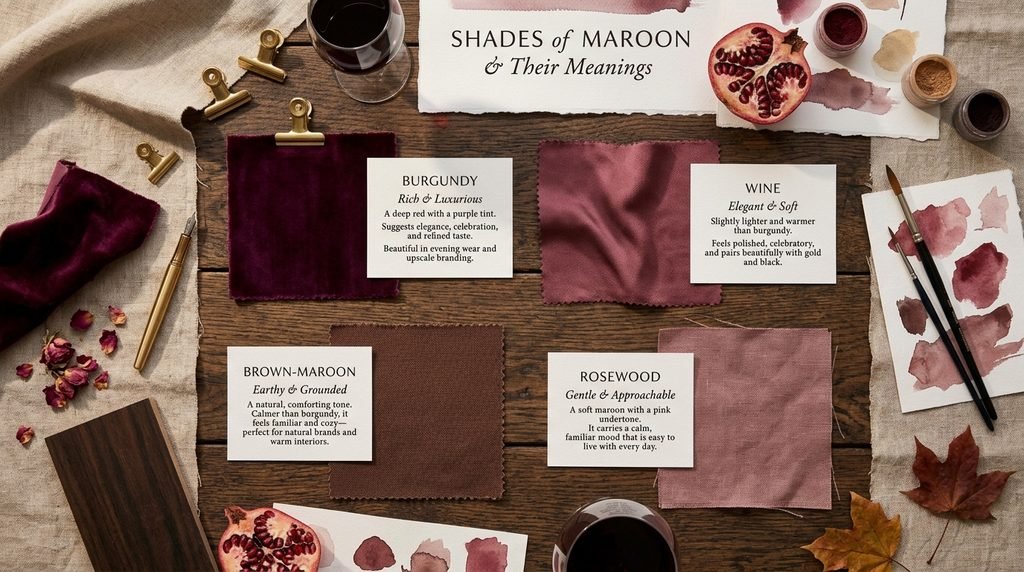
Designers choose shades carefully because tone shapes mood. A slight change can turn maroon from cozy to dramatic.
Burgundy and Wine
Burgundy has a purple tint and feels rich and luxurious. Wine shades are slightly lighter and softer. Both suggest elegance, celebration, and refined taste.
These tones are popular in evening wear and upscale branding. They feel polished and warm. They also pair well with gold and black.
Brown-Maroon and Rosewood
Brown-leaning maroon feels earthy and grounded. Rosewood has a slight pink undertone and feels gentle and approachable. These shades suit cozy interiors and natural brands.
They carry a calmer mood than deep burgundy. They feel familiar and comforting. That makes them easy to live with every day.
9. Maroon in Branding & Marketing
Brands use maroon to signal trust, tradition, and quality. It feels more serious than bright red. It also feels more welcoming than black. Maroon color psychology helps companies project quiet confidence.
The maroon color meaning works well for products that need credibility. It suggests care, experience, and substance.
Maroon in Education and Heritage Branding
Schools, universities, and long-standing institutions often choose maroon. It reflects tradition and academic pride. It looks respectable on banners, uniforms, and logos.
The color also feels stable and enduring. This helps organizations appear reliable. It is a smart choice for groups that want to feel rooted in history.
Maroon in Lifestyle and Luxury Branding
Maroon is also common in wine, leather goods, and premium lifestyle brands. It suggests richness without being flashy. Packaging in maroon feels classic and thoughtful.
Many modern brands pair maroon with cream, gold, or soft pink. This creates a warm, elegant look. It appeals to customers who value quality and comfort.
10. Maroon in Fashion & Design
Maroon is a favorite in fashion and design because it feels rich and flattering. It works across seasons, but it shines in autumn and winter. It adds depth without feeling heavy.
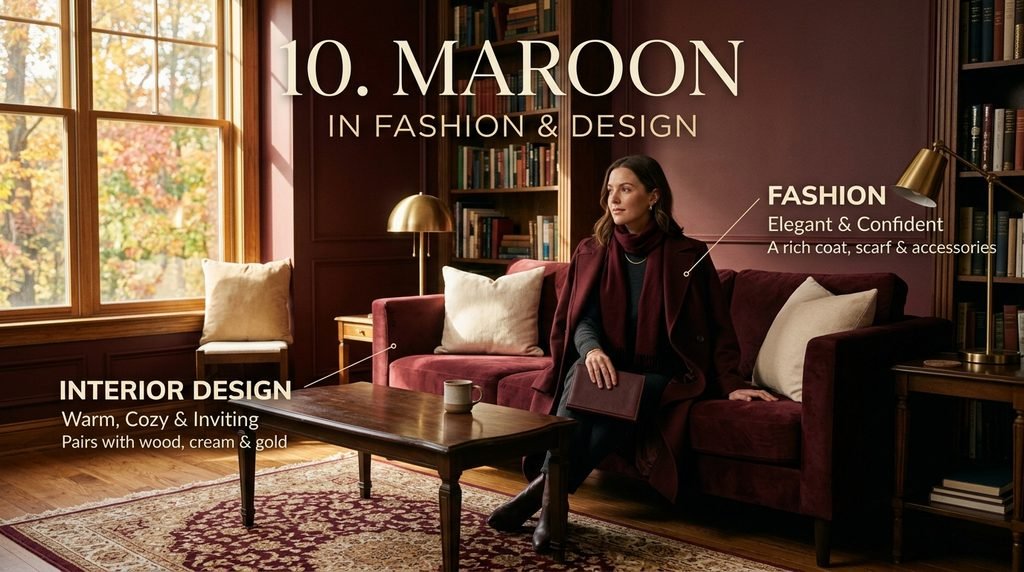
In interiors, maroon creates a warm, cozy atmosphere. It suits spaces where people want to relax and connect.
Maroon in Clothing and Accessories
A maroon coat, dress, or scarf looks elegant and confident. It flatters many skin tones and pairs well with neutrals like gray, beige, and black. Accessories in maroon can add a classy touch to simple outfits.
Maroon also works well for formal events. It feels polished but less severe than black. Many people choose it when they want a mature, refined look.
Maroon in Interior Design
In homes, maroon works well in living rooms, libraries, and dining spaces. A maroon sofa, rug, or accent wall creates warmth and character. It makes a room feel inviting.
Pair it with wood, cream, or soft gold for a classic look. Use it sparingly in small rooms, since dark shades can feel heavy. Balance is the key.
11. Maroon and Personality
People often link color choices with personality, though this is not an exact science. Still, the maroon color meaning gives interesting clues about those who love it. It usually points to a steady and thoughtful nature.
Maroon lovers are often described as mature, loyal, and calm. They prefer depth over show. Their style is quiet but confident.
Traits Associated with Maroon Lovers
People who love maroon are often seen as dependable, determined, and sincere. They value loyalty and long-term goals. They may also be deep thinkers who prefer meaningful conversation.
Many have a strong sense of responsibility. Others often trust them because of this steady presence.
Maroon in Personal Style Choices
Someone who wears maroon may want to appear refined and grounded. It signals confidence without trying too hard. It also suggests good taste and quiet strength.
Even small touches, like a maroon bag or watch strap, can show this side. The choice says, “I value substance.” That message is subtle but clear.
12. Maroon in Dreams
Dream meanings are personal and not scientific. Still, many people enjoy exploring color symbols. Maroon often appears in dreams as a deep, serious tone.
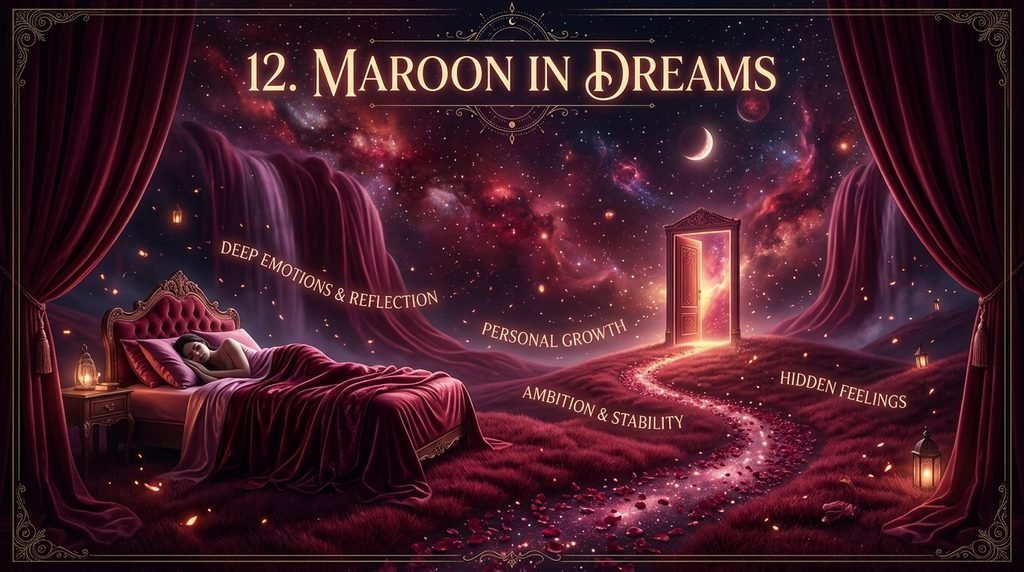
It usually points to strong feelings, personal growth, or hidden emotions. The setting and mood of the dream matter a lot.
Common Interpretations of Maroon in Dreams
Dreaming of maroon may suggest deep emotions that need attention. Some people see it as a sign of ambition or a desire for stability. Others read it as a message to stay calm and grounded.
A peaceful maroon scene, like a velvet room, can suggest comfort and security. A dark or tense scene may point to unresolved feelings. In both cases, the maroon meaning in dreams invites reflection.
13. Maroon in Astrology, Tarot & Numerology
Maroon has a symbolic place in astrology and tarot. It connects to strength, willpower, and deep emotion. Because it is a dark red, it shares many meanings with red.
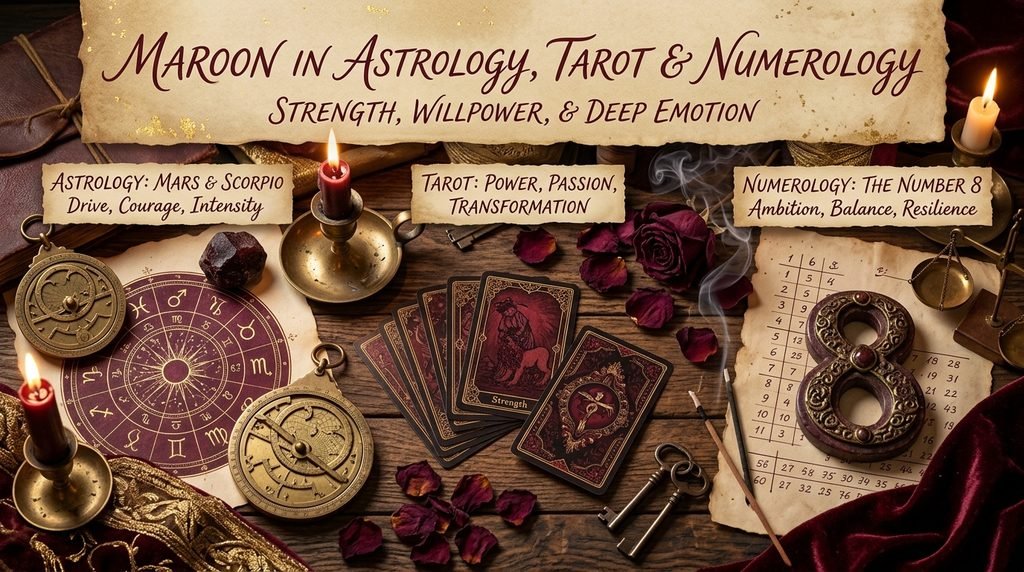
Interpretations vary, so these ideas are best seen as symbolic rather than fixed rules. They add another layer to the maroon color meaning.
In astrology, maroon is often linked to Mars, the planet of drive and courage. It is also sometimes tied to Scorpio, a sign known for intensity and emotional depth. In tarot, dark red tones appear in cards about power, passion, and transformation. In numerology, maroon is sometimes connected to the number 8, which stands for ambition, balance, and resilience.
14. Interesting Facts & Trivia
Maroon has many fun facts that go beyond its looks. These details show how deeply the shade is woven into culture and daily life.
- The word “maroon” comes from the French word for chestnut.
- Tibetan Buddhist monks are famous for their maroon robes.
- The flag of Qatar uses a deep maroon shade.
- Many universities and sports teams use maroon as a signature color.
- Maroon is often confused with burgundy, but maroon is usually browner, while burgundy leans purple.
15. Frequently Asked Questions
What is the maroon color meaning?
The maroon color meaning centers on strength, maturity, warmth, and calm confidence.
What does maroon symbolize?
Maroon symbolizes resilience, loyalty, tradition, and emotional depth.
Is maroon a calming color?
Yes. Maroon color psychology shows it feels warm and steady rather than aggressive like bright red.
What is the difference between maroon and burgundy?
Maroon leans brown or red, while burgundy has more purple in it.
What does maroon mean spiritually?
It is linked to humility, discipline, and grounding energy, especially in Buddhist traditions.
What personality traits go with maroon lovers?
They are often dependable, mature, loyal, and thoughtful.
What does maroon mean in dreams?
It often points to deep emotions, ambition, or a need for stability.
16. Conclusion
Maroon is a color of quiet power. It blends warmth, depth, and calm into one rich shade. The maroon color meaning has stayed strong across cultures, schools, and spiritual traditions.
Understanding maroon color psychology explains why people turn to it for comfort and confidence. It is not loud, yet it is never forgettable. In the end, maroon shows that true strength can be calm, steady, and beautiful.