
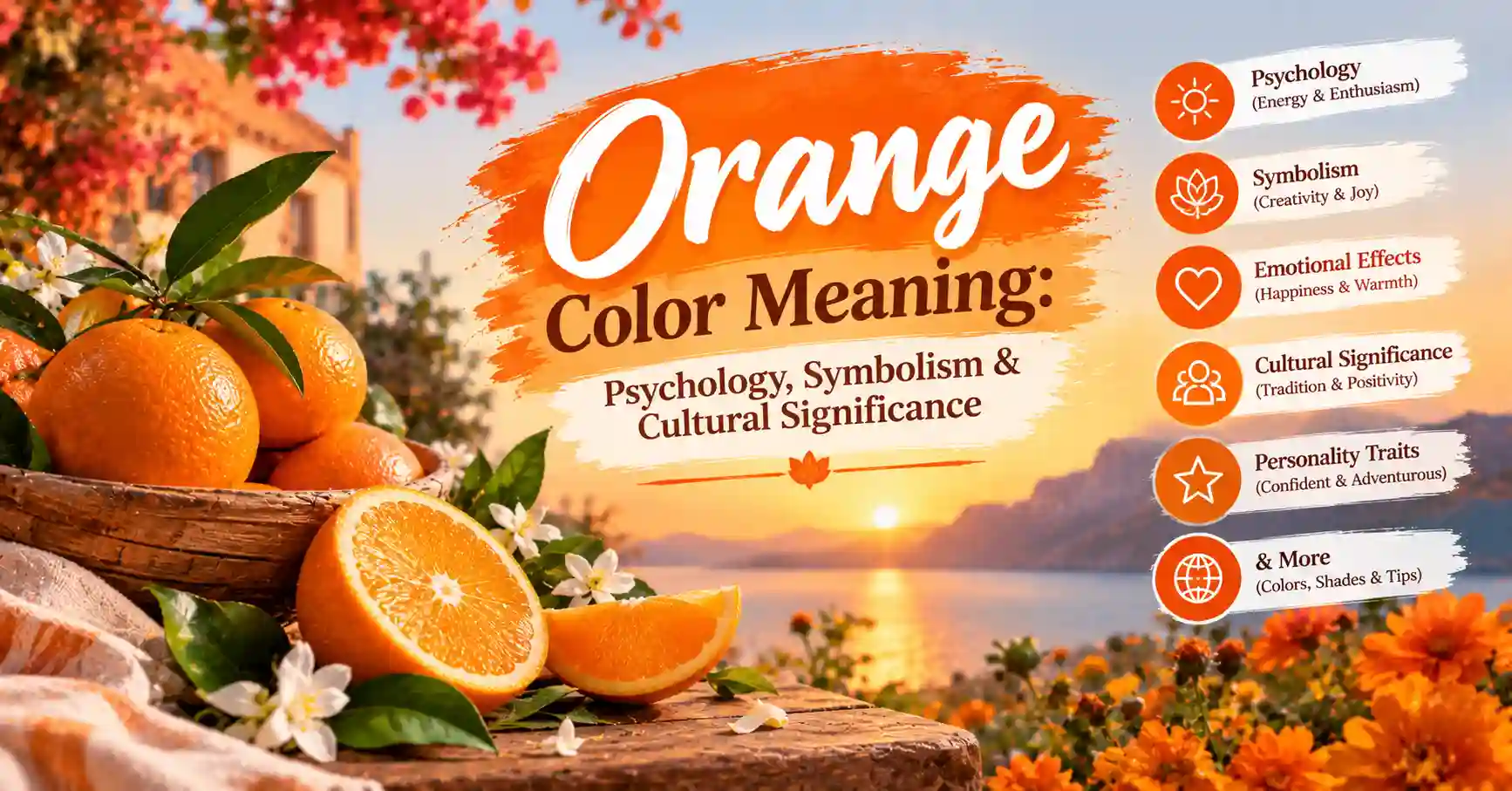

Orange sits in an unusual spot on the color wheel. It borrows heat from red and brightness from yellow, and the result is a color that feels impossible to ignore. Think of a traffic cone, a pumpkin patch, or a blazing autumn maple tree. Orange announces itself.
This article digs into the full orange color meaning, from the psychology behind why it grabs attention to its place in religion, history, fashion, and branding. Along the way, we’ll look at what different shades of orange suggest, why certain cultures treat it as sacred, and what it might mean if orange keeps showing up in your dreams.
Understanding the meaning of orange helps explain why it shows up so often in warning signs and fast-food logos alike. It’s a color built for energy, and that energy shapes how people respond to it almost everywhere it appears.
General Meaning & Symbolism
At its core, orange color meaning centers on enthusiasm, warmth, and creativity. It carries red’s intensity without red’s aggression, and it carries yellow’s cheer without yellow’s lightness. That blend makes orange feel energetic but approachable, bold but friendly.
Across most Western contexts, orange symbolizes vitality and social confidence. It’s the color people choose when they want to stand out without seeming harsh or alarming. A bright orange jacket reads as playful. A bright red one can read as aggressive.
What does orange symbolize beyond energy? Often, it represents change and transition. Autumn leaves turn orange right before they fall. Sunsets glow orange in the final minutes before darkness. That association with transformation gives orange a slightly bittersweet undertone alongside its obvious cheerfulness.
Psychology of Orange
Understanding orange color meaning starts with psychology. Color psychologists generally place orange in the same emotional family as red and yellow, the so-called warm colors, but orange occupies a gentler middle ground. It stimulates without overwhelming, which is part of why it’s used so often in spaces meant to encourage activity and conversation.
How Orange Affects Mood
Orange has a documented tendency to boost feelings of enthusiasm and sociability. Studies in environmental psychology have repeatedly linked orange spaces to increased conversation and group interaction, which is why it shows up in cafeterias, gyms, and children’s play areas far more often than in bedrooms or hospitals.
At the same time, too much orange can feel exhausting rather than exciting. Unlike blue, which calms almost indefinitely, orange tends to lose its positive effect if a space is saturated with it. Designers typically use orange as an accent rather than a dominant wall-to-wall color for exactly this reason.
Orange Color Psychology in Marketing Contexts
In orange color psychology specifically applied to consumer behavior, the color is strongly tied to impulse decisions and affordability. Orange price tags and orange “sale” stickers trigger faster decision-making than cooler colors, which is part of why clearance sections lean so heavily on this hue.
Orange also signals accessibility rather than luxury. Brands wanting to feel premium almost never choose orange as a primary color, since it reads as friendly and down-to-earth rather than exclusive. That’s a deliberate trade-off many fast-casual and budget-friendly brands are happy to make.
Orange in Different Cultures
Orange color meaning shifts dramatically depending on where in the world you’re standing. In some regions, it’s tied to celebration and prosperity. In others, it carries deep religious or national significance that goes far beyond simple decoration.
Orange in Western Culture
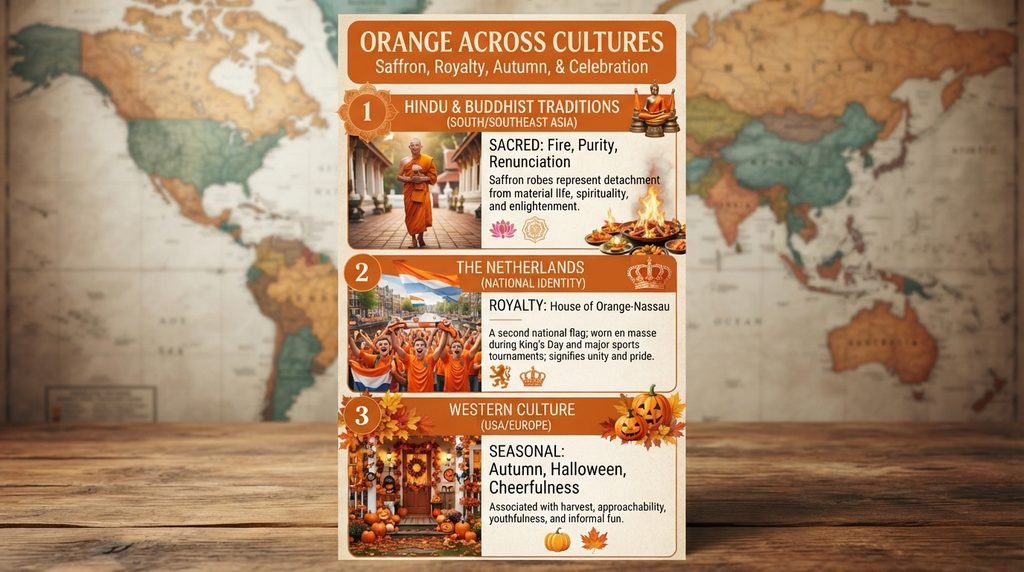
In most of the United States and Europe, orange is associated with autumn, Halloween, and informal cheerfulness. It’s a seasonal color more than a year-round statement, showing up heavily in October and fading into the background the rest of the year. Western branding often uses orange to suggest fun, youthfulness, and approachability.
Orange in Hindu and Buddhist Traditions
In India and much of South and Southeast Asia, orange holds far deeper significance. Saffron orange is considered sacred, tied to fire, purity, and spiritual renunciation. Buddhist monks in Thailand, Myanmar, and Sri Lanka traditionally wear orange robes, a practice rooted in the color’s association with simplicity and detachment from material life.
Orange in the Netherlands
The Netherlands has a uniquely strong national connection to orange, tied to the royal House of Orange-Nassau. Dutch sports fans wear orange en masse during major tournaments, and the color functions almost like a second national flag. This association has nothing to do with the fruit and everything to do with centuries of royal history.
Orange in Religion & Spirituality
The spiritual side of orange color meaning runs deep. Religious traditions around the world have assigned orange meanings that range from sacred devotion to spiritual energy centers in the body. The color rarely appears by accident in these contexts; it’s chosen deliberately for what it represents.
Orange and the Sacral Chakra
In chakra systems originating from Indian spiritual traditions, orange is linked to the sacral chakra, the energy center associated with creativity, emotion, and pleasure. This chakra sits just below the navel, and practitioners who focus on balancing it often use orange visualization or clothing as part of that practice.
Orange in Hinduism and Sikhism
Beyond Buddhism, orange and saffron tones appear throughout Hindu religious practice, from the clothing of holy figures to the color used in temple decorations during festivals. Sikhism also uses saffron prominently, particularly in the Nishan Sahib, the triangular flag flown outside Sikh gurdwaras, where the color represents courage and sacrifice.
Orange in Nature
Nature offers some of the clearest examples of orange color meaning in action, producing some of the most striking orange displays of any color, and those natural moments shape a lot of how humans emotionally respond to the hue. From the sky to the forest floor, orange tends to show up during moments of transition.
Orange Sunsets and Skies
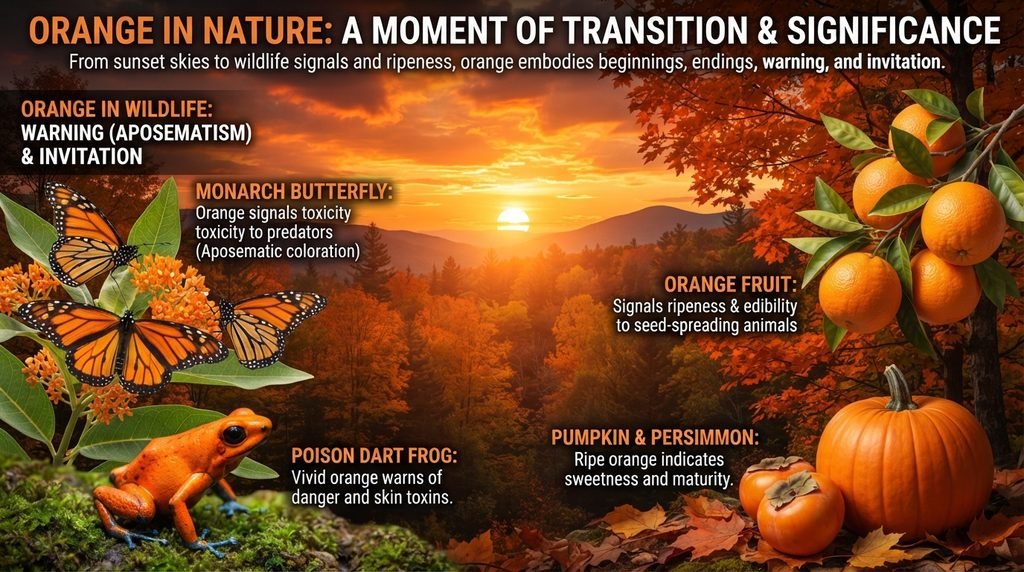
The orange glow of sunrise and sunset happens because of how sunlight scatters through the atmosphere at low angles, filtering out shorter blue wavelengths and leaving the warmer orange and red tones behind. This daily natural event is part of why orange feels inherently tied to beginnings and endings, to transition rather than permanence.
Orange in Wildlife and Plants
Orange appears throughout the natural world as both a warning and an invitation. Monarch butterflies and certain poisonous frogs use orange coloring to signal danger to predators, while many fruits, like oranges themselves, pumpkins, and persimmons, use orange to signal ripeness and edibility to the animals that spread their seeds.
Orange in History
The history behind orange color meaning is surprisingly complex, partly because the word itself took centuries to settle into common use. Orange has a surprisingly complex historical path, partly because the color didn’t even have an English name tied to the fruit until relatively late in linguistic history. Before that, English speakers described orange objects as a shade of red or yellow.
The Origin of the Word “Orange”
The word “orange” entered English through the fruit’s name, which traveled from Sanskrit through Persian, Arabic, and French before settling into English usage around the 1300s. Prior to this, there was no dedicated English word for the color, which is why older texts sometimes describe clearly orange objects using other color terms entirely.
Orange Pigments Through History
Historical orange pigments were often difficult or expensive to produce, including realgar, a toxic arsenic-based mineral pigment used by painters for centuries despite its dangers. The development of safer synthetic orange pigments in the 19th and 20th centuries made the color far more accessible for both artistic and industrial use, expanding where and how orange could appear.
Shades of Orange and Their Meanings
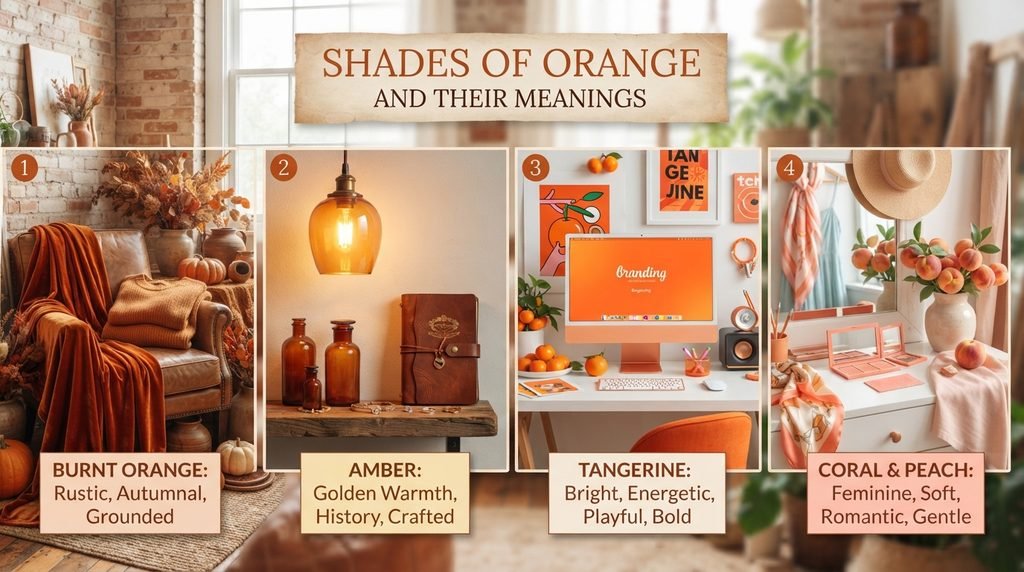
Orange color meaning isn’t fixed. Not all orange carries the same emotional weight. The specific shade dramatically changes whether a color reads as playful, sophisticated, rustic, or urgent, which is why designers choose so carefully between orange variants rather than treating the color as one single option.
Burnt Orange
Burnt orange leans darker and more muted, often associated with autumn, rustic interiors, and vintage design. It reads as warm and grounded rather than loud, which makes it popular in fall fashion collections and cozy home decor.
Amber and Tangerine
Amber carries a golden warmth that suggests preserved history and craftsmanship, often used in lighting design and jewelry. Tangerine, by contrast, stays bright and juicy, commonly chosen for energetic branding aimed at younger audiences who respond well to bold, playful color choices.
Coral and Peach
Coral blends orange with pink, producing a softer, more feminine-leaning tone popular in beauty branding and summer fashion. Peach goes even further in that direction, reading as gentle and approachable rather than bold, which is why it shows up so often in nursery decor and soft, romantic design work.
Orange in Branding & Marketing
Marketers understand orange color meaning better than almost anyone, since few colors work harder in commercial branding than orange, precisely because it combines visibility with approachability in a way few other hues manage. Companies selecting orange are almost always making a deliberate statement about accessibility and energy.
Why Brands Choose Orange
Orange logos and packaging consistently test well for grabbing attention on crowded shelves or cluttered digital pages. Major brands across fast food, telecommunications, and hardware retail use orange specifically because it suggests friendliness and enthusiasm without the visual aggression of pure red.
Orange and Price Perception
Interestingly, orange has a strong documented link to perceived affordability. Discount and clearance signage leans heavily on orange and its close cousin, bright yellow-orange, because consumers subconsciously associate the color with good deals and lower prices. Luxury brands almost universally avoid it for this exact reason.
Orange in Fashion & Design
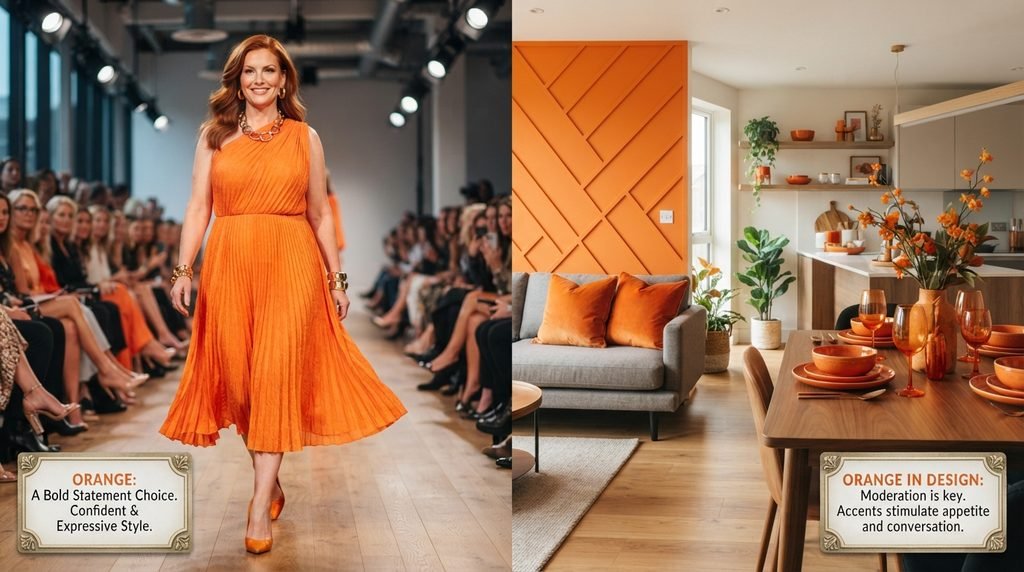
Fashion and interior design both treat orange as a bold statement choice rather than a safe default, which gives it a reputation as the color of confident, expressive style. It rewards people willing to commit to it fully.
Orange on the Runway
Orange tends to surge in fashion during periods that favor optimism and boldness, often appearing in seasonal collections tied to summer energy or autumn warmth. Designers use it as a statement piece color, in a single garment or accessory rather than head-to-toe, since full-orange outfits can easily tip into costume territory.
Orange in Interior Design
In interior spaces, orange works best in moderation, as an accent wall, throw pillows, or art rather than dominating an entire room. Kitchens and dining areas benefit particularly well from orange accents, since the color has a documented tendency to stimulate appetite and social conversation.
Orange and Personality
Orange color meaning extends into personal preference too. People who gravitate toward orange, whether in clothing, decor, or general preference, are often described as outgoing, spontaneous, and sociable. This isn’t a scientific personality test, but it’s a consistent pattern noted across color-preference studies.
Traits Associated With Orange Lovers
Fans of orange tend to be described as adventurous and enthusiastic, drawn to new experiences rather than routine. They often show comfort with being noticed, since choosing orange in clothing or decor is rarely a quiet decision. This willingness to stand out frequently correlates with confidence and a generally upbeat outlook.
What Disliking Orange Might Suggest
People who actively dislike orange sometimes describe it as overwhelming or try-hard, preferring colors that feel calmer or more understated. This isn’t a character flaw so much as a genuine preference for different kinds of visual and emotional stimulation, often favoring blues, greens, or neutral tones instead.
Orange in Dreams
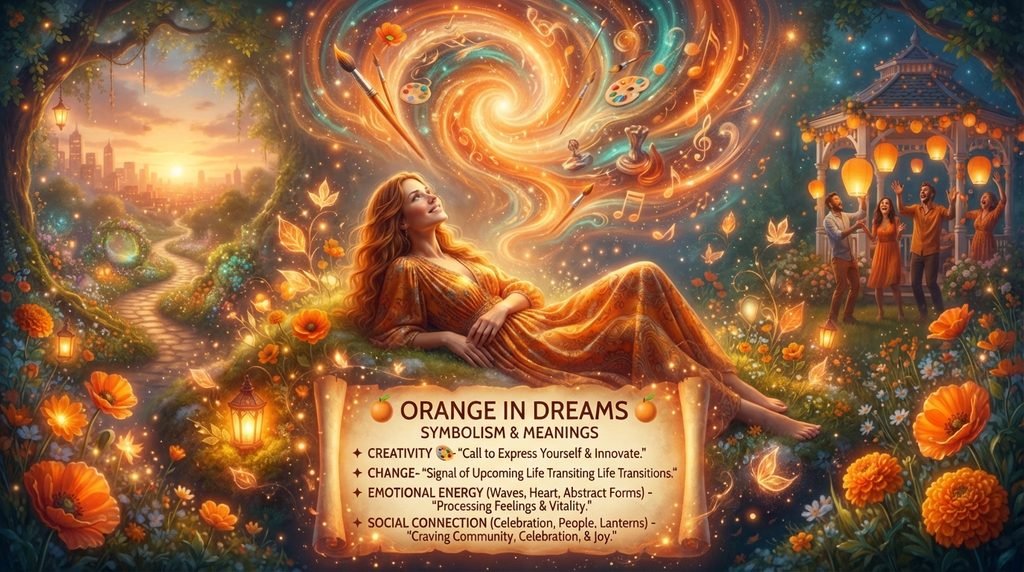
Dream interpretation is far from an exact science, but orange shows up often enough in dream analysis traditions to have developed some consistent associations. Most interpretations connect it to creativity, change, or unprocessed emotional energy.
Common Interpretations of Orange in Dreams
Seeing orange prominently in a dream is frequently interpreted as a signal of upcoming change or a need for more creative expression in waking life. Some dream analysts also connect orange to social energy, suggesting the dreamer may be craving more connection or celebration than their current routine provides.
Orange in Astrology, Tarot & Numerology
Beyond psychology and culture, orange holds a specific place in several symbolic systems that assign meaning to colors as part of broader interpretive frameworks. These systems treat orange as inherently tied to action and emotional expression.
Orange in Tarot
In tarot symbolism, orange frequently appears in cards associated with courage, creativity, and sudden change, often linked to suits connected with passion and action. Card readers sometimes treat a strong orange presence in a spread as a sign of upcoming motivation or a burst of creative energy.
Orange and Numerology
In numerology, orange is commonly associated with the number 2, tied to themes of partnership, balance, and emotional sensitivity layered underneath the color’s more obvious energetic surface. This pairing suggests orange carries more emotional depth than its bright, cheerful exterior might initially suggest.
Interesting Facts & Trivia
Orange has accumulated a handful of genuinely surprising facts over the centuries, from language quirks to scientific curiosities that most people never learn.
- The color orange is named after the fruit, not the other way around, making it one of the only common color names borrowed directly from an object.
- Before the word “orange” entered English, the color was often described as “yellow-red,” a clunky but accurate placeholder.
- Orange is the most visible color against both blue skies and gray, overcast backdrops, which is exactly why it’s used for life rafts, road safety equipment, and hunting gear.
- The Dutch national sports color, orange, has no connection to the fruit at all, tracing instead to the royal House of Orange-Nassau.
- Pumpkins, carrots, and many orange fruits owe their color to beta-carotene, a pigment the human body can convert into vitamin A.
Frequently Asked Questions
What does the color orange symbolize?
At its heart, orange color meaning centers on energy, enthusiasm, warmth, and creativity. It also carries associations with transition and change, tied to natural events like sunsets and changing autumn leaves.
What is orange color psychology in marketing?
Orange color psychology in marketing centers on grabbing attention while signaling affordability and friendliness. It’s commonly used in clearance signage and casual, budget-conscious branding rather than luxury positioning.
Why do Buddhist monks wear orange robes?
Buddhist monks traditionally wear saffron orange robes because the color represents simplicity, fire, and detachment from material possessions. The tradition dates back centuries across Theravada Buddhist countries.
What does orange mean spiritually?
Spiritually, orange is linked to the sacral chakra, associated with creativity, emotion, and pleasure. It’s also considered sacred in Hindu and Sikh traditions, often tied to courage and devotion.
What personality traits are associated with people who like orange?
People drawn to orange are often described as outgoing, adventurous, and sociable. They tend to feel comfortable standing out and gravitate toward new experiences over routine.
Why is orange used for safety equipment?
Orange offers maximum visibility against both blue sky and gray, overcast backgrounds, making it the practical choice for life rafts, road cones, and high-visibility safety gear.
What does seeing orange in a dream mean?
Orange appearing in a dream is often interpreted as a sign of upcoming change or a need for more creative expression. Some interpretations also connect it to a craving for social connection.
Conclusion
The full orange color meaning stretches far beyond a cheerful autumn color or a fast-food logo choice. It’s a hue tied to sacred robes and royal history, sunsets and safety gear, impulse purchases and spiritual energy centers. Few colors carry such a wide emotional and cultural range while still feeling instantly recognizable the moment you see them.
Whether you’re drawn to orange’s boldness or prefer to admire it from a distance, understanding the meaning of orange adds real depth to something as simple as a wall color or a piece of clothing. It’s a color built around energy, transition, and warmth, and that combination is exactly why it refuses to fade quietly into the background.