

Gray rarely gets the spotlight the way red or blue does, and that’s exactly the point. It’s the color of fog, concrete, and overcast skies, a quiet middle ground between black and white that refuses to shout. Yet gray shows up everywhere, from boardrooms to battleship hulls, carrying meaning that’s easy to overlook precisely because it blends in so well.
This article unpacks the full gray color meaning, covering everything from the psychology behind why it feels so neutral to its place in religion, fashion, and branding. We’ll also look at what different shades of gray suggest, how cultures around the world interpret it differently, and what it might mean if gray keeps appearing in your dreams.
Understanding what does the color gray mean helps explain why it’s the default choice for everything from luxury cars to minimalist interiors. Gray isn’t the absence of color opinion so much as a deliberate, often sophisticated choice, and this guide digs into exactly why.
General Meaning & Symbolism
Gray generally symbolizes balance, neutrality, and restraint. It sits exactly between black and white, which gives it a natural association with compromise, moderation, and the middle ground between two extremes. Few colors carry such a direct, built-in symbolism tied to their literal position on the value scale.
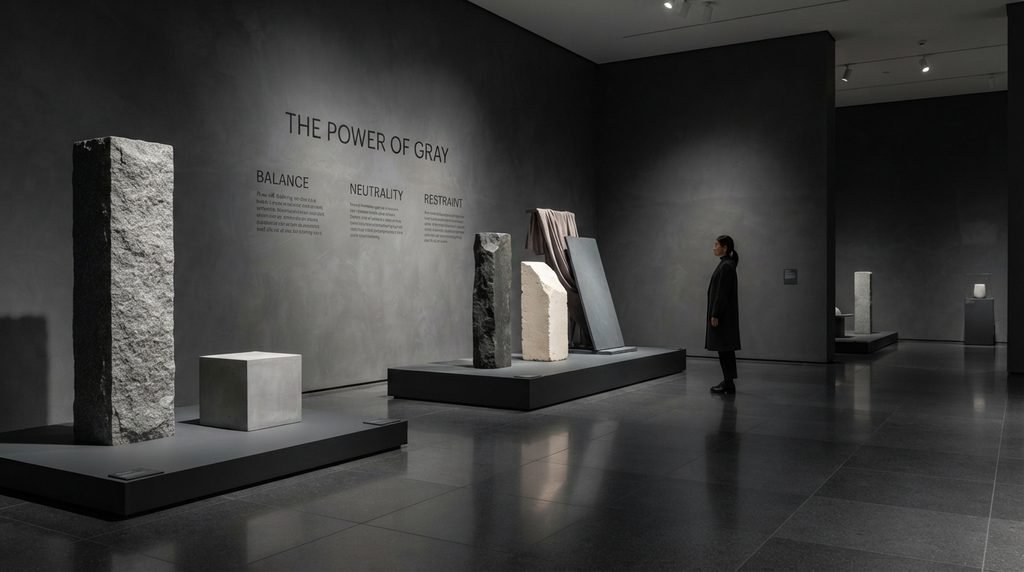
What does the color gray mean? Across most contexts, gray represents practicality over passion. It’s the color people choose when they want something to feel calm, composed, and unobtrusive rather than attention-grabbing. A gray suit reads as professional. A gray wall reads as a blank canvas rather than a statement.
What does gray symbolize beyond neutrality? It often represents maturity and seriousness, tied to graying hair and the wisdom associated with age. At the same time, gray carries a well-known negative association with dullness, indecision, and emotional flatness, a duality that makes it one of the more psychologically complex colors to interpret.
Psychology of Gray
Color psychologists typically place gray in a category of its own, since it technically isn’t part of the visible color spectrum the way red or blue is. It’s an achromatic color, built entirely from varying levels of light and dark rather than hue, which shapes how the brain processes it differently from true colors.
How Gray Affects Mood
Gray has a well-documented calming effect, lowering visual stimulation compared to brighter colors. This is part of why it’s used so often in workspaces and waiting rooms, where a sense of calm matters more than energy or excitement. Too much gray, however, has an equally well-documented tendency to flatten mood, contributing to feelings of boredom or low motivation if a space leans entirely gray with no accent color.
Environmental psychology research on overcast, gray weather consistently links extended gray skies to lower energy and mild mood dips in many people. That real-world association carries over into interior spaces, which is exactly why designers rarely recommend an all-gray room without at least one warmer accent color to counterbalance it.
Gray Color Psychology in Decision-Making
In gray color psychology specifically tied to consumer and workplace behavior, the color is strongly associated with caution and careful judgment. What does the color gray mean? Gray doesn’t push people toward quick, emotional decisions the way red or orange does. Instead, it creates a neutral backdrop that lets other elements, like a product or a key piece of information, stand out more clearly.
This neutrality is also why gray performs so well as a background or supporting color rather than a primary brand statement. It rarely competes for attention, which makes it genuinely useful in contexts where clarity and focus matter more than excitement.
Gray in Different Cultures
Gray carries different emotional weight depending on where in the world you’re standing, ranging from quiet sophistication to genuine mourning. It’s rarely a neutral choice culturally, even if it reads as visually neutral.
Gray in Western Culture
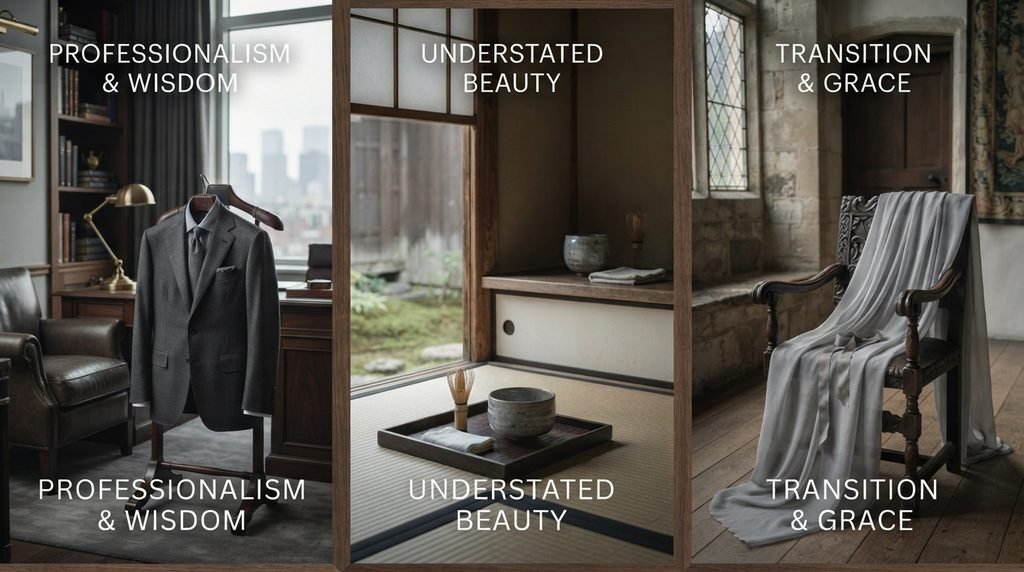
In most of the United States and Europe, gray is associated with professionalism, formality, and understated sophistication. Business attire leans heavily on gray suits specifically because the color reads as serious and competent without the aggression of black or the softness of lighter tones. It’s also tied to aging gracefully, since gray hair carries a cultural association with wisdom in many Western contexts.
Gray in Japanese Aesthetics
Japanese design culture has a particularly refined relationship with gray through the concept of “shibui,” an aesthetic philosophy that values subtle, understated beauty over bold statements. Gray tones appear constantly in traditional Japanese architecture and ceramics, valued precisely because they don’t demand attention, allowing texture and form to take center stage instead.
Gray in Mourning Traditions
In several cultures, gray functions as a secondary mourning color, standing in for or alongside black during periods of grief. This is particularly true in parts of Europe, where lighter gray was historically worn during the later stages of formal mourning, signaling a transition back toward normal life after the deepest period of loss had passed.
Gray in Religion & Spirituality
Religious and spiritual traditions have assigned gray meanings that range from humility and renunciation to genuine ambiguity between opposing spiritual forces. The color’s in-between nature makes it a natural fit for ideas about transition and balance.
Gray in Monastic Traditions
Several Christian monastic orders, including Franciscan friars in certain traditions, have historically worn gray or undyed wool habits specifically to signal poverty and humility. Choosing an unprocessed, undyed gray over a deliberately dyed color was itself a spiritual statement, rejecting vanity in favor of simplicity.
Gray as a Symbol of Spiritual Transition
Because gray sits between black and white, many spiritual traditions treat it as a color of transition or liminal space, neither fully one state nor another. Ash, a literal gray substance, plays this role directly in Ash Wednesday observances within Christianity, symbolizing mortality and the transition from life toward reflection and penance.
Gray in Nature
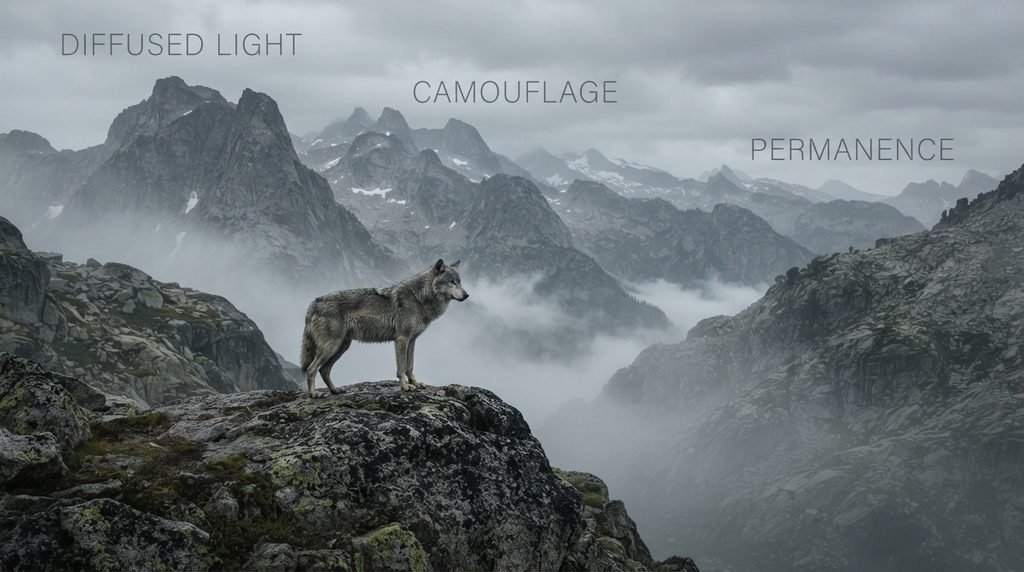
Nature produces gray constantly, though it rarely gets celebrated the way a vivid sunset or a bright flower does. From stormy skies to ancient stone, gray tends to show up during moments of weight and permanence rather than fleeting beauty.
Gray Skies and Weather
Overcast, gray skies happen when thick cloud cover scatters and diffuses sunlight evenly, removing the directional light that produces blue skies or colorful sunsets. This daily natural phenomenon is part of why gray carries such a strong association with calm, quiet, or even melancholic moods, tied directly to the weather patterns people experience during gray days.
Gray in Animals and Stone
Many animals rely on gray for camouflage and protection, including wolves, elephants, and numerous seabirds, whose gray coloring helps them blend into rocky, misty, or overcast environments. Stone and rock formations, from granite mountains to ancient gray cliffs, carry an association with permanence and timelessness, since gray stone often outlasts almost everything built or planted around it.
Gray in History
Gray has a long, practical history tied closely to materials rather than dye or pigment alone, since so many naturally gray substances, like stone, iron, and ash, played central roles in human technology and architecture.
Grisaille, a painting technique using only shades of gray, developed as a genuine artistic discipline centuries ago, often used to create the illusion of sculpture within a flat painting. Painters used grisaille both as a finished technique and as an underpainting layer, building up value and form before adding color on top.
Gray and the Industrial Revolution
Gray became strongly associated with industry and modernity during the Industrial Revolution, as steel, iron, and concrete transformed cityscapes into environments dominated by this once-overlooked color. That association between gray and industrial progress persists today, which is part of why gray remains the default color for so much modern infrastructure and technology.
Shades of Gray and Their Meanings
Not all gray carries the same emotional weight. The specific shade dramatically changes whether a color reads as elegant, cold, soft, or industrial, which is why designers choose carefully between gray variants rather than treating the color as one single option.
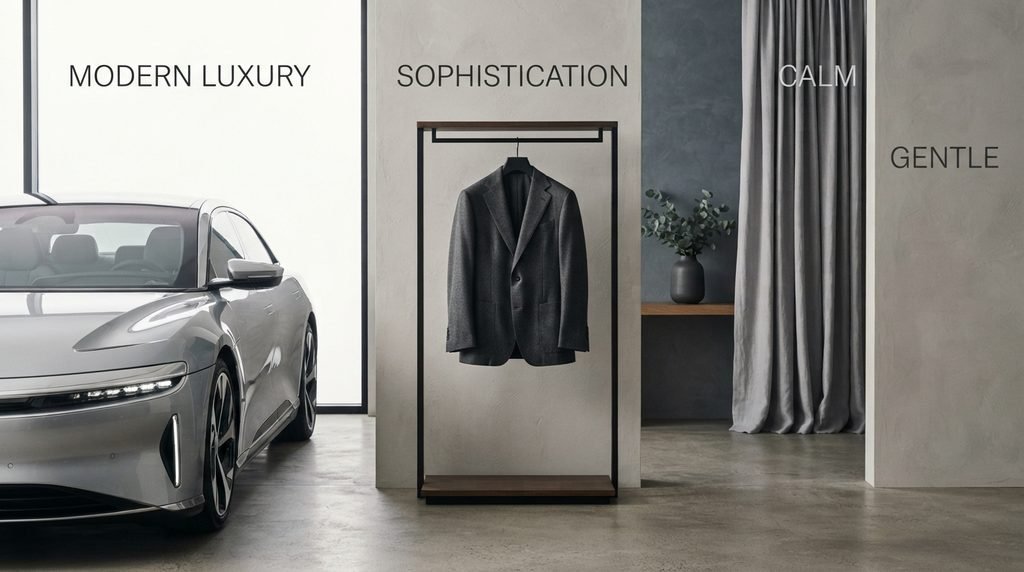
Charcoal Gray
Charcoal leans dark and dramatic, often associated with formality and modern sophistication. It reads as serious and grounded rather than soft, making it a popular choice for formalwear and high-end interior accents.
Silver and Slate
Silver carries a bright, metallic quality associated with technology, modernity, and subtle luxury, often used in product design for electronics and vehicles. Slate gray leans cooler and more muted, commonly chosen for interior walls and architecture that want a calm, contemporary feel without the starkness of pure gray.
Dove Gray
Dove gray sits on the paler, softer end of the spectrum, carrying a gentle, almost romantic quality that distinguishes it from colder, more industrial grays. It’s a favorite in bridal and nursery design, where a true neutral is needed without any harshness.
Gray in Branding & Marketing
Few colors work as hard behind the scenes in branding as gray, precisely because it rarely draws attention to itself while still shaping how a brand feels. Companies choosing gray are almost always making a deliberate statement about sophistication and reliability.
Why Brands Choose Gray
Gray logos and packaging consistently communicate seriousness, technical competence, and understated quality. Technology and automotive brands in particular lean on gray because it suggests precision and engineering excellence without competing visually with a product’s own design.
Gray and Premium Perception
Unlike orange or yellow, which signal affordability, gray has a strong documented link to premium and luxury perception when paired with clean design and quality materials. High-end electronics, luxury vehicles, and architectural firms use gray specifically because it reads as refined rather than flashy, letting craftsmanship speak for itself.
Gray in Fashion & Design
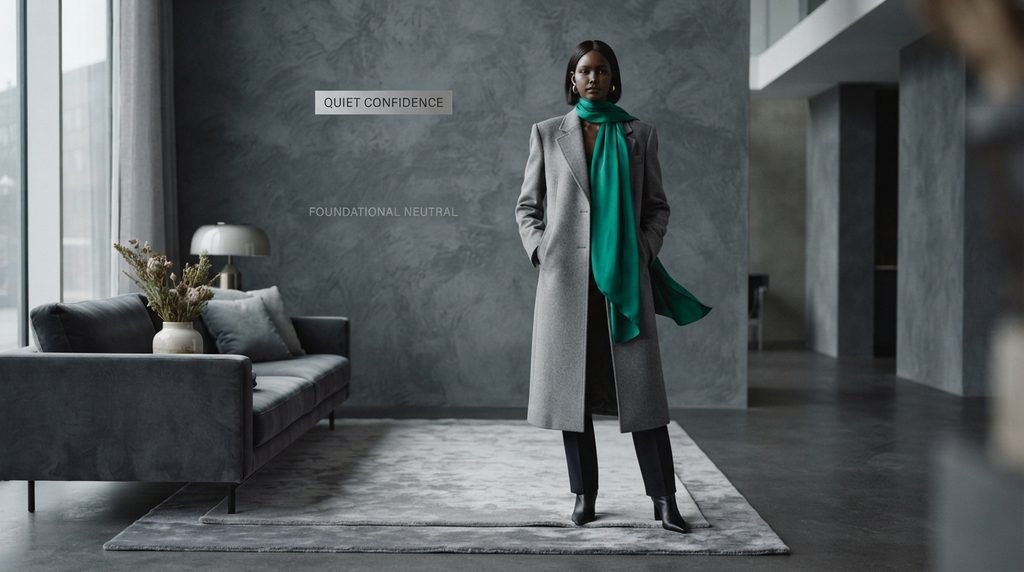
Fashion and interior design both treat gray as a foundational neutral rather than a bold statement, which gives it a reputation as the color of quiet, confident style. It rewards subtlety over spectacle.
Gray on the Runway
Gray remains a dependable staple across nearly every fashion season, valued for its ability to pair effortlessly with almost any other color. Designers often use gray as a base layer or supporting piece, letting a single bold accent color stand out against it rather than competing for attention.
Gray in Interior Design
In interior spaces, gray has become one of the most requested neutral wall colors of the past two decades, prized for its ability to feel modern without the coldness of stark white. Living rooms and bedrooms both benefit from gray’s calming, flexible quality, since it adapts easily to both warm and cool accent colors depending on the room’s overall mood.
Gray and Personality
People who gravitate toward gray, whether in clothing, decor, or general preference, are often described as balanced, cautious, and reserved. This isn’t a scientific personality test, but it’s a consistent pattern noted across color-preference research.
Traits Associated With Gray Lovers
Fans of gray tend to be described as thoughtful and measured, preferring careful consideration over impulsive decisions. They often value stability and consistency, choosing gray specifically because it doesn’t demand constant attention or reinvention. This preference frequently correlates with a practical, detail-oriented approach to both work and personal style.
What Disliking Gray Might Suggest
People who actively dislike gray sometimes describe it as lifeless or depressing, preferring colors that feel more emotionally expressive or energetic. This reflects a genuine preference for stronger visual and emotional stimulation, often favoring warmer, brighter hues that feel more immediately engaging than a neutral, muted tone.
Gray in Dreams
Dream interpretation is far from an exact science, but gray shows up often enough in dream analysis traditions to have developed some consistent associations. Most interpretations connect it to uncertainty, emotional numbness, or a period of transition.
Common Interpretations of Gray in Dreams
Seeing gray prominently in a dream is frequently interpreted as a sign of indecision or an unresolved situation in waking life, reflecting the color’s in-between nature. Some dream analysts also connect gray to emotional suppression, suggesting the dreamer may be avoiding or numbing a feeling rather than processing it directly.
Gray in Astrology, Tarot & Numerology

Beyond psychology and culture, gray holds a specific place in several symbolic systems that assign meaning to colors as part of broader interpretive frameworks. These systems generally treat gray as representing ambiguity or balance between opposing forces.
Gray in Tarot
In tarot symbolism, gray frequently appears in cards associated with uncertainty, transition, or a pause before a decision, often linked to imagery involving fog, clouds, or twilight. Card readers sometimes treat a strong gray presence in a spread as a signal that clarity hasn’t yet arrived and patience is needed before acting.
Gray and Numerology
In numerology, gray is commonly associated with balance-focused numbers tied to diplomacy and careful judgment, reflecting the color’s position exactly between black and white. This pairing suggests gray carries more depth and deliberation than its quiet, understated surface might initially suggest.
Interesting Facts & Trivia
Gray has accumulated a handful of genuinely interesting facts over the centuries, from language quirks to scientific curiosities many people never learn.
- Gray is technically achromatic, meaning it has no hue at all, built entirely from varying levels of black and white rather than any position on the color wheel.
- The spelling “gray” is more common in American English, while “grey” is more common in British English, though both refer to the same color.
- Human hair turns gray due to a gradual reduction in melanin production, a natural process tied to aging rather than any disease process in most cases.
- Battleships have been painted gray since the early 20th century specifically because the color offers effective camouflage against both sky and sea under most weather conditions.
- Gray matter, the tissue responsible for most brain processing, gets its name directly from its actual grayish color when examined outside the body.
Frequently Asked Questions
What does the color gray mean symbolize?
Gray generally symbolizes balance, neutrality, and sophistication. It also carries associations with maturity and caution, tied to its position exactly between black and white.
What is gray color psychology in branding?
Gray color psychology in branding centers on signaling reliability, precision, and understated quality. It’s commonly used by technology and automotive brands wanting to project engineering excellence without competing visually with the product itself.
Why do some cultures associate gray with mourning?
Several cultures use gray as a secondary mourning color, often worn during the later stages of grief as a transition back toward normal life. This tradition is particularly documented in parts of European mourning customs.
What does gray mean spiritually?
Spiritually, gray is often tied to humility and simplicity, reflected in the undyed wool habits worn by certain monastic orders. It also represents transition and liminal space in traditions that use ash, like Ash Wednesday observances.
What personality traits are associated with people who like gray?
People drawn to gray are often described as balanced, cautious, and thoughtful. They tend to value stability and careful decision-making over impulsive, attention-seeking choices.
Why is gray used so often in technology and luxury branding?
Gray signals precision and sophistication without competing visually with a product’s own design, which is exactly why so many premium electronics and vehicles lean on it. It reads as refined rather than flashy.
What does seeing gray in a dream mean?
Gray appearing in a dream is often interpreted as a sign of indecision or an unresolved situation. Some interpretations also connect it to emotional numbness or avoidance.
Conclusion
The full gray color meaning stretches far beyond a boring, default background choice. It’s a color tied to monastic humility and industrial progress, luxury branding and overcast skies, careful judgment and quiet sophistication. Few colors carry such a wide practical and symbolic range while still managing to stay almost invisible in plain sight.
Whether you’re drawn to gray’s calm restraint or find it a little flat without a bolder accent nearby, understanding what does the color gray mean adds real depth to something as simple as a wall color or a tailored suit. It’s a color built around balance and quiet confidence, and that’s exactly why it remains one of design’s most dependable, enduring choices.
[…] is a cool, shiny shade that sits between gray and white. It feels sleek, modern, and quietly elegant. The silver color meaning is tied to […]