
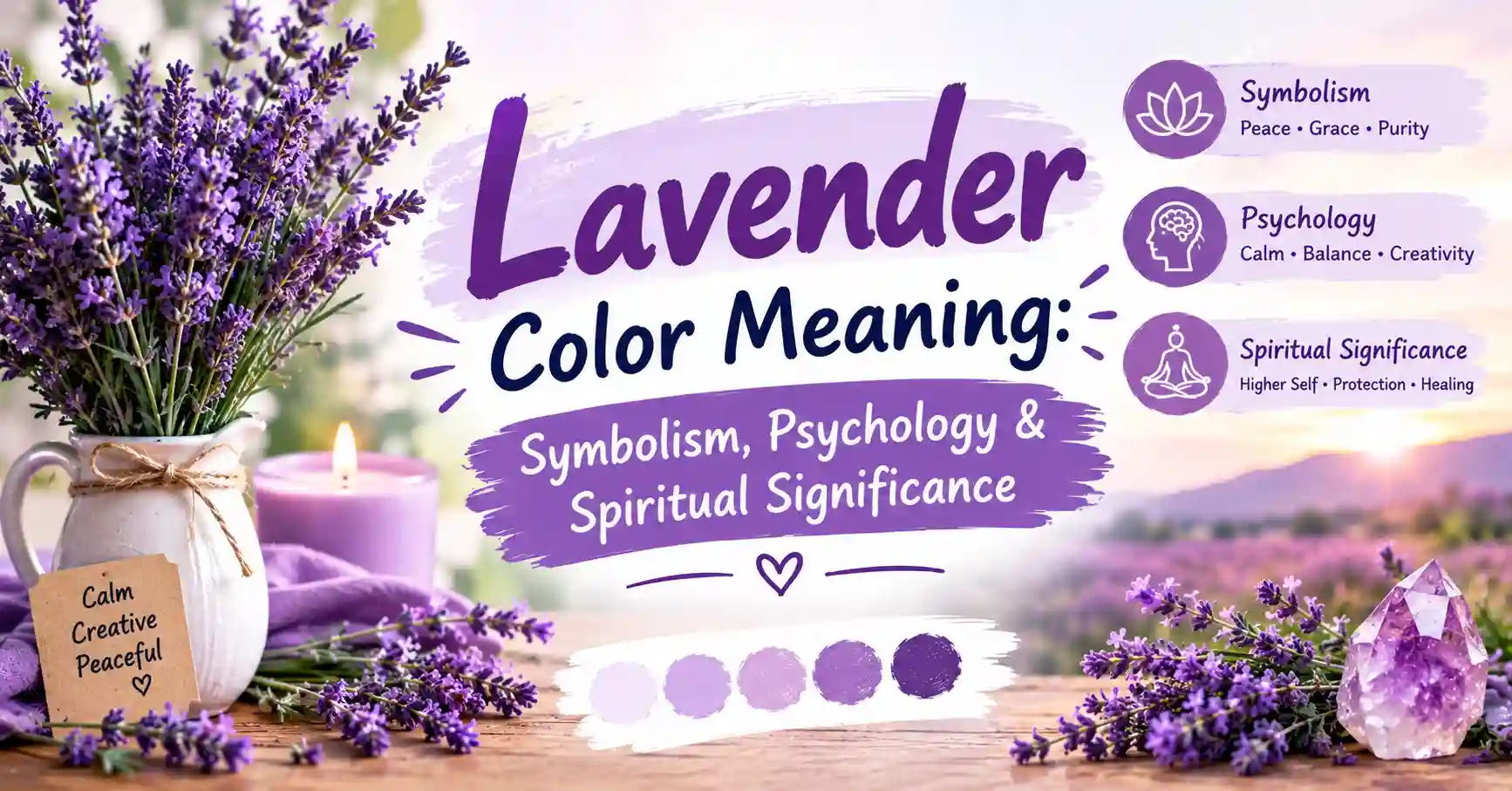

Lavender is a soft, dreamy shade that sits between purple and pale blue. It feels gentle, calm, and a little bit magical. The lavender color meaning is tied to peace, grace, and quiet imagination.
You see lavender in flower fields, bath products, wedding décor, and spring fashion. It rarely shouts for attention. Instead, it invites you to slow down. This article explores the full lavender color meaning, from psychology and culture to history and branding. By the end, you’ll know exactly why this delicate color has such lasting appeal.
2. General Meaning & Symbolism
Lavender is a lighter, softer cousin of purple. It keeps purple’s mystery but drops its heavy drama. That is why the lavender color meaning feels more gentle and approachable than the meaning of deep violet or royal purple.

Most people link lavender with calm, elegance, and femininity. It also suggests nostalgia and tenderness. Few colors feel this soothing while still looking graceful.
Lavender as a Symbol of Calm and Serenity
Lavender is one of the most relaxing colors in the spectrum. Its pale tone reduces visual noise and invites a quiet mood. The scent of lavender plants reinforces this link, since the aroma is widely used to encourage rest.
Because sight and smell work together, the color often triggers the same peaceful feeling. A lavender room can feel softer and slower than almost any other.
Lavender as a Symbol of Grace and Femininity
Lavender is also tied to elegance and delicate beauty. It appears often in bridal palettes, spring fashion, and floral design. In many places, it suggests refinement without stiffness.
This graceful reputation shapes the lavender meaning in everyday life. It feels polished but never cold. It also feels romantic in a subtle, understated way.
3. Psychology of Lavender
Lavender color psychology focuses on calm, comfort, and gentle creativity. It blends the energy of red with the peace of blue, but in a very light form. The result is a color that soothes the mind without putting it to sleep.
Many designers use lavender when they want a quiet emotional lift. It feels safe and kind. It also leaves room for thought.
Lavender and Relaxation
Soft purples tend to feel restful, and lavender is the clearest example. People often describe it as comforting, especially in spaces meant for winding down. That is why lavender color psychology is popular in bedrooms, spas, and wellness studios.
The color doesn’t demand focus. Instead, it lets the mind drift. This makes it a good choice for places where stress needs to fade.
Lavender and Creativity
Lavender also supports imagination and gentle daydreaming. It carries purple’s creative spark, but in a softer, less intense way. Writers, artists, and designers often enjoy it for that reason.
Because it feels calm, lavender can help people think freely. It encourages quiet ideas rather than loud ones. That balance is a big part of its emotional charm.
4. Lavender in Different Cultures
Colors never mean the same thing everywhere. Lavender is no exception. The lavender color meaning shifts with history, tradition, and social movements, so it helps to look at several regions.
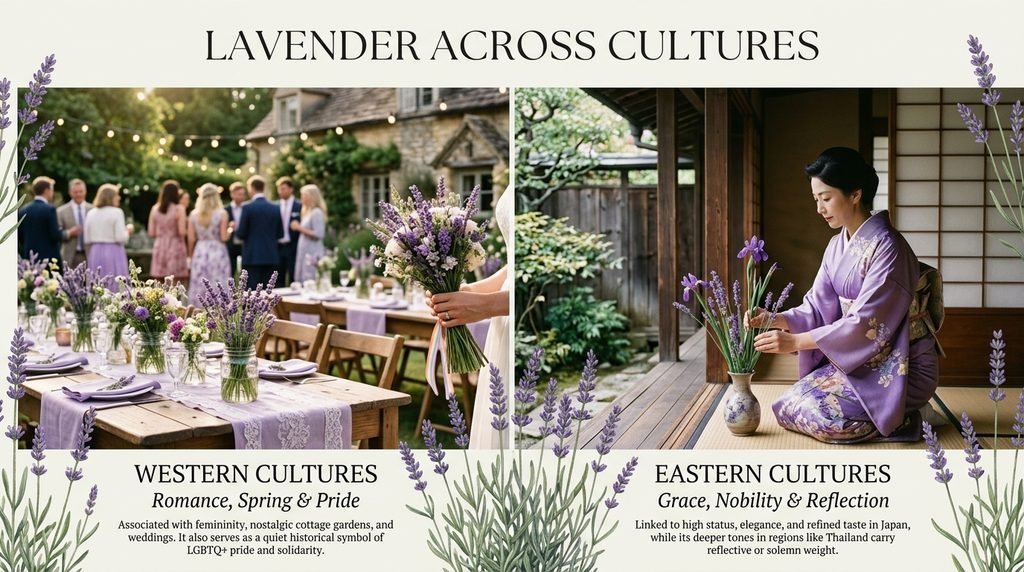
In some places, it stands for romance and softness. In others, it carries a more serious or political weight. Looking across cultures reveals how rich this color really is.
Lavender in Western Cultures
In Western countries, lavender is linked to femininity, spring, and gentle romance. It is a favorite in weddings, baby showers, and garden themes. It also suggests nostalgia, often reminding people of old-fashioned linen and cottage gardens.
Lavender also carries social meaning. It has long been connected to LGBTQ+ history and identity, serving as a quiet symbol of pride and solidarity. This gives the color a layer of courage beneath its gentle surface.
Lavender in Eastern Cultures
In parts of Asia, lighter purples are tied to elegance, nobility, and refined taste. In Japan, soft purple tones have long been linked to grace and high status.
These differences show why the meaning of lavender is never fixed. A soft shade can feel festive in one place and thoughtful in another. Good designers always check local traditions first.
5. Lavender in Religion & Spirituality
Lavender carries a calm spiritual energy. Its pale glow suggests peace, healing, and quiet reflection. For this reason, the lavender color meaning appears often in meditation, prayer, and holistic wellness.
Many traditions treat purple tones as a bridge between the earthly and the divine. Lavender, being lighter, feels like a gentler version of that bridge. It invites calm rather than awe.
Lavender and the Crown Chakra
In many spiritual systems, violet and lavender are linked to the crown chakra. This energy center is said to connect a person with higher awareness and inner peace. Lavender is often used in meditation spaces to support that idea.
People who follow these practices often choose lavender candles, cloths, or crystals. The soft color is thought to encourage stillness and clarity. It also fits the mood of quiet reflection.
Lavender in Christian and Mystic Traditions
In Christianity, purple shades appear in seasons of prayer and preparation, such as Advent and Lent. Lighter tones like lavender are sometimes used to suggest hope within those quiet periods. They soften the seriousness of deeper purple.
In mystic and folk traditions, lavender the plant was often used for cleansing and protection. People hung it in homes and added it to baths. This history adds to what lavender symbolizes today: purity and gentle healing.
6. Lavender in Nature
Lavender appears in nature as a soft, hazy shade. It is not as common as green or brown, so it feels special when it shows up. Natural lavender tones often signal calm, beauty, and a bit of wonder.
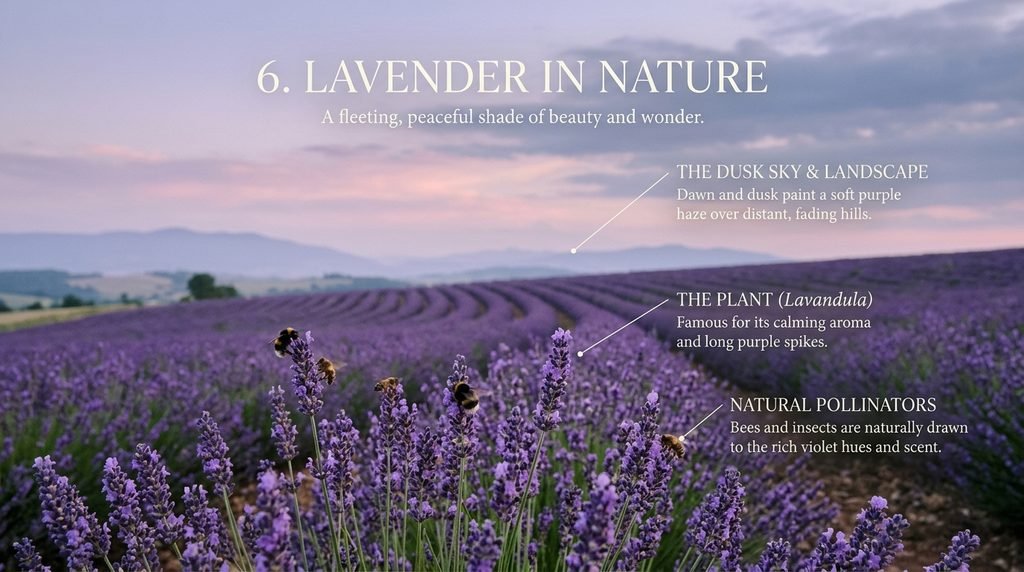
Nature uses this color for practical reasons too. Many plants rely on purple tones to attract pollinators. That adds a scientific layer to the lavender meaning we feel emotionally.
Lavender in Plants and Flowers
The lavender plant is the most famous example. Its long purple spikes cover fields in places like southern France and parts of England. Other flowers, such as lilacs, wisteria, and hydrangeas, share similar soft purple tones.
Bees love these blooms. The color and scent work together as a natural invitation. Gardeners often plant lavender to bring pollinators and peaceful scenery at the same time.
Lavender in Skies and Landscapes
Lavender also shows up in the sky. Dawn and dusk often paint a soft purple haze across the clouds. Distant hills can fade into a pale lavender blue as the day ends.
These moments feel quiet and fleeting. They remind people to pause. That calm feeling is a core part of lavender color psychology.
7. Lavender in History
Lavender has a long and surprising history. Long before it was a fashion color, it was a plant used for cleaning, healing, and perfume. Over time, the plant’s name became the name of the shade.
Understanding this past makes the lavender color’s meaning richer. It shows how a humble flower turned into a symbol of softness and quiet strength.
Lavender in Ancient and Historic Use
Ancient peoples valued lavender for its fragrance and its cleansing qualities. It was used in baths, linens, and perfumes across the ancient world. Over the centuries, it became a staple of European gardens and home remedies.
Because of this long use, the color feels familiar and comforting. People connect it to clean sheets, fresh air, and care. That association still shapes the meaning of lavender today.
Lavender in Modern Social History
In Victorian times, lavender and similar soft shades were worn during the later stage of mourning. This showed a gentle move from deep grief toward recovery. In the twentieth century, lavender gained a bold new meaning tied to LGBTQ+ identity and activism.
Today, lavender continues to evolve. It has even been celebrated as a trend color in modern design. It remains a color that is both soft and strong.
[Image caption: Rows of blooming lavender in Provence, France, helped make the shade a global symbol of calm.]
8. Shades of Lavender and Their Meanings
Not every lavender looks the same. Some are pale and airy, while others lean toward pink or deeper violet. These small shifts change the lavender color meaning in subtle but real ways.
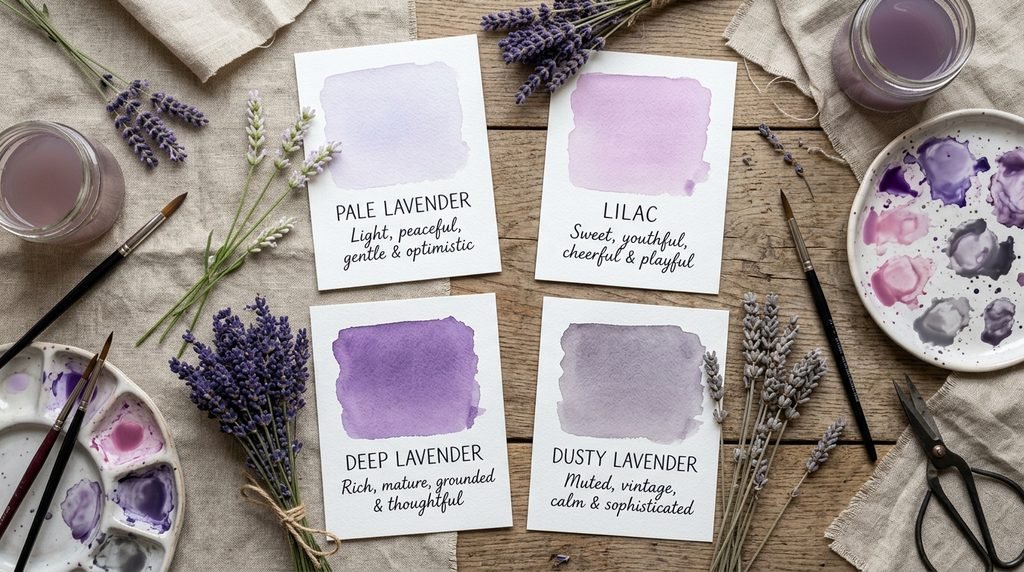
Designers choose shades carefully because tone changes mood. A slight shift can move a color from sweet to sophisticated.
Pale Lavender and Lilac
Pale lavender feels airy, light, and peaceful. Lilac leans a little pinker and feels sweeter and more youthful. Both shades are common in nurseries, spring fashion, and soft branding.
They suggest gentleness and optimism. They also pair beautifully with white and cream. These lighter tones feel clean and fresh.
Deep Lavender and Dusty Lavender
Deep lavender has more color and feels richer and more mature. Dusty lavender is muted and slightly gray, giving it a vintage, calm look. Both shades work well in modern interiors and elegant branding.
These tones feel grounded and thoughtful. They keep lavender’s softness but add depth. That makes them useful when you want calm with a touch of sophistication.
9. Lavender in Branding & Marketing
Brands use lavender to signal calm, care, and quiet luxury. It stands out gently in a world of bold reds and blues. Understanding lavender color psychology helps companies choose it with purpose.
The lavender color meaning works especially well for products that promise comfort or gentle beauty. It feels trustworthy without feeling stern.
Lavender in Wellness and Beauty Branding
Wellness, skincare, and sleep products often use lavender. The color matches the idea of relaxation and self-care. It also pairs naturally with the scent that many of these products contain.
Customers read it as soft, safe, and soothing. It tells them the product is kind. That quiet message builds trust fast.
Lavender in Digital and Lifestyle Branding
Lavender has also become popular in apps, startups, and lifestyle brands. It feels modern, friendly, and creative. It stands out without feeling harsh on screens.
In recent years, a digital style of lavender has even become a major trend color in design. This shows how flexible it is. It suits both old-world charm and new-world tech.
10. Lavender in Fashion & Design
Lavender is a favorite in fashion and design because it feels fresh and flattering. It works in spring collections, evening wear, and everyday outfits. It adds color without overwhelming the eye.
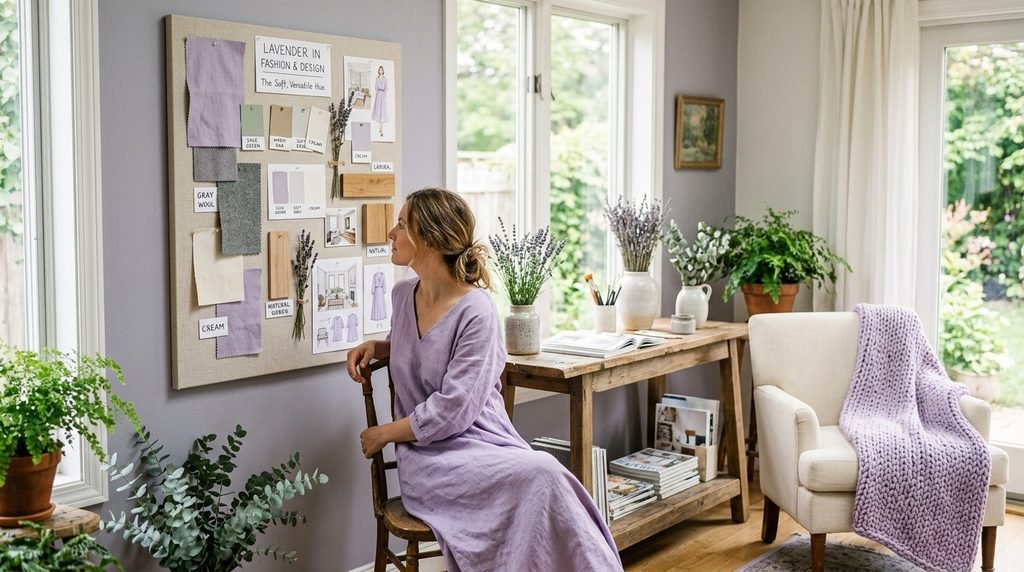
In interiors, it creates a soft, welcoming mood. It is easy to combine with many other tones. That makes it very versatile.
Lavender in Clothing and Accessories
A lavender dress or blouse looks elegant and approachable. It suits many skin tones and pairs well with white, gray, and navy. Accessories in lavender can add a gentle pop to neutral outfits.
Lavender is also popular in weddings and special events. It feels romantic but not too bold. Many people choose it when they want to look soft and polished.
Lavender in Interior Design
In homes, lavender is popular for bedrooms, bathrooms, and reading corners. It creates a calm background that supports rest. Paired with gray or cream, it feels modern and clean.
Pair it with natural wood or soft green for a garden-inspired look. Use deeper shades for accent walls. A little goes a long way.
11. Lavender and Personality
People often connect color choices with personality, though this is more art than science. Still, the lavender color meaning offers interesting clues about what draws people to this shade. It usually points to a gentle and thoughtful nature.
Lavender lovers are often described as calm and imaginative. They tend to value peace over conflict. Their style is soft but not shallow.
Traits Associated with Lavender Lovers
People who love lavender are often seen as kind, creative, and sensitive. They enjoy quiet spaces and meaningful conversations. They may also be dreamers who notice small details.
Many value harmony in their relationships. Their calm presence often puts others at ease.
Lavender in Personal Style Choices
Someone who wears lavender may want to appear graceful and approachable. It signals softness without weakness. It also suggests a quiet confidence that doesn’t need to be loud.
Even small touches, like a lavender scarf or phone case, can reflect this personality. The choice says, “I value calm.” That message is subtle but clear.
12. Lavender in Dreams
Dream meanings are personal and not scientific. Still, many people find color symbols interesting. Lavender often appears as a soft, comforting image in dreams.
It usually points to gentle emotions, rest, or spiritual calm. The surrounding details matter, so the dream’s mood is important.
Common Interpretations of Lavender in Dreams
Dreaming of lavender may suggest a need for peace or emotional healing. Some people see it as a sign of intuition growing stronger. Others read it as encouragement to slow down.
A lavender field in a dream often feels hopeful and restful. Dream readers often link it to comfort after a stressful time. In this way, the lavender meaning in dreams stays kind and reassuring.
13. Lavender in Astrology, Tarot & Numerology
Lavender has a quiet place in astrology and tarot. It connects to intuition, spiritual growth, and soft emotional energy. Because it is a light purple, it shares many meanings with violet and purple.

Many practitioners link it to calm, dreamy signs. Interpretations vary, so these are best seen as symbolic rather than fixed rules. They add another layer to the lavender color meaning.
In astrology, lavender is often connected to Pisces, a sign known for imagination and empathy. It is also tied to Neptune, the planet of dreams and intuition. In tarot, light purple tones appear in cards about intuition, hope, and spiritual insight. In numerology, lavender is sometimes linked to the number 7, which stands for reflection and inner wisdom.
14. Interesting Facts & Trivia
Lavender has many fun facts that go beyond its looks. These details show how deeply the color and plant are woven into human life. They also make great conversation starters.
- The color gets its name from the lavender plant, not the other way around.
- Lavender was widely used in ancient baths and linens for its clean scent.
- In Victorian times, lavender was a common half-mourning shade.
- Bees are strongly drawn to lavender flowers, which makes the plant a pollinator favorite.
- Lavender has been used as a quiet symbol in LGBTQ+ history for decades.
15. Frequently Asked Questions
What is the lavender color meaning?
The lavender color meaning centers on calm, grace, gentle creativity, and spiritual peace.
What does lavender symbolize?
Lavender symbolizes serenity, femininity, nostalgia, and soft intuition.
Is lavender a calming color?
Yes. Lavender color psychology shows it supports relaxation and a peaceful mood.
What is the difference between lavender and purple?
Lavender is lighter and softer, while purple is deeper and more dramatic.
What does lavender mean spiritually?
It is linked to the crown chakra, meditation, healing, and higher awareness.
What personality traits go with lavender lovers?
They are often kind, creative, sensitive, and peace-loving.
What does lavender mean in dreams?
It often points to emotional healing, rest, and growing intuition.
16. Conclusion
Lavender is a color of quiet power. It brings together calm, creativity, and grace in one soft shade. The lavender color meaning has stayed gentle and meaningful across fields, homes, and generations.
Understanding lavender color psychology explains why people reach for it when they need peace. It is not loud, yet it is never forgettable. In the end, lavender shows that softness can be a strength.