

Purple has always felt a little different from other colors. It doesn’t occur as often in nature. It isn’t as loud as red or as calm as blue. If you’ve ever wondered what the color purple means, the short answer is that it’s tied to luxury, mystery, and imagination — and has been for thousands of years.
For centuries, purple dye was one of the hardest colors to produce. That scarcity made it a color for royals, priests, and the powerful. Today, purple still feels special. It shows up in branding, fashion, and spirituality, always carrying a sense of depth. This article breaks down everything purple represents, from ancient history to modern psychology, so you’ll understand exactly what the color purple means in every context — personal, cultural, and spiritual.
2. General Meaning & Symbolism
Purple sits between red and blue, and it borrows a little emotional energy from both. It blends red’s passion with blue’s calm, creating a color that feels both exciting and peaceful. This balance is part of why so many people ask what the color purple means when they see it used in art or design.
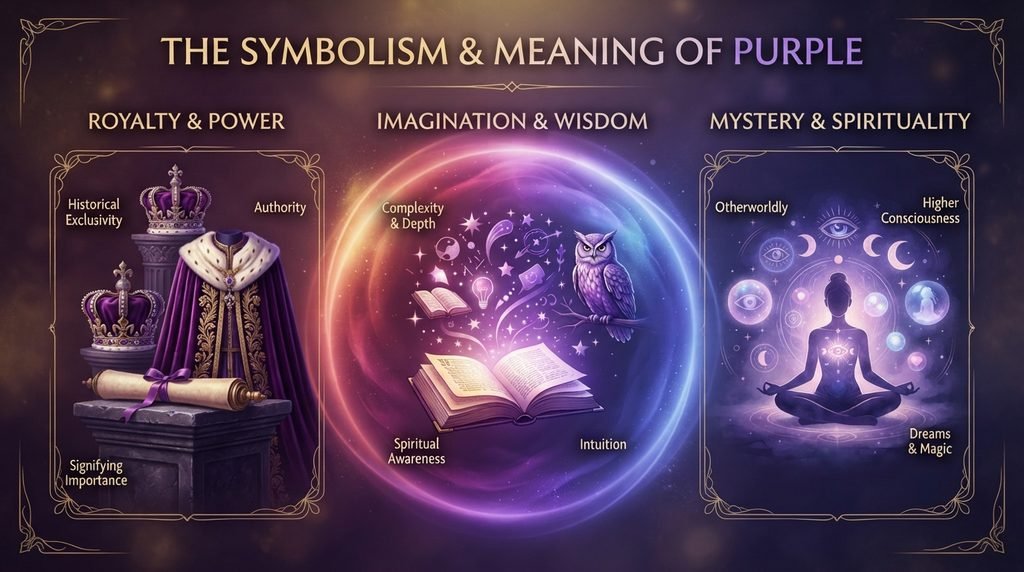
Purple is often linked to imagination, wisdom, and spiritual awareness. It’s not a color people usually associate with simplicity. Instead, it suggests complexity, depth, and a touch of mystery.
Purple as a Symbol of Royalty
Purple’s connection to royalty goes back thousands of years, largely because purple dye was once extremely expensive to make. Only kings, queens, and high officials could afford garments dyed in true purple. This exclusivity built a lasting association between purple and power.
Even today, purple robes, sashes, and accessories are used to suggest elegance and authority. The color still feels reserved for something important, not ordinary.
Purple as a Symbol of Mystery and Spirituality
Beyond royalty, purple is closely tied to spiritual reflection and the unknown. It’s often used to represent intuition, dreams, and higher consciousness. This is part of why purple symbolism appears so often in meditation spaces and spiritual branding.
Because purple isn’t common in everyday objects, it naturally feels a bit otherworldly. People often associate it with things that go beyond the physical, like magic or deep introspection.
3. Psychology of Purple
Purple color psychology suggests this is a color of balance between energy and calm. It doesn’t overstimulate like red, but it also isn’t as relaxing as blue. Instead, purple tends to encourage creativity and reflection — which is often the real answer when people ask what the color purple means on an emotional level.
Many studies on color perception note that purple is often linked to imaginative thinking. It’s a favorite among artists, writers, and dreamers, likely because of this creative pull.
Purple and Creativity
Purple is frequently associated with artistic expression and original thinking. Because it’s a less common color in daily life, seeing it can spark curiosity and imaginative thought. This is one reason purple color psychology is often applied in creative industries.
People who surround themselves with purple, whether in décor or clothing, are sometimes seen as more open to unconventional ideas.
Purple and Emotional Balance
Unlike red, which heightens emotion, purple tends to create a sense of emotional steadiness. It combines stimulation with calmness, making it feel thoughtful rather than reactive. This balance is why purple is often used in spaces meant for reflection.
It’s also linked to feelings of luxury and self-worth, giving it a subtle emotional richness that other colors don’t always carry.
4. Purple in Different Cultures
Purple’s meaning shifts depending on cultural context, much like most colors. In some places, it represents nobility and wealth. In others, it’s tied to mourning or spiritual practice. Answering what the color purple mean really depends on where in the world you’re asking.
Global brands and designers often have to research these cultural differences before using purple internationally.
Purple in Western Cultures
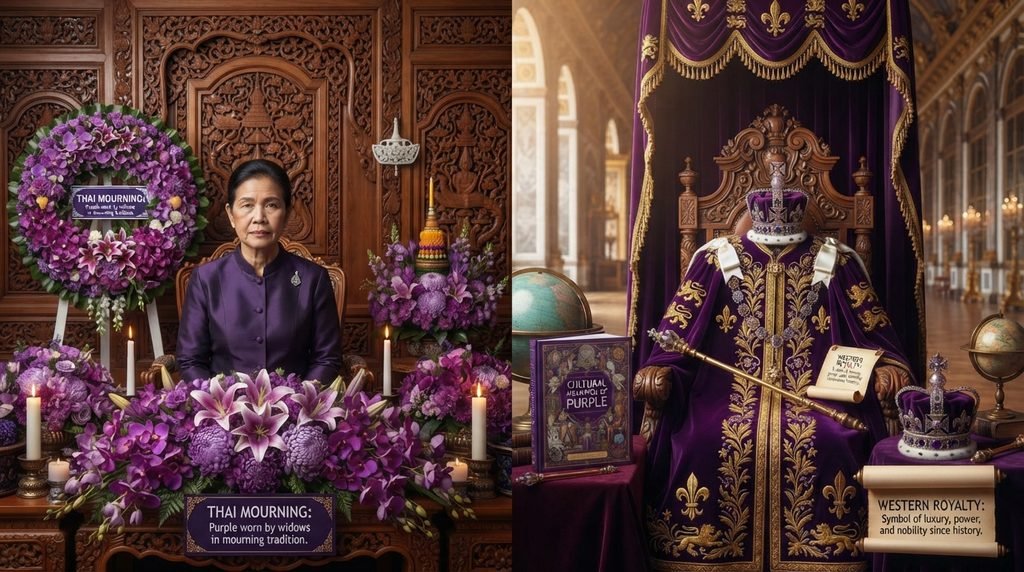
In Western countries, purple is strongly linked to royalty, luxury, and creativity. It’s used in high-end branding and formal design to suggest sophistication. Historically, only the wealthy could wear it, and that legacy still lingers today.
Purple is also associated with imagination and individuality in modern Western pop culture, often tied to artistic or nonconformist identities.
Purple in Eastern Cultures
In some Asian cultures, purple carries spiritual and symbolic weight tied to wealth and privilege, similar to the West. In Thailand, purple is traditionally worn during mourning, particularly by widows.
These varied meanings show that purple color psychology isn’t universal — context always matters.
5. Purple in Religion & Spirituality
Purple holds deep spiritual meaning across multiple faiths, often tied to sacred rituals and reflection. Its rarity and richness naturally lend it a solemn, elevated feeling. This makes purple a common choice in religious clothing and symbolism.
Because purple blends warmth and coolness, it’s often seen as a bridge between the physical and spiritual worlds.
Purple in Christianity
In Christianity, purple is closely associated with penance, reflection, and preparation, especially during Lent and Advent. Clergy often wear purple vestments to represent solemnity and spiritual discipline. It also historically symbolized Christ’s royalty and suffering.
This dual meaning of humility and majesty makes purple a particularly meaningful color within religious tradition.
Purple in Eastern Spiritual Practices
In Hinduism and Buddhism, purple is sometimes linked to the crown chakra, representing higher consciousness and spiritual connection. It’s used in meditation practices to encourage clarity and inner peace.
This spiritual association reinforces purple’s broader symbolism of wisdom and enlightenment.
6. Purple in Nature
Purple is one of the rarer colors found in the natural world, which adds to its sense of specialness. When it does appear, it tends to stand out dramatically. This scarcity is part of why purple in nature feels so eye-catching.
Because true purple pigments are harder to produce biologically, plants and animals that display them often do so for a clear evolutionary reason.
Purple in Plants and Flowers
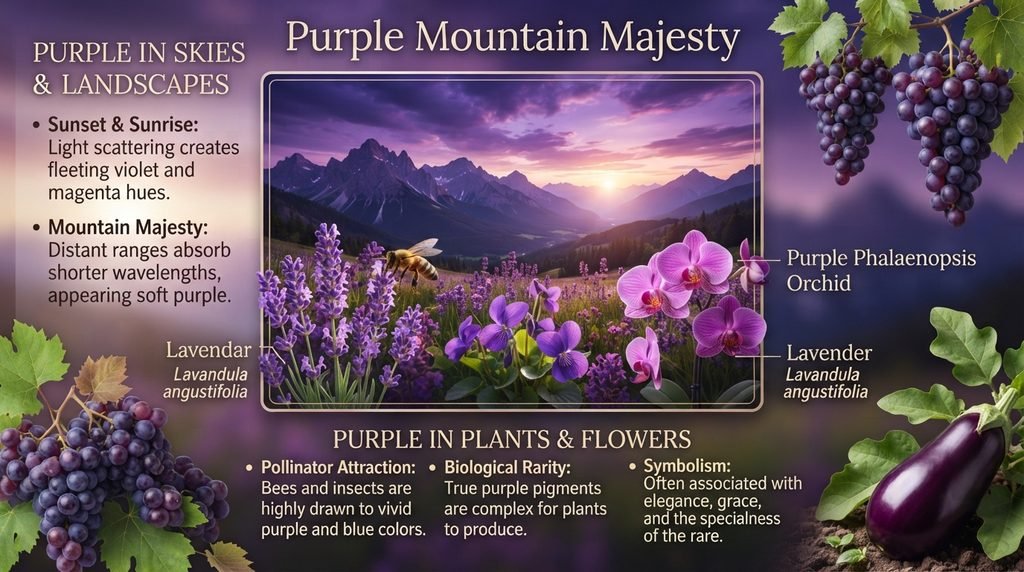
Lavender, violets, and orchids are among the most recognizable purple flowers, often symbolizing elegance and grace. Purple grapes and eggplants also showcase the color vividly in nature. These plants often use purple pigments to attract pollinators like bees, which are especially drawn to purple and blue hues.
This biological role adds a practical layer to purple’s otherwise symbolic reputation.
Purple in Skies and Landscapes
Purple frequently appears during sunrises and sunsets, when light scatters at certain angles. Mountain ranges in the distance often take on a soft purple hue, sometimes called “purple mountain majesty.” These natural moments often evoke a sense of calm and wonder.
Such displays reinforce purple’s link to beauty that feels rare and fleeting rather than constant.
7. Purple in History
Purple’s historical significance is deeply tied to its production difficulty. For centuries, creating purple dye was expensive and labor-intensive, which shaped much of the color’s symbolic power. Looking at this history is one of the clearest ways to understand what does the color purple mean today.
The rarity of purple pigment meant that wearing it was, quite literally, a display of wealth.
Tyrian Purple and Ancient Royalty
Ancient Phoenicians created a dye known as Tyrian purple, extracted from sea snails in a process that required thousands of snails for a small amount of dye. This made the color extraordinarily expensive, reserving it almost exclusively for emperors and high nobility. Roman leaders often wore purple togas to signal ultimate authority.
This tradition cemented purple’s long-standing connection to power and exclusivity.
Purple in Later Centuries
Purple remained a symbol of wealth well into the 19th century, until synthetic dyes made it more widely available. Once affordable purple dye emerged, the color became accessible to the general public for the first time. Even so, its royal reputation never fully faded.
This shift shows how purple color psychology evolved from strict exclusivity to broader cultural appreciation.
[Image caption: Ancient Tyrian purple was once so rare it was reserved for emperors and royalty.]
8. Shades of Purple and Their Meanings
Purple has many shades, and each one shifts the emotional tone slightly. Some feel soft and calming, while others feel bold and dramatic. Understanding these differences adds nuance to purple symbolism.
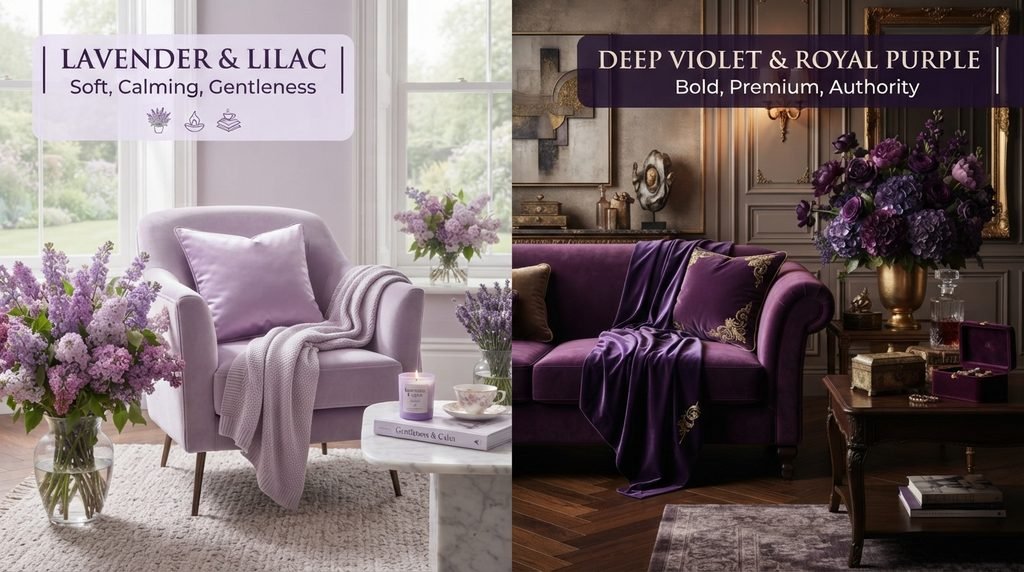
Designers often choose specific shades carefully, since even small changes can shift a message significantly.
Lavender and Lilac
Lavender and lilac are soft, muted purples often associated with gentleness and femininity. They’re commonly used in relaxing spaces, like spas or nurseries, because of their calming effect. These shades feel approachable rather than intense.
Unlike deeper purples, lavender rarely suggests power — it leans more toward softness and comfort.
Deep Violet and Royal Purple
Deep violet and royal purple carry much more intensity, often symbolizing luxury and authority. These shades are commonly used in formal branding or high-end product design. They feel bold, rich, and unmistakably premium.
This contrast between light and dark purple shows just how versatile the color can be depending on saturation.
9. Purple in Branding & Marketing
Purple is a popular choice in branding because it instantly suggests luxury, creativity, and uniqueness. It’s less common than colors like blue or red, which helps brands stand out. This makes purple color psychology especially useful for premium or imaginative products.
Companies often use purple specifically to differentiate themselves from more conventional competitors.
Purple in Luxury and Beauty Branding
Many luxury and beauty brands use purple to convey elegance and exclusivity. It suggests sophistication without feeling as aggressive as red or as corporate as blue. Cosmetic and skincare brands especially favor purple for this reason.
This branding choice taps directly into purple’s historical link to royalty and refinement.
Purple in Tech and Creative Industries
Purple is also common in tech and creative branding, where it signals innovation and imagination. Companies wanting to appear forward-thinking often choose purple to stand apart from traditional corporate colors. It suggests originality rather than convention.
This dual use — luxury and innovation — shows purple’s surprising versatility in marketing.
10. Purple in Fashion & Design
In fashion, purple is often chosen to make a bold yet elegant statement. It’s less common than black, white, or navy, which makes it feel special when worn. A purple outfit tends to stand out without feeling overly flashy.
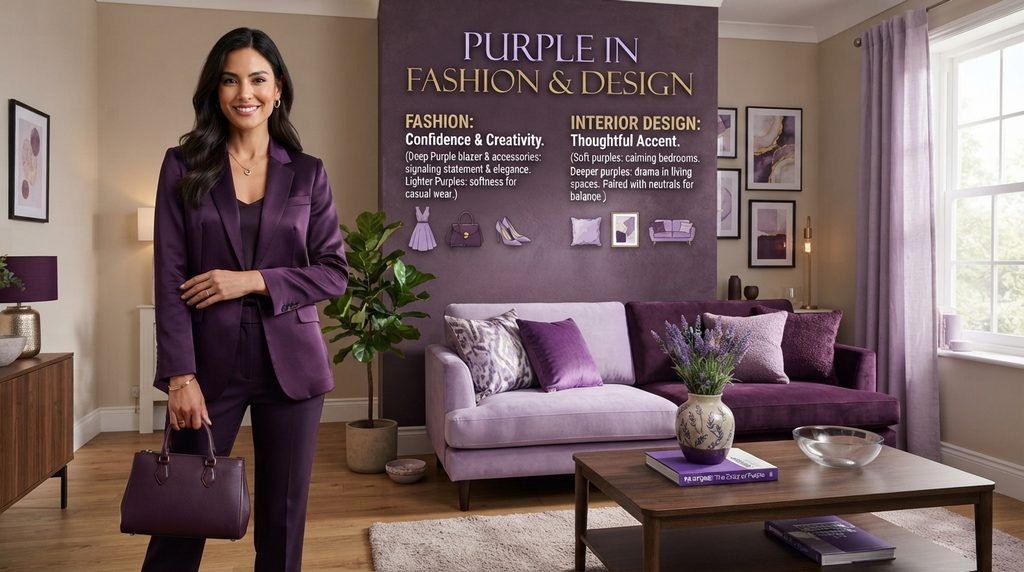
In interior design, purple is often used thoughtfully, since too much can feel overwhelming in everyday spaces.
Purple in Clothing and Accessories
A purple dress or blazer often signals confidence paired with creativity. Deep purple accessories, like handbags or shoes, can elevate an outfit’s formality. Lighter purples, on the other hand, often add softness to casual looks.
This flexibility makes purple a favorite for both formal occasions and everyday personal style.
Purple in Interior Design
In interiors, purple is often used as an accent color in cushions, art, or a feature wall. Soft purples create calming bedrooms, while deeper purples add drama to living spaces. Used carefully, it adds richness without overpowering a room.
Designers often pair purple with neutral tones to balance its intensity.
11. Purple and Personality
People drawn to purple often share certain personality traits, at least according to general color psychology patterns. This isn’t an exact science, but it does offer interesting insight into what does the color purple mean for someone’s inner style.
Color preference can reflect how someone likes to express their individuality.
Traits Associated with Purple Lovers
People who favor purple are often seen as imaginative, thoughtful, and a little unconventional. They tend to value creativity and originality over blending in. This preference often reflects someone who enjoys deep thinking and unique self-expression.
Such individuals may also be drawn to spirituality, art, or design in their personal or professional lives.
Purple in Personal Style Choices
Someone who frequently wears purple may be signaling confidence paired with individuality. It’s often chosen by people who want to stand out without appearing overly bold. Even small purple details, like jewelry or accessories, can reflect a thoughtful, expressive personality.
This makes purple a popular choice for those who value both elegance and originality.
12. Purple in Dreams
Dream interpretation isn’t scientific, but purple often appears as a meaningful symbol. In dreams, purple is frequently linked to spiritual awareness, transformation, or hidden emotions. This makes the meaning in dreams feel deeply personal.
The specific shade and setting within a dream can shift its interpreted meaning.
Common Interpretations of Purple in Dreams
Seeing purple in a dream may suggest a need for deeper self-reflection or spiritual growth. Some interpret it as a sign of creativity trying to surface in waking life. Others see it as a symbol of ambition or a desire for greater recognition.
Because purple blends calm and intensity, dream analysts often treat it as a sign of internal balance being sought.
13. Purple in Astrology, Tarot & Numerology
Purple holds notable symbolic weight in astrology and tarot, often tied to intuition and spiritual insight. It’s frequently associated with Pisces, a sign known for imagination and emotional depth. Purple is also linked to the planet Neptune, which governs dreams and intuition.
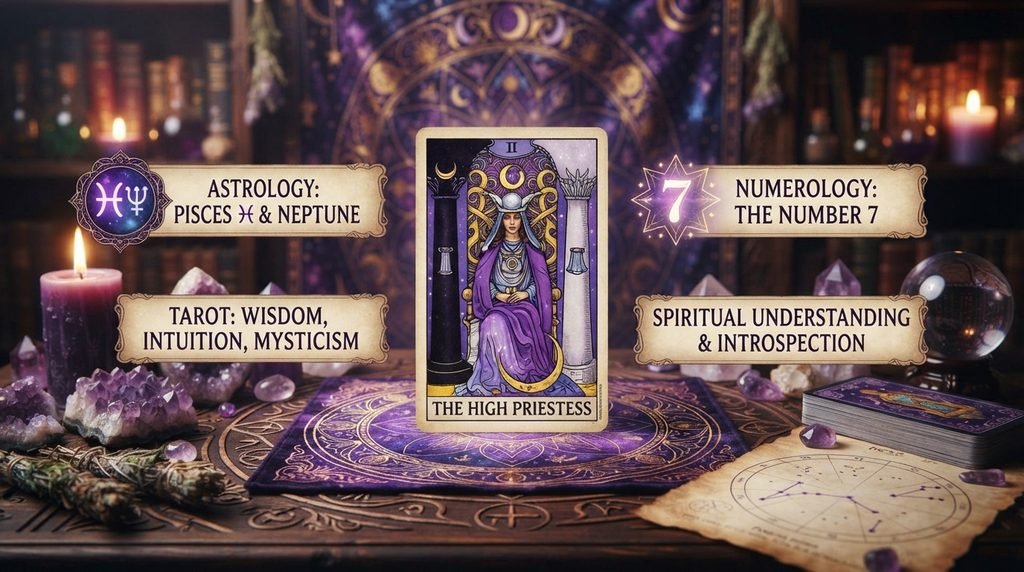
In tarot, purple often appears in cards representing wisdom, mysticism, or transformation. In numerology, purple is sometimes connected to the number 7, a number associated with introspection and spiritual understanding.
14. Interesting Facts & Trivia
Purple carries a surprising number of unique facts beyond its symbolism and psychology. These details make the color even more intriguing to explore.
- Ancient Tyrian purple dye required thousands of sea snails to produce a tiny amount.
- Purple was once so expensive that sumptuary laws restricted who could wear it.
- Purple is one of the rarest colors in nature compared to green or yellow.
- The first synthetic dye ever created, mauveine, was a shade of purple.
15. Frequently Asked Questions
What does the color purple mean?
Purple means royalty, creativity, spirituality, and mystery, blending both energy and calm into one color.
Why has purple historically been linked to royalty?
Purple dye was once extremely rare and expensive to produce, making it accessible only to the wealthy and powerful.
What does the color purple mean in branding?
In branding, purple often represents luxury, creativity, and innovation, helping brands feel premium or imaginative.
Is purple a calming color?
Yes, purple color psychology suggests it balances stimulation and calm, making it feel thoughtful rather than overwhelming.
What personality traits are linked to purple lovers?
People who love purple are often imaginative, individualistic, and drawn to creativity or spirituality.
What does the color purple mean in dreams?
Purple in dreams often reflects spiritual growth, hidden emotions, or a desire for deeper self-reflection.
Is purple associated with any zodiac sign?
Yes, purple is often linked to Pisces and the planet Neptune, both associated with intuition and imagination.
16. Conclusion
So, what does the color purple mean at the end of the day? It’s a color that blends royalty, spirituality, and creativity into a single hue. From ancient dyemakers crushing thousands of snails to modern luxury brands choosing it for elegance, purple has always suggested something special — a color that rewards curiosity rather than offering simple answers.