

Why White Color Meaning Matters: White surrounds everyday life more than people often notice. It fills hospital walls, wedding dresses, and fresh snowfall. It sits quietly in blank pages, clean sheets, and bright morning light.
The meaning of the color is often described as simple, but it carries real depth. It can point to purity, peace, and new beginnings. It can also point to emptiness, coldness, and even mourning in some cultures. That range makes white far more complex than it first appears.
This guide covers the full picture. You will learn what white symbolizes, how white color psychology shapes mood, and how cultures and religions read this shade. You will also see white in nature, history, branding, fashion, dreams, and astrology.
General White Color Meaning & Symbolism
White is the color of clarity and openness. It holds every color within it, yet shows none of them directly. That paradox gives white a quiet, almost neutral kind of power.

When people ask what white symbolizes, the answer often centers on purity. White also stands for simplicity, peace, and fresh starts. It feels clean, like a space ready to be filled.
Core Psychological Associations of White
The core meaning of the color white is tied to clarity and order. White feels light and uncluttered. It suggests a mind at rest and a space free of noise.
Most people connect white with a few main ideas:
- Purity and innocence
- Peace and calm
- Simplicity and cleanliness
- New beginnings and openness
Positive Meanings of White
At its best, white stands for honesty, clarity, and fresh potential. It helps people feel calm and focused. It also suggests a clean slate, free from past clutter or conflict.
White is often used where trust and cleanliness matter most. Hospitals, laboratories, and minimalist design all lean on it for this reason. In these settings, the meaning of white is sterile, safe, and clear.
Negative Meanings of White
White has a colder side too. It can suggest emptiness, isolation, or a lack of warmth. A room that is entirely white may feel sterile rather than calming.
In several cultures, white is also tied to mourning and loss. Too much white can feel stark or unfinished. The meaning of white depends heavily on context and surrounding tones.
What White Represents Overall
White represents a blank space full of possibility. It holds no fixed direction until something else is added to it. That openness is both its strength and its challenge.
This dual nature explains why white can feel hopeful in one setting and hollow in another. A soft ivory white feels warm, while a stark white feels clinical. Few colors shift mood so easily through such small changes in tone.
White Color Psychology: How the Color Affects Mind and Body
White color psychology looks at how this shade shapes thought and feeling. Researchers have studied it in offices, hospitals, and retail spaces. Some findings are well supported, while others remain more anecdotal.
What we can say is that white often creates a sense of space. It tends to clear visual clutter from a setting. Here is how it plays out.
White Color Psychology and Mood
White is often linked to feelings of calm and mental clarity. Many people find it easier to focus in a clean, white space. This is part of why minimalist offices and studios favor white walls.
White can also feel refreshing, almost like a reset. It is commonly used in spaces meant to feel light and unburdened, such as spas and galleries. Too much white without contrast, however, can start to feel flat or cold.
White and the Brain and Nervous System
Claims that white directly lowers stress hormones are not strongly proven. What is better supported is that white increases perceived brightness and openness in a room. This visual effect can indirectly support a calmer mood.
White also reflects nearly all visible light, making spaces feel brighter without extra lighting. This practical quality adds to its reputation as fresh and clean. For contrast, black leans toward heaviness, while white leans toward lightness.
Why Humans React Calmly to White
Human associations with white may connect to daylight, clean water, and snow. These natural elements often signal safety and clarity. Clear water, for instance, suggested purity long before modern filtration existed.
Over time, white also became linked to cleanliness through fabric, medicine, and hygiene practices. That cultural layering strengthens white’s association with safety and order today.
White Color Meaning in Different Cultures
White color meaning shifts dramatically depending on where you are in the world. A shade seen as joyful in one country can represent deep mourning in another. This makes white one of the most culturally varied colors to study.
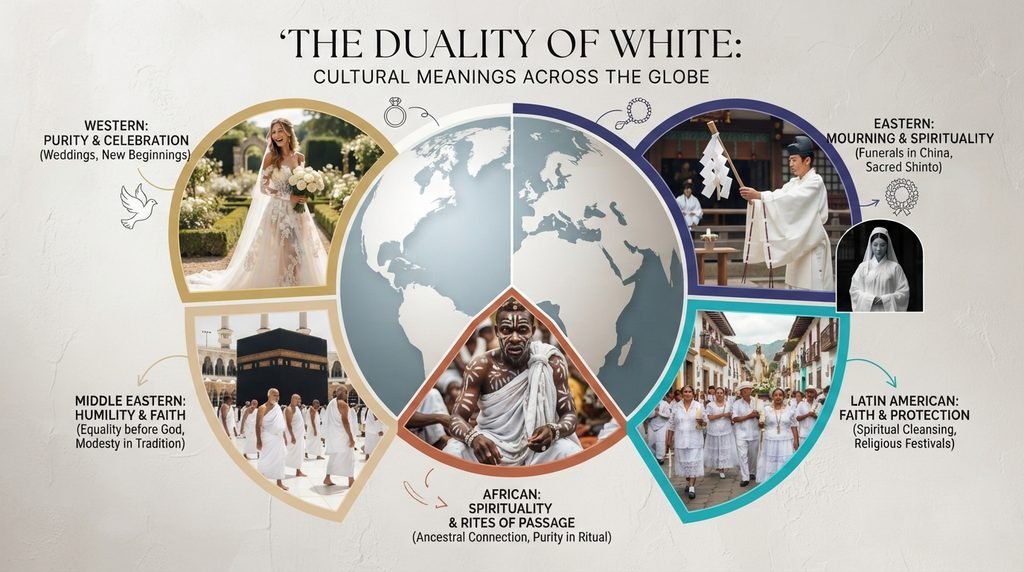
Below is a tour of how white is understood around the globe. Keep in mind every region holds many traditions, so these are broad patterns.
White Meaning in Western Culture
In Western countries, white is strongly tied to purity, weddings, and new beginnings. Brides commonly wear white gowns to symbolize innocence and a fresh start. White is also linked to peace, as seen in the white dove used as a global symbol.
White plays a practical role too, appearing in medical settings and minimalist design. It suggests cleanliness, order, and a sense of calm control.
White Meaning in Eastern Cultures
In many parts of Asia, white carries a very different weight than it does in the West. It is often connected to mourning, loss, and the spirit world rather than celebration.
- China: White is traditionally the color of mourning and funerals. It is avoided in festive contexts like weddings, where red is favored instead.
- Japan: White represents purity and the sacred, especially in Shinto rituals. At the same time, white is also worn at funerals, showing its dual role in both celebration and grief.
- India: White is linked to peace and simplicity, but it is also closely associated with mourning, particularly widowhood in traditional customs.
White Meaning in African Cultures
White holds varied meaning across Africa, shaped by many distinct traditions. In some West African cultures, white symbolizes purity, spirituality, and connection to ancestors. It is often worn during religious ceremonies and rites of passage.
In other communities, white chalk or powder is used in rituals to mark spiritual protection or transition. This shows how white can carry sacred weight beyond simple color symbolism.
White Meaning in Middle Eastern Cultures
In much of the Middle East, white represents purity, peace, and modesty. Traditional garments like the thobe or dishdasha are often white, reflecting simplicity and comfort in hot climates. White is also closely tied to religious practice.
During the Hajj pilgrimage in Islam, pilgrims wear simple white garments called ihram. This practice emphasizes equality and humility before faith, stripping away markers of wealth or status.
White Meaning in Latin American Cultures
In Latin America, white often represents purity, peace, and spiritual connection. It is worn during many religious festivals and ceremonies tied to Catholic tradition. White clothing is also common in rituals from syncretic faiths blending Indigenous and African spiritual practices.
White is additionally linked to cleansing rituals in some folk traditions. It is chosen specifically to represent a fresh spiritual start or protection from negative energy.
Cultural Contrasts in White Color Meaning
The sharpest contrast lies in weddings versus funerals. In the West, white celebrates new beginnings through marriage. In China and parts of India, white instead marks the end of life and mourning.
Another contrast is sacred versus secular use. In Japan, white carries deep spiritual weight tied to purity rituals. In Western retail and design, it is often chosen simply for its clean, modern look. This range shows how heavily white color meaning depends on cultural framing.
White Meaning in Religion & Spirituality
White plays a central role across many of the world’s religious traditions. It is widely used to represent purity, divinity, and spiritual transition. Its brightness naturally lends itself to ideas of the sacred.
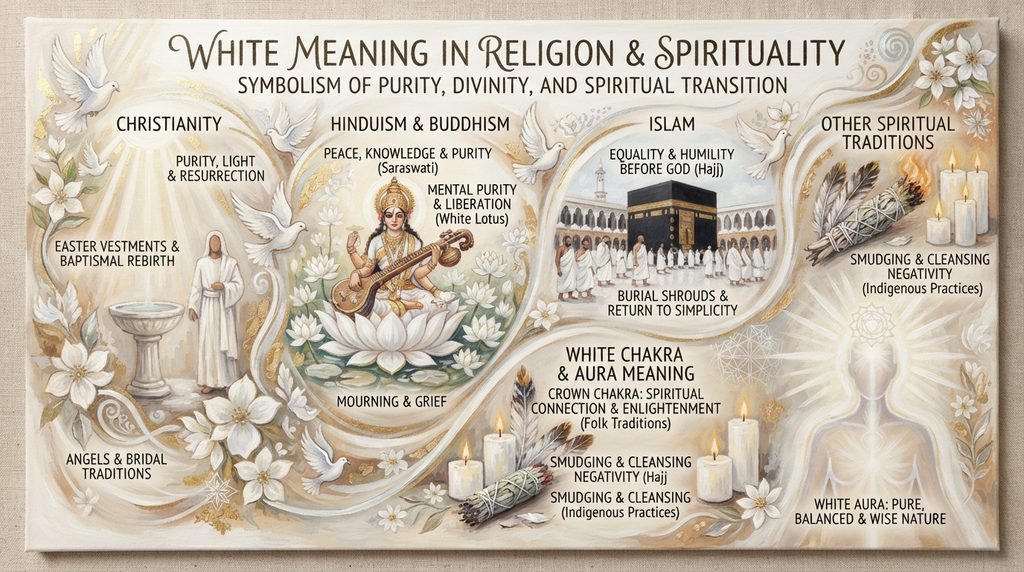
Here is what white symbolizes in several spiritual contexts.
White in Christianity
In Christian tradition, white represents purity, light, and resurrection. Priests often wear white vestments during Easter and other major celebrations. White is also closely tied to baptism, where it signals a spiritual rebirth and cleansing from sin.
Angels are frequently depicted in white, reinforcing the color’s association with holiness. Brides in Western Christian weddings traditionally wear white to represent purity before marriage.
White in Hinduism and Buddhism
In Hinduism, white is linked to peace, knowledge, and purity. It is associated with the goddess Saraswati, who represents wisdom and learning. White is also commonly worn during mourning periods in Hindu tradition, showing its dual role of purity and grief.
In Buddhism, white represents mental purity and liberation from attachment. The white lotus specifically symbolizes spiritual perfection and a calm, enlightened mind.
White in Islam
White holds strong significance in Islamic tradition, particularly through the practice of pilgrimage. Pilgrims performing Hajj wear simple white garments to symbolize equality and humility before God. This practice removes visible markers of wealth or social status.
White is also the preferred color for burial shrouds in Islamic tradition. It represents purity and a return to simplicity at the end of life.
White in Other Spiritual Traditions
In many folk and shamanic traditions, white is used in rituals meant to invite protection or spiritual clarity. White candles, for example, are common in various practices meant to encourage peace or new intentions.
White sage, used in some Indigenous smudging practices, is also tied to cleansing and spiritual clearing. These traditions treat white as a vehicle for removing negativity rather than simply representing it.
White Chakra and Aura Meaning
In chakra teaching, white is often linked to the crown chakra, located at the top of the head. This energy center represents spiritual connection, higher awareness, and enlightenment. A balanced crown chakra is said to bring a sense of unity and clarity.
In aura reading, a white aura is often associated with spiritual advancement and a pure, balanced nature. Believers describe such people as calm, wise, and deeply connected to higher understanding. These ideas come from spiritual belief rather than scientific evidence.
White Color Meaning in Nature
Nature offers white in striking, often temporary forms. Many white elements appear during specific seasons or moments, adding to their symbolic weight. This fleeting quality shapes much of white’s natural meaning.
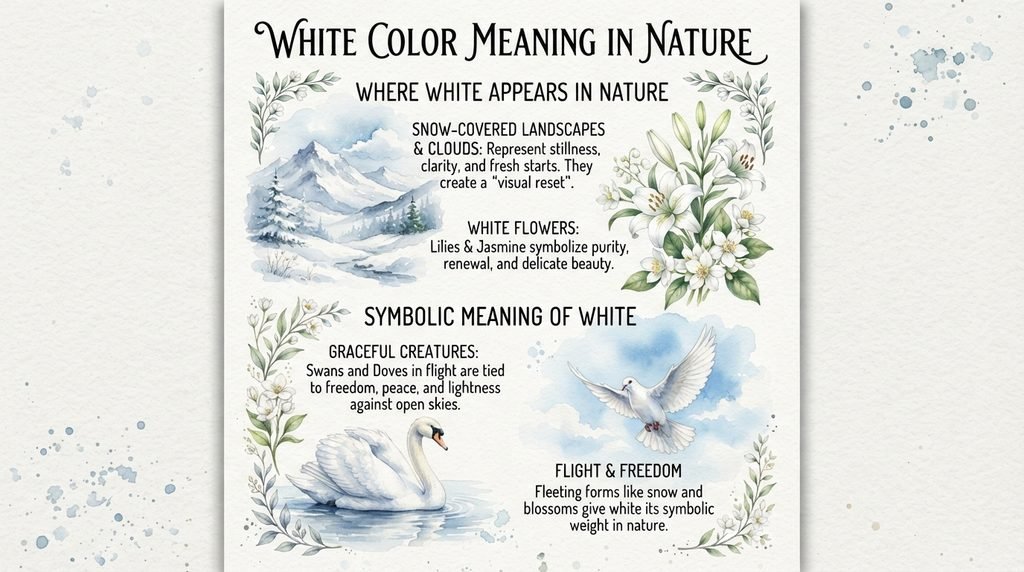
Looking at white in the wild helps explain why humans link it to purity and renewal.
Where White Appears in Nature
White shows up across snow, clouds, flowers, and certain animals. Many of these appearances are tied to clarity or transformation in the natural world. White also appears in bones, teeth, and bright daylight.
Here are a few familiar examples:
- Snow-covered landscapes
- White doves and swans
- Clouds and bright daylight
- White lilies and jasmine flowers
Symbolic Meaning of White from Nature
White in nature often signals stillness and transformation. Freshly fallen snow covers a landscape completely, creating a sense of a clean start. This visual reset is likely part of why white became linked to new beginnings.
White is also tied to flight and freedom through birds like doves and swans. Their graceful movement against open skies reinforces white’s association with peace and lightness.
White Color Meaning in History
White has a long and layered history across art, power, and daily life. Its meaning has shifted depending on available materials and cultural needs. Tracing white through time reveals its surprising range of uses.
Historical Significance of White
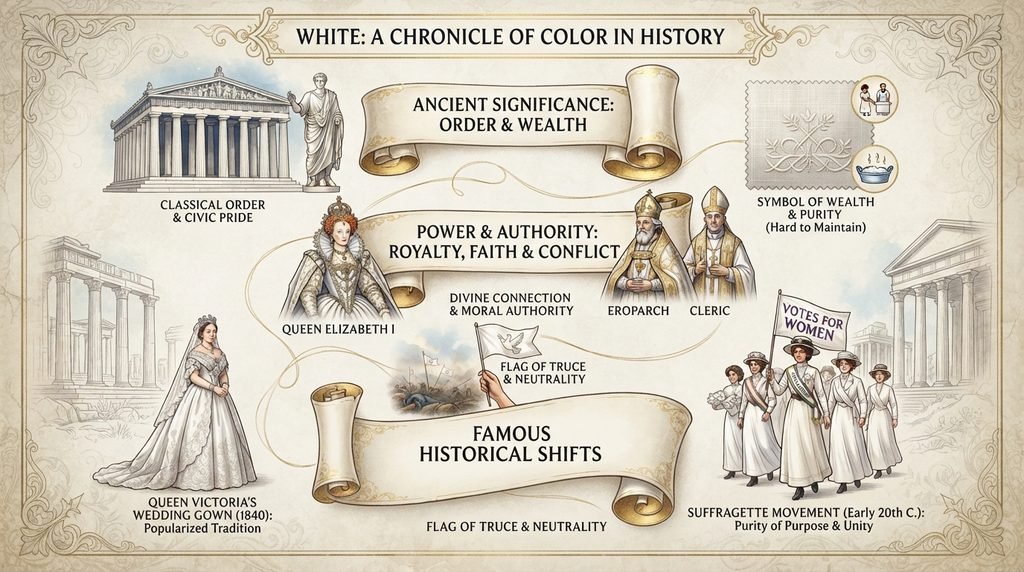
Ancient civilizations often used white marble and plaster in architecture and sculpture. Greek and Roman structures frequently relied on white stone, partly due to availability and partly for its clean, dignified appearance. White became associated with order and civic pride.
White fabric was also historically difficult to keep clean, which made it a marker of wealth. Only those who could afford servants or frequent washing could maintain bright white clothing.
White, Royalty, War, and Class
White has long signaled status and formality in various societies. European royalty and clergy often wore white to represent moral authority and divine connection. White flags, meanwhile, became a universal symbol of surrender and truce during conflict.
In modern politics, white has also been used to represent neutrality and peace negotiations. This practical use carries forward white’s long association with calm resolution rather than conflict.
Famous Historical Shifts in White
Queen Victoria’s choice to wear a white wedding gown in 1840 helped popularize the tradition across Western culture. Before this, brides often wore their best dress in any color, not specifically white. This single historical choice reshaped wedding customs for generations.
White also played a major role in the civil rights movement through the Suffragette campaign, where white clothing symbolized purity of purpose and unity among activists. This shows how white can carry strong social and political weight beyond personal style.
Shades of White and Their Meanings
Not all whites feel identical. A warm ivory feels soft and inviting, while a stark white feels clinical and sharp. These subtle shifts change the entire mood white creates.
Here are the main families of white and what each tends to communicate.
Warm White Shades
Warm whites carry a soft undertone that feels cozy and inviting. They suggest comfort rather than coldness. They are common in home interiors and relaxed design spaces.
- Ivory: warmth, elegance, and timeless comfort
- Cream: softness and quiet sophistication
- Eggshell: gentle neutrality and calm
Cool and Stark White Shades
Cool whites feel crisp and clean, often used to suggest precision and modernity. They can feel clinical if overused without warm accents. They are popular in medical and high-tech design.
- Pure white: clarity, precision, and simplicity
- Bright white: freshness and sharp focus
- Arctic white: coolness and clean minimalism
Off-White and Muted Shades
Muted whites blend softness with subtle texture or tint. They feel grounded rather than stark. They suit relaxed, natural design styles.
- Bone white: understated elegance
- Linen white: natural simplicity and calm
- Pearl white: soft luxury and gentle shine
White Color Meaning in Branding & Marketing
White is a strategic choice for brands seeking simplicity and trust. It creates visual breathing room in a crowded market. Choosing white sends a specific, often premium signal to consumers.
Let’s look at why companies rely on white and what it communicates.
Why Brands Use White in Logos
White suggests cleanliness, simplicity, and modern sophistication. It is often used as negative space to make other design elements stand out. Many tech and lifestyle brands use white to feel minimal and premium.
White also pairs well with nearly every other color, making it a flexible design choice. This versatility is part of why white color psychology appears so often in branding strategy.
Famous Brands That Use White
Several recognizable brands rely heavily on white in their identity. The color helps them feel clean, modern, and trustworthy. A few examples include:
- Apple
- Tesla
- Adidas
- Uniqlo
- Nike
What White Communicates to Consumers
White tells consumers a brand is simple, honest, and high quality. It suggests confidence through restraint rather than bold color claims. That is why it works well for tech, wellness, and luxury brands.
Brands wanting warmth or urgency typically lean toward red or other bold colors instead.
White Color Meaning in Fashion & Design
White is a timeless choice in both clothing and interior spaces. It can feel formal, casual, or spiritual depending on context. Its flexibility makes it a staple across nearly every design approach.

The key is balancing white with texture and contrast to avoid flatness.
What Wearing White Signifies
Wearing white often signals cleanliness, confidence, and simplicity. It can feel formal in tailored pieces or relaxed in summer fabrics. Many people choose white for fresh starts, from weddings to new seasons.
White clothing also requires more care to maintain, which can subtly suggest attentiveness or status. This practical element still echoes its historical ties to wealth and upkeep.
White Meaning in Interior Design
In interiors, white creates a sense of space and light. It works well in small rooms, making them feel larger and brighter. White walls also serve as a blank canvas for art, furniture, and color accents.
Too much unbroken white can feel sterile or cold without texture. Designers often balance it with wood tones, soft fabrics, or greenery to add warmth.
Style Tips for Using White
White is a flexible color to build around in both fashion and decor. A little texture or contrast keeps it from feeling flat. Try these simple ideas:
- Pair white with black for a bold, classic contrast
- Mix textures like linen and cotton for depth
- Use warm white tones in bedrooms for a cozy feel
- Add greenery or wood accents to soften stark white spaces
White Color Meaning and Personality
Many people feel a strong pull toward white without fully knowing why. Color preference can offer a light, fun glimpse into personality traits. This is not a scientific test, but it remains a popular way to reflect on personal style.
Personality Traits of People Who Love White
People who love white are often described as organized and clear-minded. They tend to value simplicity and calm over clutter. They may also appreciate precision and fresh starts.
Common traits linked to white lovers include:
- Clarity and focus
- A preference for order
- Honesty and directness
- An appreciation for minimalism
What Choosing White as a Favorite Color Reveals
A favorite color of white may suggest someone who values peace and mental clarity. They may prefer clean, uncomplicated environments over busy ones. They often feel most comfortable when things are organized.
It can also point to a desire for fresh starts and personal growth. White lovers may enjoy letting go of excess rather than holding onto clutter. That pursuit of clarity is part of white’s quiet appeal.
White Color Meaning in Dreams
Dream interpretations are personal, and no single meaning applies to everyone. Still, white often appears when the mind is processing change or clarity. It can show up as light, clothing, or open spaces.
Here are common ways people read white in dreams.
Positive Meanings of White in Dreams
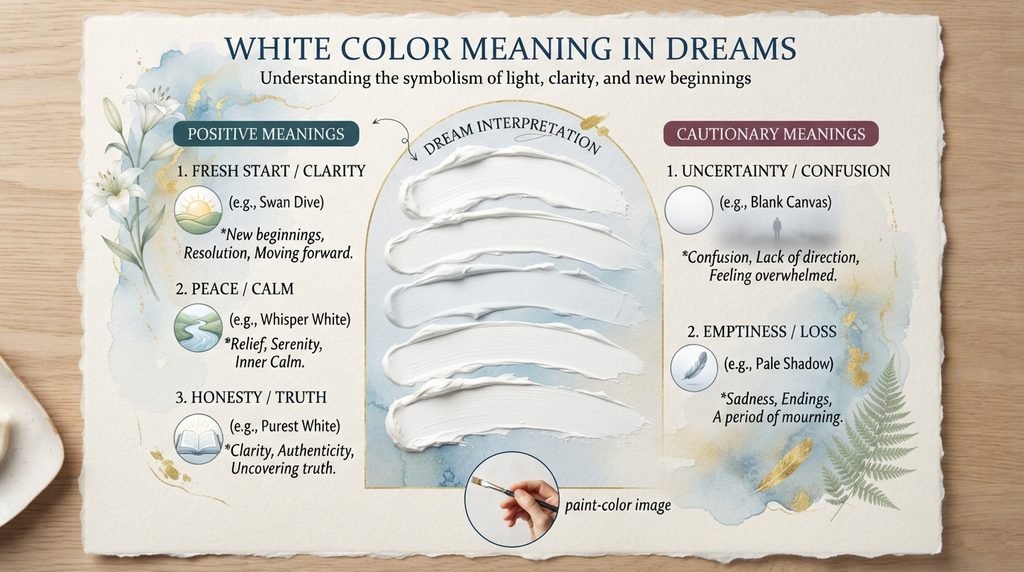
White can point to peace, clarity, or a fresh start. A bright white light or clean white room may reflect a sense of relief or resolution. It can suggest you are ready to move forward from a difficult period.
Some people see white in dreams as a sign of honesty. It may hint that truth is becoming clearer in a situation you have been uncertain about.
Cautionary Meanings of White in Dreams
White can also point to emptiness or unresolved feelings. A dream filled with blank white space might suggest confusion or a lack of direction. It may be your mind’s way of asking for more clarity before moving forward.
In some interpretations, white can also relate to loss or endings, echoing its mourning symbolism in several cultures. Pay attention to how the dream made you feel.
White Color Meaning in Astrology, Tarot & Numerology
White appears in several mystical systems tied to clarity and spiritual connection. It is linked to purity, new beginnings, and higher awareness. Keep in mind these are belief-based traditions, and sources may vary.
White and Zodiac Signs
White is often linked to Cancer and Pisces, both known for emotional depth and intuition. Cancer’s connection to the moon pairs naturally with white’s soft glow. Virgo is sometimes included too, given its association with purity and order.
These associations tie white closely to themes of clarity and emotional sensitivity across astrology.
White in Tarot Symbolism
White appears in tarot art tied to purity, truth, and new beginnings. The Fool card, representing fresh starts and open possibility, often features white tones. It suggests innocence stepping into the unknown.
White flowers and bright backgrounds also appear on cards related to clarity and spiritual insight. In tarot, white often signals a clean slate or renewed purpose.
White in Numerology
Numerology does not have one universally agreed color system. Some sources link white to the number 9, associated with completion and spiritual wisdom. Others connect it to the number 1, tied to new beginnings and fresh starts.
Because sources differ, treat these links as a matter of personal interpretation.
Interesting Facts & Trivia About the Meaning of White
White carries several surprising stories tied to science and culture. These facts highlight how much depth this seemingly simple color holds.
Surprising Science Facts About White
White is not a single wavelength of light but a combination of all visible colors seen together. This is why passing white light through a prism separates it into a full rainbow. White snow appears white because its many ice crystals scatter all light wavelengths equally.
Polar bears have black skin beneath their white fur, which helps absorb heat from sunlight. Their fur appears white due to how it scatters light, not because of white pigment itself.
Surprising Cultural Facts About White
In ancient Rome, togas worn by candidates for public office were intentionally whitened, which is where the word “candidate” originates from a term meaning “white-robed.” This links white directly to ideas of honesty and public trust. The historical trace still echoes in how we view candidates today.
White has also long been associated with surrender in warfare through the white flag. This use is so widespread that it functions as a near-universal signal across unrelated cultures and conflicts.
Frequently Asked Questions About White Color Meaning
These are common questions people search for about white. Each answer stays short and clear.
What does the color white mean spiritually?
Spiritually, white represents purity, enlightenment, and connection to the divine. It is linked to the crown chakra in many spiritual traditions. It encourages clarity and release from mental clutter.
What does white symbolize in general?
White symbolizes purity, peace, simplicity, and new beginnings. It can also suggest emptiness or mourning in certain cultures. Its exact meaning shifts with context and tradition.
What is white color psychology in simple terms?
White color psychology suggests this shade feels clean and mentally clarifying. It can support focus and a sense of openness. Too much unbroken white, however, can feel cold or sterile.
Why do brands use white in their logos?
Brands use white to feel simple, modern, and trustworthy. It creates visual space that makes other design elements stand out. It works especially well for tech, wellness, and luxury products.
Is white always associated with purity?
In Western cultures, white is strongly tied to purity and weddings. In several Asian cultures, white is instead linked to mourning and funerals. Its meaning depends heavily on cultural context.
What does white mean in a dream?
White in a dream often points to clarity, peace, or a fresh start. It can also suggest emptiness or unresolved feelings depending on the dream’s tone. The surrounding details and your emotions matter most.
Conclusion:
White color meaning stretches far beyond simple purity. It carries peace and emptiness, celebration and mourning, often shifting entirely based on culture. Few colors hold such contrasting weight while still appearing so plain on the surface.
From ancient marble temples to modern minimalist design, white has always represented a kind of blank potential. Its quiet strength lies in how much meaning it can hold without saying much at all. The next time you notice white around you, consider what story it might be telling in that particular space.
[…] plays a specific, often modern role in spiritual symbolism compared to older colors like white or red. It is closely tied to intuition and higher perception in many belief systems. Its placement […]
[…] plays a gentler, less central role in religious symbolism compared to colors like red or white. Still, several traditions use it to express specific spiritual ideas. Its soft tone often […]
[…] generally symbolizes balance, neutrality, and restraint. It sits exactly between black and white, which gives it a natural association with compromise, moderation, and the middle ground between […]
[…] is a soft, sandy neutral that sits between white and brown. It feels warm, calm, and quietly confident. The beige color meaning is tied to […]
[…] is a cool, shiny shade that sits between gray and white. It feels sleek, modern, and quietly elegant. The silver color meaning is tied to reflection, […]