
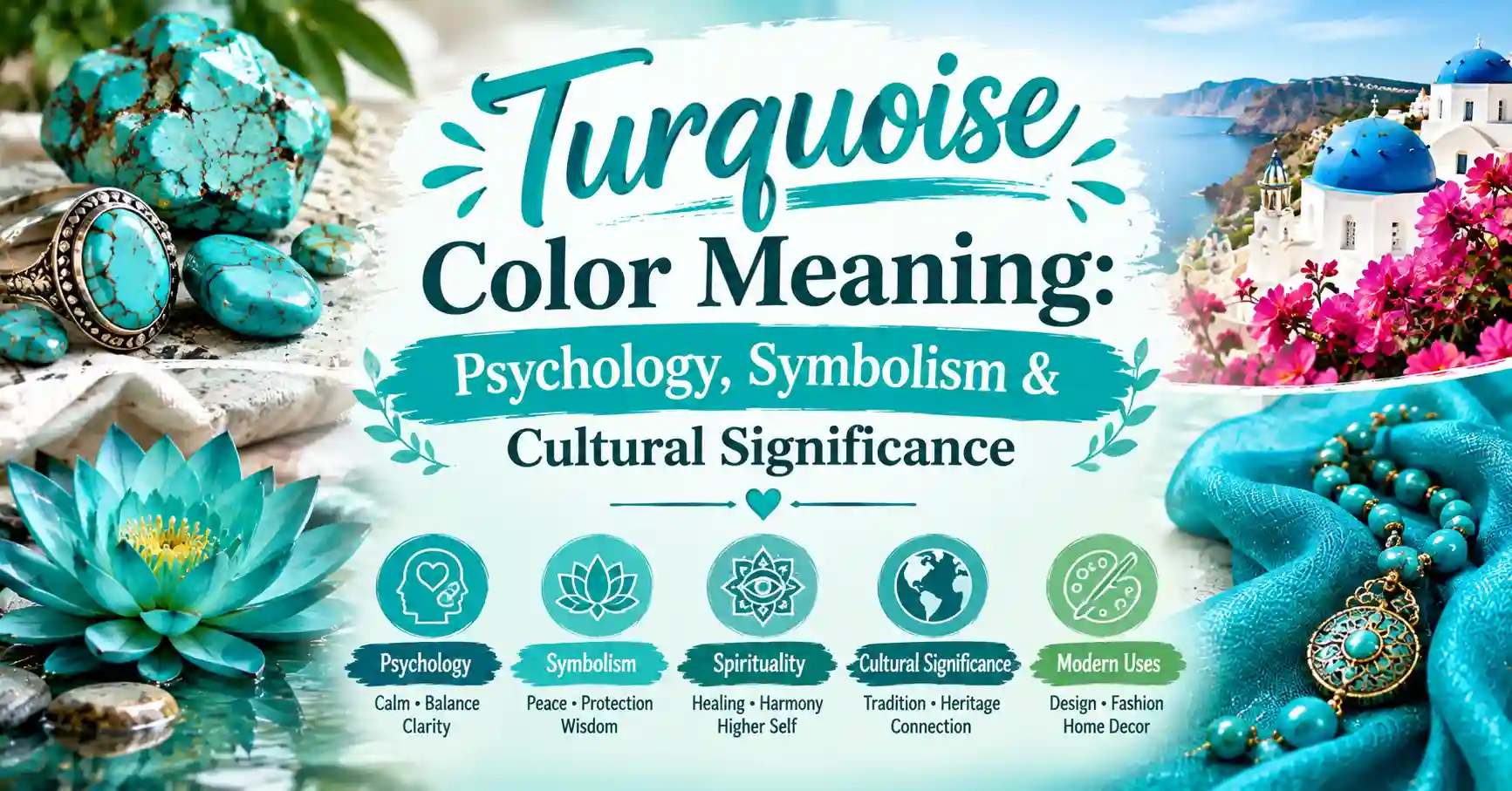

1. Introduction
Turquoise is a bright shade that sits between blue and green. It looks like tropical water on a sunny day. The turquoise color meaning is tied to calm, clarity, and gentle energy.
You see turquoise in ocean lagoons, ancient jewelry, and cheerful modern design. It feels fresh and a little bit magical. It also feels friendly and open. This article explores the full turquoise color meaning, from psychology and culture to history and branding. By the end, you’ll see why this lively shade has charmed people for thousands of years.
2. General Meaning & Symbolism
Turquoise blends the peace of blue with the growth of green. It takes calm from one and renewal from the other. That mix shapes the turquoise color meaning in every setting where it appears.

Most people link turquoise with serenity, clear thinking, and protection. It suggests fresh air and open water. It also carries a playful spark that deeper blues often lack.
Turquoise as a Symbol of Calm and Clarity
Turquoise is one of the most refreshing colors in the spectrum. Its cool tone settles the mind. Its brightness keeps the mood light.
This is part of what turquoise symbolizes in daily life. It points to clear thoughts and open communication. People often choose it when they want peace without dullness.
Turquoise as a Symbol of Protection and Good Fortune
Turquoise has long been seen as a protective color. Many cultures wear turquoise stones as charms against harm. They believe the shade brings luck and safe travel.
This idea has lasted for centuries. A turquoise ring or pendant is often treated as more than jewelry. It becomes a small symbol of care and hope.
3. Psychology of Turquoise
Turquoise color psychology focuses on calm, balance, and emotional ease. It mixes the steadiness of blue with the freshness of green. The result is a color that soothes the mind while still lifting the mood.
Because turquoise feels like water, it often brings a sense of relief. It reminds people of cool breezes and open skies. Many designers use it to create a clean, friendly feeling.
Turquoise and Emotional Balance
Turquoise helps steady emotions. It isn’t as heavy as navy or as sharp as bright green. Instead, it feels light and balanced.
That is why it appears in spaces made for rest and healing. Spas, clinics, and bathrooms often use it. It supports a quiet, hopeful mood.
Turquoise and Communication
Turquoise is also tied to open and honest speech. It feels clear, like fresh water. Many people link it with creative expression and easy conversation.
In some spiritual systems, it relates to the throat area, which stands for speaking truth. At the same time, too much turquoise can feel cool or distant. It works best with warm accents.
4. Turquoise in Different Cultures
Colors carry different meanings around the world. Turquoise is no exception. The turquoise color meaning shifts with history, trade, and tradition. Looking at several regions shows how rich this shade really is.

In some places, turquoise is a sacred stone. In others, it stands for travel, sea, and style. Together, these views make turquoise a truly global color.
Turquoise in Western Cultures
In Western countries, turquoise is linked to summer, beaches, and a relaxed life. It appears often in retro design and coastal décor. It also suggests creativity and a free spirit.
Turquoise is the traditional birthstone for December. It is also tied to friendship and good wishes. In everyday speech, people use it to describe bright, tropical water.
Turquoise in Eastern and Indigenous Cultures
In Persia and the wider Middle East, turquoise domes decorate many grand buildings. The color is tied to beauty, faith, and protection. In Tibet, turquoise stones are treasured and often worn as charms.
Many Native American peoples, including the Navajo and Zuni, also hold turquoise sacred. They use it in jewelry, art, and ceremony. These examples show that the meaning of turquoise often grows from both land and legend.
5. Turquoise in Religion & Spirituality
Turquoise carries a calm spiritual glow. Its sky-and-water shade suggests peace, healing, and a link to higher realms. For this reason, the turquoise color meaning appears in sacred stones, art, and quiet rituals.
Many traditions treat turquoise as a stone of protection. It is believed to guard the wearer and bring balance. It feels spiritual without feeling heavy.
Turquoise as a Sacred Stone
In several Native American traditions, turquoise connects the earth and the sky. It is used in prayer items, ceremonies, and jewelry. Many see it as a gift that brings health and safety.
In Tibetan practice, turquoise is often placed on altars and worn as a charm. It stands for good fortune and a clear mind. These uses show deep respect for the stone and its color.
Turquoise and Healing Energy
In energy-based spiritual systems, turquoise is linked to calm, healing, and honest expression. It is often tied to the throat or heart center. Practitioners use it to support peace and open communication.
These views are symbolic rather than scientific. Still, they add a thoughtful layer to what turquoise symbolizes in spiritual life. The color invites calm and care.
6. Turquoise in Nature
Turquoise appears in nature as a glowing, watery shade. It shows up in oceans, lakes, minerals, and birds. The turquoise color meaning feels natural because it comes straight from clear water and sunlight.

Nature often uses turquoise for beauty and display. It also paints some of the most peaceful scenes on Earth. These sights add a real-world layer to turquoise color meaning.
Turquoise in Water and Landscapes
Shallow tropical seas glow turquoise when sunlight hits white sand. Glacier-fed lakes can also shine in this color. The effect looks bright and almost unreal.
These places feel calm and open. They invite people to slow down and breathe. That relaxed feeling is a key part of turquoise color psychology.
Turquoise in Animals and Minerals
Some birds, such as kingfishers and certain parrots, show flashes of turquoise. Peacocks also display turquoise tones in their feathers. These shades help attract mates and stand out in leafy settings.
The turquoise gemstone forms when water moves through rock containing copper and aluminum. This slow process creates the famous blue-green stone. It shows how nature can shape beauty over time.
7. Turquoise in History
Turquoise has a long and fascinating past. People have mined and worn the stone for thousands of years. The color name even comes from it. The word is linked to the French term for “Turkish,” since the stone reached Europe through Turkish trade routes.
Looking at history makes the turquoise color meaning clearer. It shows how a precious stone became a symbol of protection and beauty.
Turquoise in Ancient Use
Ancient Egyptians prized turquoise and mined it in the Sinai region. They used it in royal jewelry and burial treasures. The famous golden mask of Tutankhamun includes turquoise-colored inlays.
Ancient Persians and Aztec artists also valued the stone. They set it in masks, crowns, and sacred objects. It was treasured as a gift of the earth and sky.
Turquoise in Modern Times
In recent centuries, turquoise became a favorite in jewelry and design. It was central to Southwestern American silverwork. In the twentieth century, it also filled retro kitchens and mid-century homes.
One famous example is the pale turquoise used by Tiffany & Co. This shade became a symbol of elegance and gifting. It shows how turquoise moved from ancient altars to modern style.
[Image caption: Ancient turquoise jewelry and tropical lagoons show why the color has long symbolized protection and calm.]
8. Shades of Turquoise and Their Meanings
Not all turquoises look alike. Some lean toward blue. Others lean toward green or gray. These small changes shift the turquoise color meaning in subtle ways.
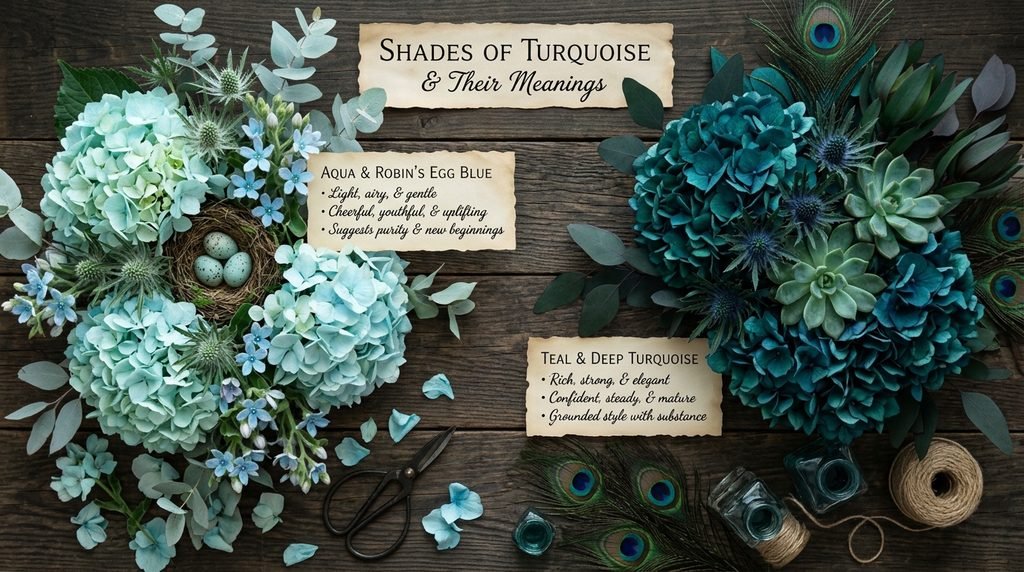
Designers choose shades with care because tone shapes mood. A slight shift can move turquoise from playful to calm.
Aqua and Robin’s Egg Blue
Aqua and robin’s egg blue are light and airy. They feel fresh, cheerful, and gentle. These shades suit nurseries, summer fashion, and soft branding.
They suggest purity and new beginnings. They also feel youthful and kind. Many people find them uplifting.
Teal and Deep Turquoise
Teal and deep turquoise are richer and stronger. They feel elegant, steady, and mature. These tones work well in luxury design and bold interiors.
They keep turquoise’s calm but add depth. They feel confident and grounded. That makes them useful when you want style with substance.
9. Turquoise in Branding & Marketing
Brands use turquoise to signal freshness, trust, and creativity. It feels friendly and modern. It also stands out without feeling harsh. Turquoise color psychology helps companies send a clear message of clean energy.
The turquoise color meaning works well for travel, wellness, and tech brands. It tells customers the product is calm, clear, and easy to use.
Turquoise in Travel and Wellness Branding
Travel, resort, and spa brands often use turquoise. The color reminds people of warm seas and relaxed days. It makes a place feel inviting.
Wellness brands use it to suggest cleanliness and calm. Customers read it as safe and refreshing. That message builds trust quickly.
Turquoise in Tech and Lifestyle Branding
Some tech and lifestyle brands use turquoise to look creative and open. It feels modern without feeling cold. It also stands out on screens.
Gift and jewelry brands use it for a special feeling. A turquoise box can signal care and celebration. This shows how flexible the shade really is.
10. Turquoise in Fashion & Design
Turquoise is a favorite in fashion and design because it adds color without heaviness. It works for summer outfits, jewelry, and bold accents. It brings a cheerful, creative feel.
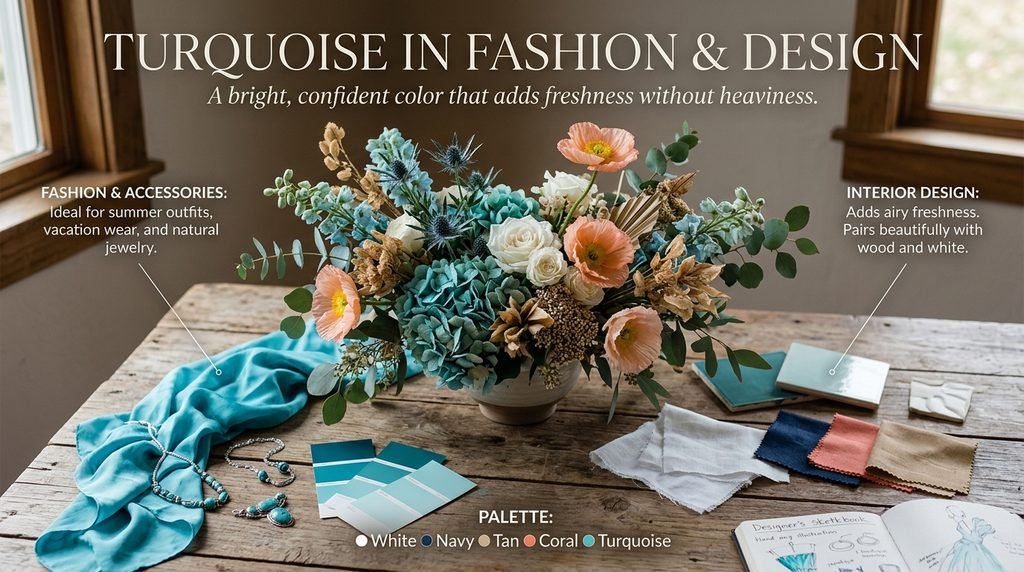
In interiors, turquoise adds freshness and life. It works well in both small and large spaces.
Turquoise in Clothing and Accessories
A turquoise dress or scarf looks bright and confident. It pairs well with white, navy, tan, and coral. Turquoise jewelry suits many skin tones and styles.
Many people choose it for vacations and casual events. It feels fun but still polished. Even a small turquoise accent can lift a simple look.
Turquoise in Interior Design
In homes, turquoise appears in accent walls, pillows, tiles, and art. It makes rooms feel airy and fresh. It also pairs nicely with wood and white.
Use deeper teal for a cozy, rich space. Use lighter aqua for a bright, beachy mood. A little goes a long way.
11. Turquoise and Personality
People often link color choices with personality, though this is not an exact science. Still, the turquoise color meaning offers helpful clues about those who love it. It usually points to a creative, open, and balanced nature.

Turquoise lovers are often described as friendly and independent. They like fresh ideas and calm spaces. Their style is lively but gentle.
Traits Associated with Turquoise Lovers
People who love turquoise are often seen as creative, thoughtful, and expressive. They value honesty and clear communication. They may also be curious and open to new experiences.
Many have a warm, easygoing charm. Others often feel comfortable around them.
Turquoise in Personal Style Choices
Someone who wears turquoise may want to look fresh and approachable. It signals confidence without being loud. It also suggests a love of art and nature.
Even small touches, like a turquoise ring or bag, can show this side. The choice says, “I value openness.” That message is soft but clear.
12. Turquoise in Dreams
Dream meanings are personal and not scientific. Still, many people enjoy exploring color symbols. Turquoise often appears in dreams as clear, calming water or a bright stone.
It usually points to healing, clarity, or emotional peace. The mood of the dream matters a great deal.
Common Interpretations of Turquoise in Dreams
Dreaming of turquoise may suggest a need for calm or fresh communication. Some people see it as a sign of healing after a hard time. Others read it as a message to speak honestly.
Clear turquoise water often feels hopeful. Murky or stormy water may point to worry. In both cases, the turquoise meaning in dreams invites quiet reflection.
13. Turquoise in Astrology, Tarot & Numerology
Turquoise has a gentle place in astrology and tarot. It connects to protection, healing, and honest expression. Because it blends blue and green, it fits well with balanced symbols.
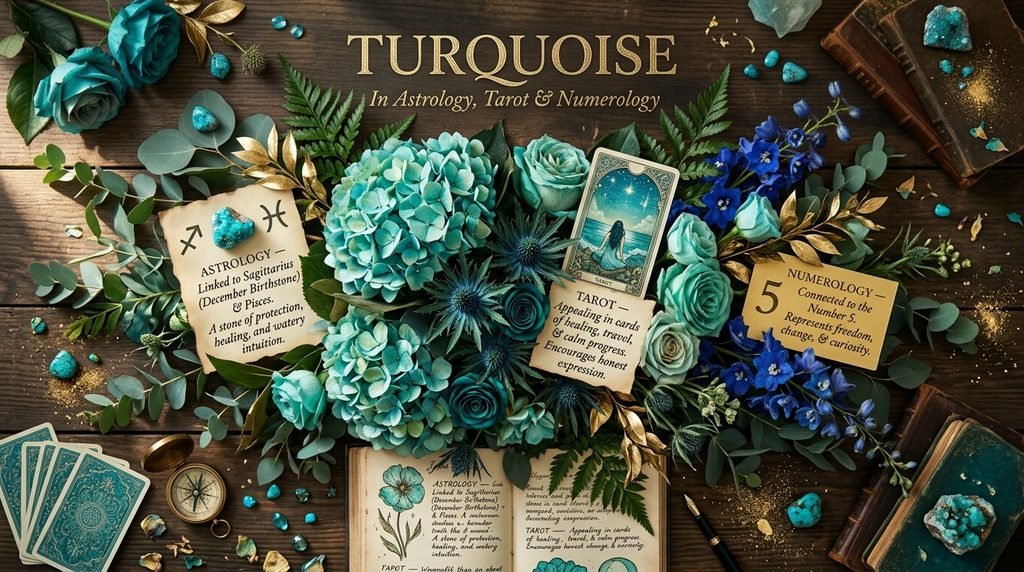
Interpretations vary, so these ideas are best seen as symbolic rather than fixed rules. They add another layer to the turquoise color meaning.
In astrology, turquoise is often linked to Sagittarius, since it is a December birthstone. It is also tied to Pisces for its watery feel. In tarot, soft blue-green tones appear in cards about healing, travel, and calm progress. In numerology, turquoise is sometimes connected to the number 5, which stands for freedom, change, and curiosity.
14. Interesting Facts & Trivia
Turquoise has many fun facts that go beyond its looks. These details show how deeply the shade is part of human life.
- The word “turquoise” comes from the French term for “Turkish.”
- Turquoise is one of the oldest gemstones used in jewelry.
- It is the traditional birthstone for December.
- Ancient Egyptians mined turquoise in the Sinai region.
- Tiffany & Co. made its pale turquoise-blue box famous around the world.
15. Frequently Asked Questions
What is the turquoise color meaning?
The turquoise color meaning centers on calm, clarity, protection, and creative energy.
What does turquoise symbolize?
Turquoise symbolizes healing, good fortune, open communication, and fresh beginnings.
Is turquoise a calming color?
Yes. Turquoise color psychology shows it feels cool, clear, and soothing.
What is the difference between turquoise and teal?
Turquoise is brighter and lighter, while teal is deeper and more muted.
What does turquoise mean spiritually?
It is linked to protection, healing, and honest expression.
What personality traits go with turquoise lovers?
They are often creative, calm, expressive, and open-minded.
What does turquoise mean in dreams?
It often points to healing, clarity, or a need for peaceful communication.
16. Conclusion
Turquoise is a color of fresh, quiet energy. It blends calm, protection, and creativity into one bright shade. The turquoise color meaning has stayed strong across ancient jewelry, tropical seas, and modern design.
Understanding turquoise color meaning explains why people turn to it for peace and clarity. It is not harsh, yet it always feels alive. In the end, turquoise shows that calm and joy can live in the same color.
[…] Read More: Turquoise Color Meaning: Psychology, Symbolism & Cultural Significance […]