

Introduction
Beige is a soft, sandy neutral that sits between white and brown. It feels warm, calm, and quietly confident. The beige color meaning is tied to simplicity, comfort, and balance.
Many people call beige plain. That misses the point. Beige is the color of sand, linen, and natural wool. It gives other colors room to shine while still holding its own. This article explores the full beige color meaning, from psychology and culture to history and branding. By the end, you’ll see why this gentle shade has such lasting appeal.
General Meaning & Symbolism
Beige is a muted blend of cream and light brown. It has none of the loudness of red or the drama of black. That quiet nature shapes the beige color meaning in every setting where it appears.
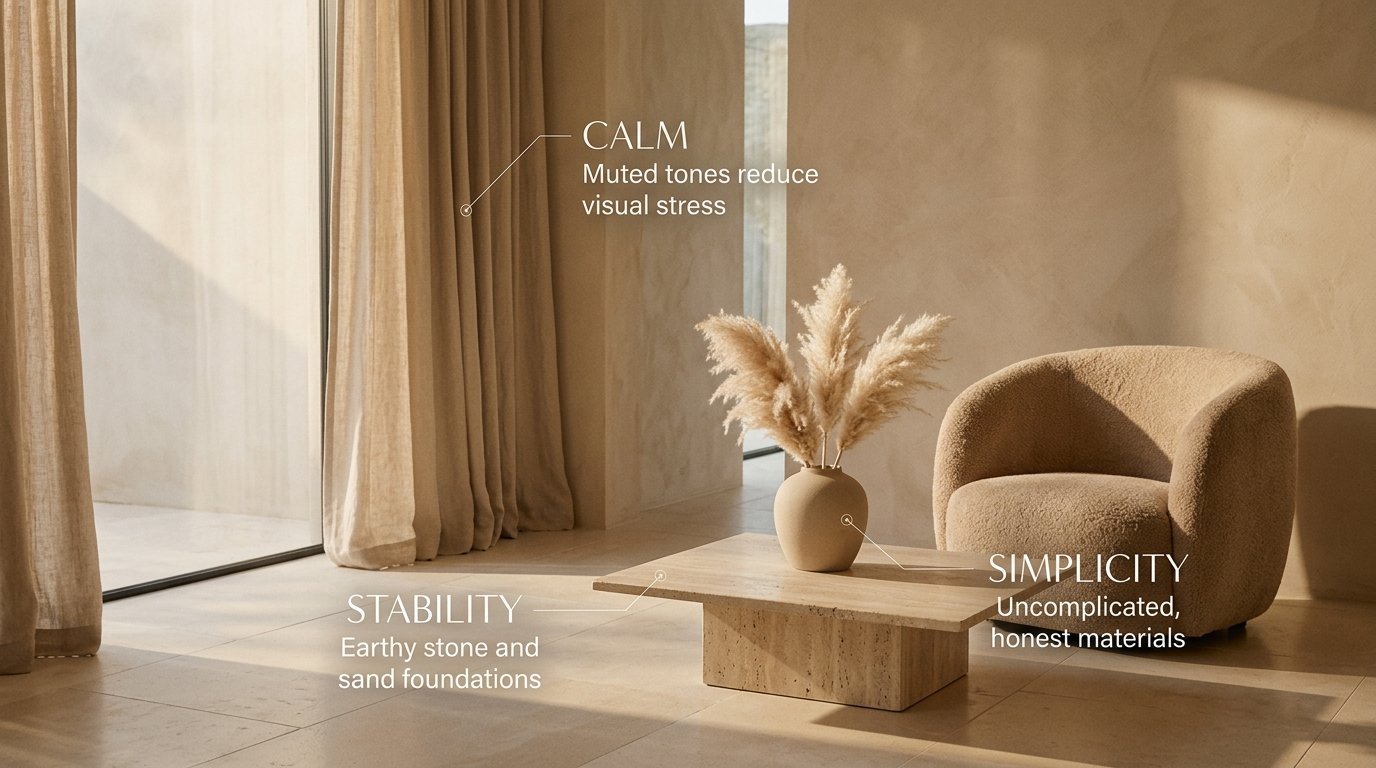
Most people link beige with calm, reliability, and modesty. It suggests a life that feels steady and uncomplicated. It also carries a sense of warmth, like a cozy room on a slow afternoon.
Beige as a Symbol of Simplicity
Beige stands for keeping things simple. It doesn’t need decoration or attention to feel complete. It simply exists, softly and comfortably.
This is part of what beige symbolizes in everyday life. It points to humility, ease, and a lack of pretense. People often choose it when they want peace instead of a statement.
Beige as a Symbol of Stability and Comfort
Beige also feels safe and dependable. Its earthy tone reminds the eye of sand, stone, and soil. These are things that feel solid and steady.
That grounded feeling makes beige a comforting presence. It rarely creates tension or stress. It simply supports whatever surrounds it.
Psychology of Beige
Beige color psychology centers on calm, balance, and emotional ease. It is neither bright nor dark, neither hot nor cold. This middle position makes it one of the most restful colors for the human eye.

Because beige is so soft, it doesn’t compete for attention. It helps the mind relax. Many designers rely on it to create a peaceful backdrop.
Beige and Emotional Calm
Beige lowers visual noise. Bright colors can push the senses, but beige does the opposite. It lets the mind settle.
This is why beige often appears in spaces meant for rest. Bedrooms, spas, and waiting rooms use it often. It supports a gentle, steady mood.
Beige and Dependability
Beige is also tied to trust and reliability. It feels honest and unforced. People often read it as practical and sensible.
At the same time, too much beige can feel flat or dull. That is why it often works best with accents. Used well, it builds comfort without losing life.
Beige in Different Cultures
Colors carry different meanings around the world. Beige is no exception, though it is usually viewed as a gentle, natural tone. The beige color meaning shifts with climate, materials, and tradition.

In many places, beige is linked to the earth and to simple living. In others, it reflects elegance and restraint. Looking at several regions shows how flexible this neutral can be.
Beige in Western Cultures
In Western countries, beige is linked to classic style, modern minimalism, and quiet elegance. It appears often in timeless fashion and calm interiors. It is also tied to practicality, like the trench coat and the khaki pants.
Beige can also carry a slightly negative tone in casual speech. People sometimes use the word to describe something dull. Yet in design, it remains a symbol of refined simplicity.
Beige in Eastern Cultures
In many Asian traditions, natural, earthy tones reflect harmony with nature. Soft neutrals are often valued in design that favors balance and calm. In Japan, muted natural shades fit well with a design style that celebrates simplicity and quiet beauty.
In desert regions of the Middle East and North Africa, sandy tones are part of the landscape and architecture. They suggest warmth, shelter, and home. These examples show that the meaning of beige often grows from the land itself.
Beige in Religion & Spirituality
Beige carries a quiet spiritual energy. It is humble, earthy, and calm. For this reason, the beige color meaning appears in simple clothing, natural fabrics, and peaceful sacred spaces.
Many spiritual traditions value modesty and a life free of excess. Beige fits that spirit well. It reflects a focus on what is natural and essential.
Beige and Humility
Plain, undyed cloth has long been worn by people who choose simple living. Natural fibers in soft neutral tones show a life without show or vanity. Beige carries that same gentle message today.
In this sense, beige symbolizes modesty and acceptance. It reminds people to value substance over appearance. That idea sits close to the heart of many faiths.
Beige and Grounding Energy
In energy-based spiritual practices, earthy tones are linked to grounding. Beige is seen as a color that brings steadiness and security. It is often used to support calm meditation and a feeling of being rooted.
These views are symbolic rather than scientific. Still, they add a thoughtful layer to what beige symbolizes in spiritual life. The color invites stillness and balance.
Beige in Nature
Beige is everywhere in nature, though we often overlook it. It appears in sand, stone, dry grass, and many animals. The beige color feels natural because it comes straight from the earth.

Nature often uses beige for protection and balance. It helps living things blend in and stay safe. It also paints some of the most peaceful landscapes on Earth.
Beige in Landscapes
Sandy beaches, desert dunes, and dry fields all carry beige tones. These places often feel wide, quiet, and open. The color adds to their calm, timeless mood.
Soft beige stone also shapes cliffs and canyons. Over time, wind and water create smooth, warm surfaces. These scenes show how peaceful beige can feel.
Beige in Animals and Plants
Many animals use beige for camouflage. Deer, camels, lions, and desert foxes all blend easily into dry landscapes. Their coats help them hide from danger and hunt more safely.
Plants also show beige tones, such as dried wheat, bamboo, and seed pods. These shades signal rest and harvest. They link beige to cycles of calm after growth.
Beige in History
Beige has a simple but interesting past. The word comes from French and was first linked to natural, undyed wool. That origin explains why beige feels so honest and unprocessed.
Looking at history makes the beige color’s meaning clearer. It shows how a plain fabric color became a symbol of taste and calm.
Beige in Early Use
Before modern dyes, many fabrics were left in their natural tones. Wool, linen, and cotton came in shades of cream, sand, and light brown. Ancient peoples, including the Egyptians, wore plain linen suited to hot climates.
These natural fabrics were practical and comfortable. Beige became tied to everyday life and honest work. It was the color of things made simply.
Beige in Modern Times
In the twentieth century, beige became a fashion and design favorite. Designer Coco Chanel was well known for her love of neutral tones, including beige. Later, beige filled homes, offices, and wardrobes across the world.
In recent years, beige has returned as a trend color. Minimalist design and calm, understated style have made it popular again. This shows how timeless the shade really is.
[Image caption: Natural linen and sand tones show how beige began as the color of simple, undyed fabric.]
Shades of Beige and Their Meanings
Not all beiges look alike. Some lean toward cream. Others lean toward gray or brown. These small changes shift the beige color meaning in subtle ways.
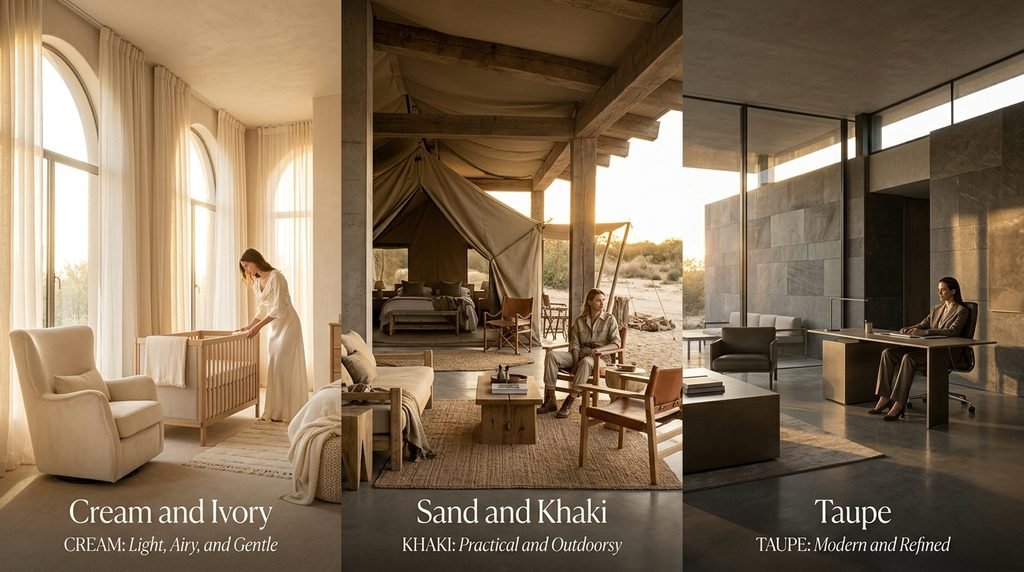
Designers choose shades with care because tone shapes mood. A small shift can move beige from soft to sophisticated.
Cream and Ivory Beige
Cream and ivory beige are light and airy. They feel clean, gentle, and welcoming. These shades suit weddings, nurseries, and bright interiors.
They suggest purity and calm. They also reflect light well, which opens up a room. Many people find them soft and uplifting.
Taupe, Sand, and Khaki Beige
Taupe leans gray and feels modern and refined. Sand is warm and earthy. Khaki has a slight green tint and feels practical and outdoorsy.
These deeper tones feel grounded and strong. They work well in rugged fashion and natural interiors. They keep beige’s calm but add more character.
Beige in Branding & Marketing
Brands use beige to signal calm, quality, and natural care. It feels gentle and honest. It also feels premium when paired with the right design. Beige color psychology helps companies build quiet trust.
The beige color meaning works especially well for products that promise comfort or purity. It tells customers that the brand is simple and sincere.
Beige in Wellness and Natural Product Branding
Skincare, organic foods, and home goods often use beige packaging. The color suggests natural ingredients and a gentle touch. It feels clean without feeling cold.
Customers often read beige as safe and honest. It supports the idea of “less is more.” That message builds trust quickly.
Beige in Luxury and Minimalist Branding
Beige also appears in luxury and modern minimalist brands. When paired with black, gold, or white, it looks elegant and refined. It suggests taste without showing off.
Many fashion and lifestyle brands use beige to feel timeless. The shade avoids passing trends. That makes it a smart long-term choice.
Beige in Fashion & Design
Beige is a staple in fashion and design because it feels effortless. It goes with almost everything and flatters many skin tones. It adds calm without being boring.

In interiors, beige creates a soft base that supports other colors. It works in both small and large spaces.
Beige in Clothing and Accessories
A beige coat, trench, or sweater looks polished and easy. It pairs well with white, black, navy, and soft pastels. Beige accessories add quiet elegance to simple outfits.
Many people build a capsule wardrobe around neutral colors like beige. It makes dressing simple and stylish. It also gives a clean, calm look.
Beige in Interior Design
In homes, beige is a classic wall and furniture color. It makes rooms feel warm, open, and peaceful. It also lets art, plants, and textures stand out.
Pair it with wood, linen, and soft greens for a natural look. Add texture to keep it from feeling flat. A mix of materials gives beige depth.
Beige and Personality
People often link color choices with personality, though this is not an exact science. Still, the beige color meaning offers helpful clues about those who love it. It usually points to a calm and thoughtful nature.
Beige lovers are often described as easygoing and dependable. They prefer harmony over drama. Their style is quiet but confident.
Traits Associated with Beige Lovers
People who love beige are often seen as practical, patient, and humble. They may also be good listeners who stay calm under stress.
They tend to avoid conflict and loud attention. Many have a gentle sense of humor. Others often find them easy to be around.
Beige in Personal Style Choices
Someone who wears beige may want to look polished without effort. It signals confidence that doesn’t need to be loud. It also suggests good taste and a love of comfort.
Even small beige touches, like a bag or scarf, can show this side. The choice says, “I value calm.” That message is soft but clear.
Beige in Dreams
Dream meanings are personal and not scientific. Still, many people enjoy exploring color symbols. Beige often appears in dreams as a soft and neutral tone.
It usually points to calm, simplicity, or a need for balance. The mood of the dream matters a great deal.
Common Interpretations of Beige in Dreams
Dreaming of beige may suggest a desire for peace and a simpler life. Some people see it as a sign of emotional neutrality or a pause between big changes. Others read it as a call to slow down and rest.
A warm beige scene often feels comforting. A very flat or empty beige scene may point to boredom or a lack of excitement. In both cases, the beige meaning in dreams invites quiet reflection.
Beige in Astrology, Tarot & Numerology
Beige has a gentle place in astrology and tarot. It connects to earth energy, patience, and steady growth. Because it is a natural neutral, it fits well with grounded symbols.
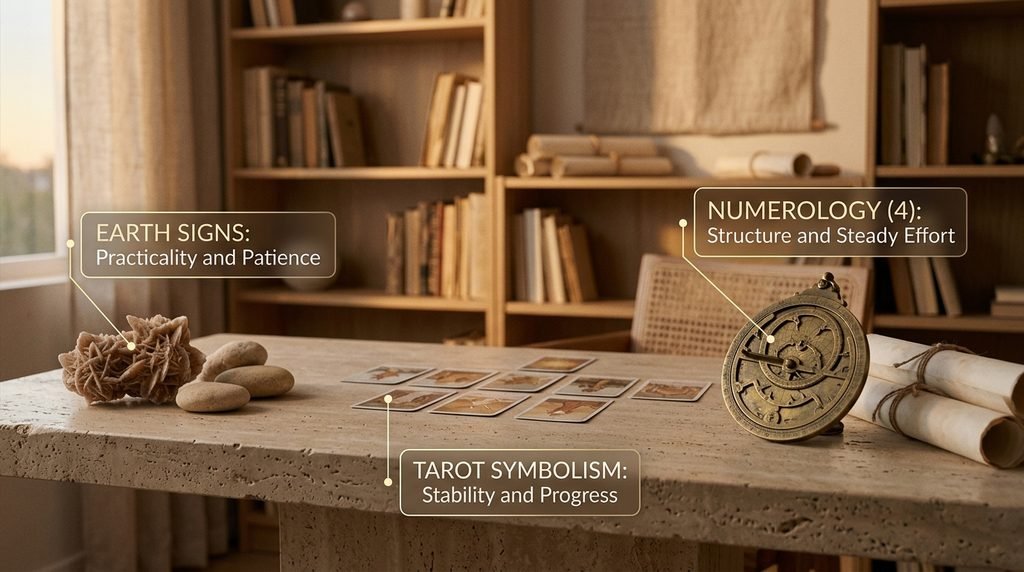
Interpretations vary, so these ideas are best seen as symbolic rather than fixed rules. They add another layer to the beige color meaning.
In astrology, beige is often linked to earth signs like Taurus, Virgo, and Capricorn. These signs are known for patience and practical thinking. In tarot, soft earthy tones appear in cards about stability, home, and quiet progress. In numerology, beige is sometimes connected to the number 4, which stands for structure, security, and steady effort.
Interesting Facts & Trivia
Beige has many fun facts that go beyond its looks. These details show how deeply the shade is part of daily life.
- The word “beige” comes from French and was first linked to natural, undyed wool.
- Many animals, such as camels and lions, use beige coats to blend into dry landscapes.
- Coco Chanel was famously fond of beige and neutral tones.
- Beige is often used in minimalist design because it pairs well with nearly every color.
- The trench coat, a classic beige piece, began as practical outdoor wear.
Frequently Asked Questions
What is the beige color meaning?
The beige color meaning centers on calm, simplicity, comfort, and quiet reliability.
What does beige symbolize?
Beige symbolizes humility, stability, warmth, and natural balance.
Is beige a calming color?
Yes. Beige color psychology shows it feels soft and restful, with little visual stress.
Is beige a boring color?
Not necessarily. Beige can feel boring when used alone, but with texture and accents, it looks warm and elegant.
What does beige mean spiritually?
It is linked to humility, grounding, and a simple, natural way of living.
What personality traits go with beige lovers?
They are often calm, practical, patient, and easygoing.
What does beige mean in dreams?
It often points to a need for peace, simplicity, or a pause before change.
Conclusion
Beige is a color of quiet strength. It blends calm, comfort, and simplicity into one soft shade. The beige color meaning has stayed steady across fashion, homes, and many cultures.
Understanding the meaning of the beige color explains why people turn to it for peace and balance. It is not loud, yet it is never out of place. In the end, beige shows that simple things can be beautiful and lasting.