
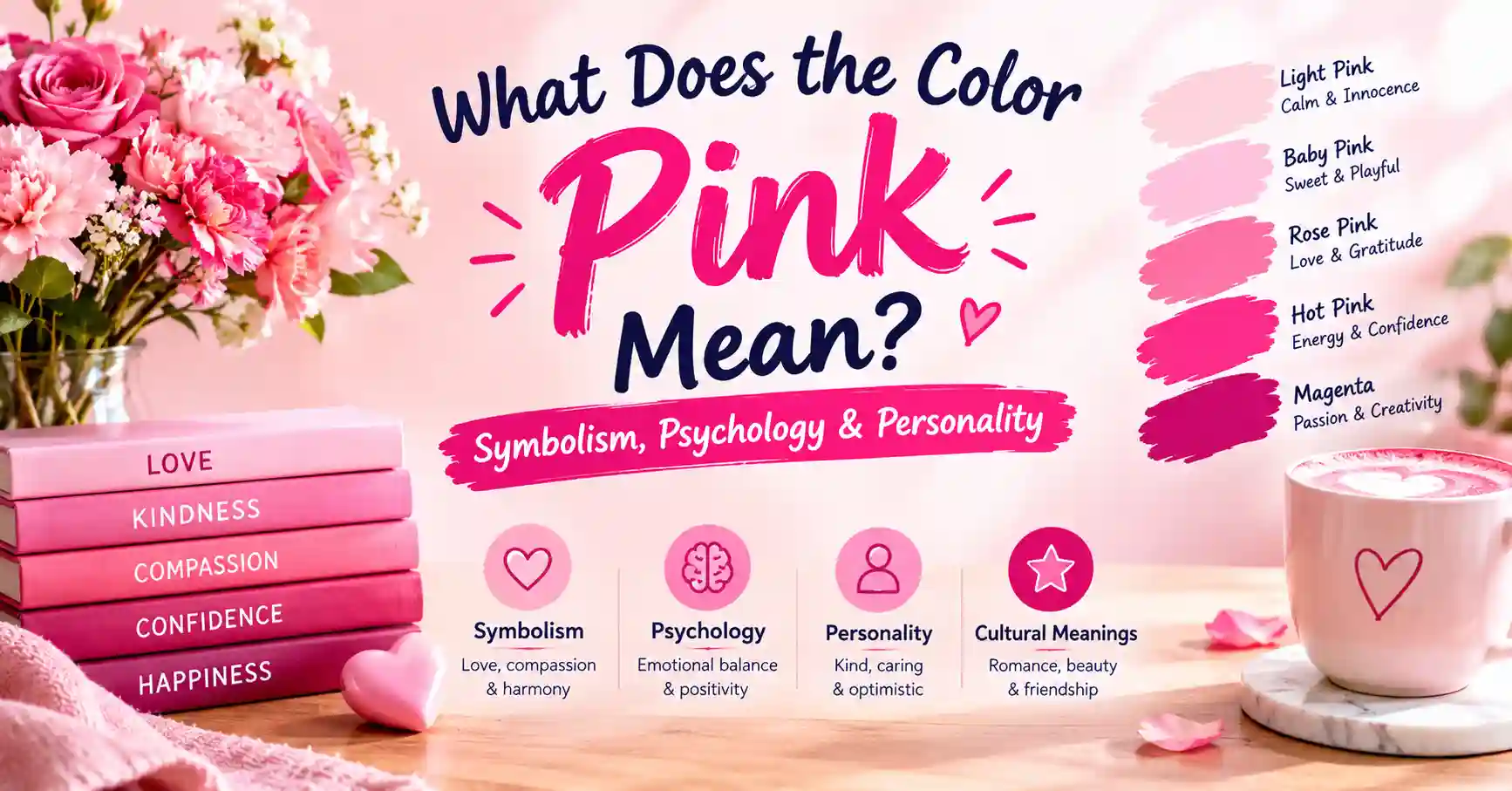

What Does the Color Pink Mean? Pink shows up in soft sunsets, birthday cards, and flower petals. It sits in candy wrappers, baby blankets, and bold fashion statements. Few colors feel so gentle and so attention-grabbing at the same time.
People often ask what the color pink means, and the answer is layered. Pink can point to love, kindness, and comfort. It can also point to playfulness, rebellion, and bold confidence. That range is what makes the meaning of the color pink worth exploring.
This guide covers the full picture. You will learn what pink symbolizes, how pink color psychology shapes mood, and how cultures and religions read this shade. You will also see pink in nature, history, branding, fashion, dreams, and astrology.
General Pink Color Meaning & Symbolism
Pink is the color of warmth without heat. It carries red’s passion but softens it into something gentler. That softness is why pink feels so approachable.
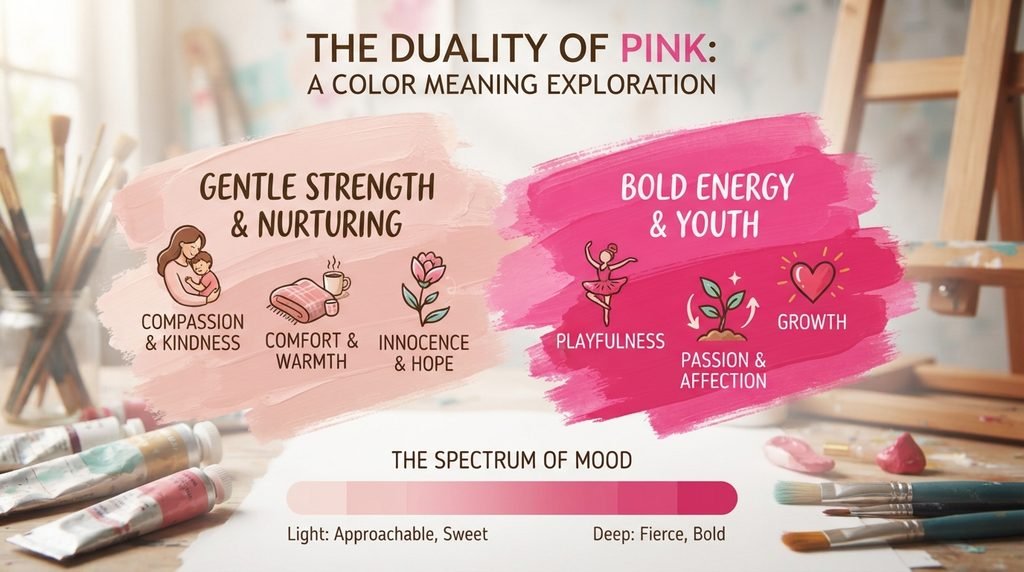
When people ask what pink symbolizes, the answer often centers on affection. Pink also stands for comfort, youth, and sweetness. It feels caring, like a warm hug rather than a bold statement.
Core Psychological Associations of Pink
The core meaning of the color pink is tied to tenderness and care. Pink feels nurturing and light. It suggests gentleness without weakness.
Most people connect pink with a few main ideas:
- Love and affection
- Comfort and softness
- Playfulness and youth
- Compassion and kindness
Positive Meanings of Pink
At its best, pink stands for warmth, sweetness, and emotional openness. It helps people feel welcomed and cared for. It also suggests innocence and a light, hopeful outlook.
Pink is often used where comfort matters most. Nurseries, greeting cards, and romantic gifts lean on it for this reason. In these settings, the meaning of pink is gentle and reassuring.
Negative Meanings of Pink
Pink has a less flattering side too. It can suggest immaturity or a lack of seriousness. Some view it as too delicate for important or formal settings.
Pink has also been tied to outdated gender rules, which some people now push back against. Too much pastel pink in a space can feel saccharine. The meaning of pink depends heavily on shade and context.
What Pink Represents Overall
Pink represents gentle strength. It softens red’s intensity into something more approachable. That blend of warmth and calm gives pink its unique identity.
This dual nature explains why pink can feel sweet in one setting and bold in another. A soft blush pink feels delicate, while a hot pink feels fierce. Few colors shift mood so easily with just a change in tone.
Pink Color Psychology: How the Color Affects Mind and Body
Pink color psychology looks at how this shade shapes feelings and behavior. Researchers have studied it in prisons, gyms, and marketing tests. Some findings are widely repeated, though not all hold up under closer study.
What we can say is that pink often feels calming at first glance. It tends to soften tension in a space. Here is how it plays out.
Pink Color Psychology and Mood
Pink is often linked to a sense of calm and nurturing. Some facilities have painted walls a shade called “Baker-Miller pink” in hopes of reducing aggression. Early results were promising, though later research found the calming effect may fade over time.
Pink can also lift a playful, lighthearted mood. Bright pink especially tends to boost cheerfulness and energy. It feels less urgent than red but still full of life.
Pink and the Brain and Nervous System
Claims that pink physically lowers muscle strength or heart rate come mostly from that early prison study. The science behind it is not strongly confirmed, so it is safer to describe pink as emotionally soothing rather than physically calming. Its gentler tone compared to red is well supported by general observation.
Pink sits close to red on the color spectrum, but it is lighter and less saturated. This softer quality likely explains why it feels less alarming. For contrast, red’s meaning leans toward urgency, while pink leans toward warmth.
Why Humans React Warmly to Pink
Human reactions to pink may connect to associations with skin, flowers, and warmth. Soft pink tones appear in sunrises, blossoms, and healthy skin tones. These natural links may be part of why pink feels comforting and alive.
Over time, pink also became tied to sweetness through candy and desserts. That cultural layering adds to its gentle, inviting reputation today.
Pink Color Meaning in Different Cultures
Pink color meaning shifts depending on where you are in the world. A shade seen as purely feminine in one country may carry very different associations elsewhere. Still, most cultures link pink to softness, romance, or celebration in some form.
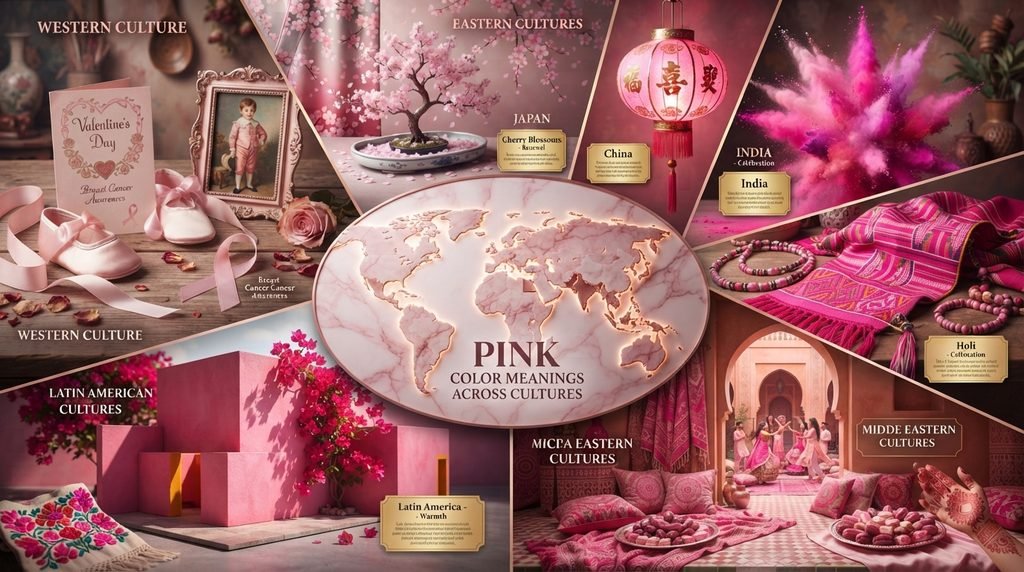
Below is a tour of how pink is understood around the globe. Keep in mind every region holds many traditions, so these are broad patterns.
Pink Meaning in Western Culture
In Western countries, pink is strongly tied to romance, femininity, and sweetness. It appears in Valentine’s Day cards, baby gifts, and wedding themes. It also plays a role in breast cancer awareness campaigns, where it stands for support and hope.
Pink has shifted over time in the West too. It was once considered a strong, masculine color before marketing trends reassigned it to girls in the twentieth century. Today, many designers and individuals reclaim pink as gender-neutral and bold.
Pink Meaning in Eastern Cultures
In many parts of Asia, pink carries softer and more universal meanings than in the West. It often connects to nature and celebration rather than being tied to one gender.
- Japan: Pink is closely tied to cherry blossoms, which represent the fleeting beauty of life. Hanami, the tradition of viewing these blossoms, celebrates renewal and gentle joy.
- China: Pink is often seen as a youthful, charming color linked to romance and good fortune. It is less loaded with gender meaning than in Western traditions.
- India: Pink appears vibrantly during the festival of Holi, where colored powders fill the air. There it represents joy, energy, and community celebration.
Pink Meaning in African Cultures
Pink does not carry one fixed meaning across Africa, since traditions vary widely by region. In some West African textile traditions, pink dyes are used alongside other bright colors to signal celebration and status. Vibrant cloth, including pink tones, often marks important ceremonies.
In other communities, pink may simply be appreciated for its visual beauty rather than carrying deep symbolic weight. This shows that pink’s meaning can be more decorative than symbolic in certain traditions.
Pink Meaning in Middle Eastern Cultures
Pink in the Middle East often appears in textiles, henna designs, and celebratory clothing. It is associated with joy and festivity, especially at weddings and family gatherings. Pink florals and fabrics bring warmth to decor and dress.
The color carries less rigid gender coding in much of the region compared to Western pop culture. It is used more freely across contexts, from architecture to clothing, without being seen as exclusively feminine.
Pink Meaning in Latin American Cultures
In Latin America, pink is a vibrant and welcomed color used in architecture, art, and fashion. Bright pink buildings are iconic in cities like Mexico City, especially in the work of architect Luis Barragán. This pink expresses warmth, creativity, and bold personality.
Pink also appears in traditional textiles and festive clothing throughout the region. It is treated as a color of joy and artistic expression rather than being limited to romance alone.
Cultural Contrasts in Pink Color Meaning
The sharpest contrast is around gender. In the West, pink has carried strong “girl color” associations for decades. In much of Asia and Latin America, pink is used more freely across genders and contexts.
Another contrast is decorative versus symbolic use. In Japan, pink carries deep seasonal and philosophical meaning through cherry blossoms. In other regions, it may simply be chosen for its cheerful appearance. This range shows how pink color meaning depends heavily on cultural framing.
Pink Meaning in Religion & Spirituality
Pink plays a gentler, less central role in religious symbolism compared to colors like red or white. Still, several traditions use it to express specific spiritual ideas. Its soft tone often represents compassion and unconditional love.
Here is what pink symbolizes in a few spiritual contexts.
Pink in Christianity
In Christian tradition, pink appears during Advent and Lent on a day called “Gaudete” or “Laetare” Sunday. These days mark a brief shift toward joy within a more somber season. The rose-colored candle or vestments symbolize hope breaking through waiting or penance.
Pink is not a dominant liturgical color overall, but its rare appearances carry specific weight. It signals a softening of mood within a structured religious calendar.
Pink in Hinduism and Buddhism
In Hinduism, pink does not have one fixed sacred role, but it appears often in festival contexts like Holi. There it reflects joy, love, and the arrival of spring. Pink flowers are also used in various devotional offerings.
In Buddhism, the pink lotus holds special significance. It is considered the supreme lotus, often associated with the historical Buddha himself. This flower represents purity and spiritual awakening rising from muddy waters.
Pink in Islam
Pink does not carry a specific doctrinal meaning in Islam, similar to its limited role in many monotheistic traditions. Its presence is mostly cultural and decorative, appearing in textiles, architecture, and personal style. Soft pink tones are valued for their beauty and warmth.
In regions with strong floral and garden traditions, pink roses often appear in poetry and art with spiritual undertones of love and devotion. This connection is more poetic than formally religious.
Pink in Other Spiritual Traditions
In some New Age and wellness practices, pink is linked to unconditional love and emotional healing. Crystals like rose quartz, valued for their soft pink hue, are associated with self-love and gentle compassion. Practitioners often use pink in meditation spaces meant for emotional repair.
Pink also appears in some folk traditions as a color meant to soften difficult emotions. It is seen as a gentle, non-threatening presence in spiritual practice.
Pink Chakra and Aura Meaning
In chakra teaching, pink is often linked to the heart chakra alongside green. This energy center governs love, compassion, and connection to others. A balanced heart chakra is said to support healthy relationships and self-acceptance.
In aura reading, a pink aura is often associated with a gentle, loving nature. Believers describe such people as warm, empathetic, and nurturing. These ideas come from spiritual belief rather than scientific evidence.
Pink Color Meaning in Nature
Nature offers plenty of pink, often in delicate and fleeting forms. Many pink elements in the natural world are tied to short seasons or soft textures. This fragility adds to pink’s gentle reputation.
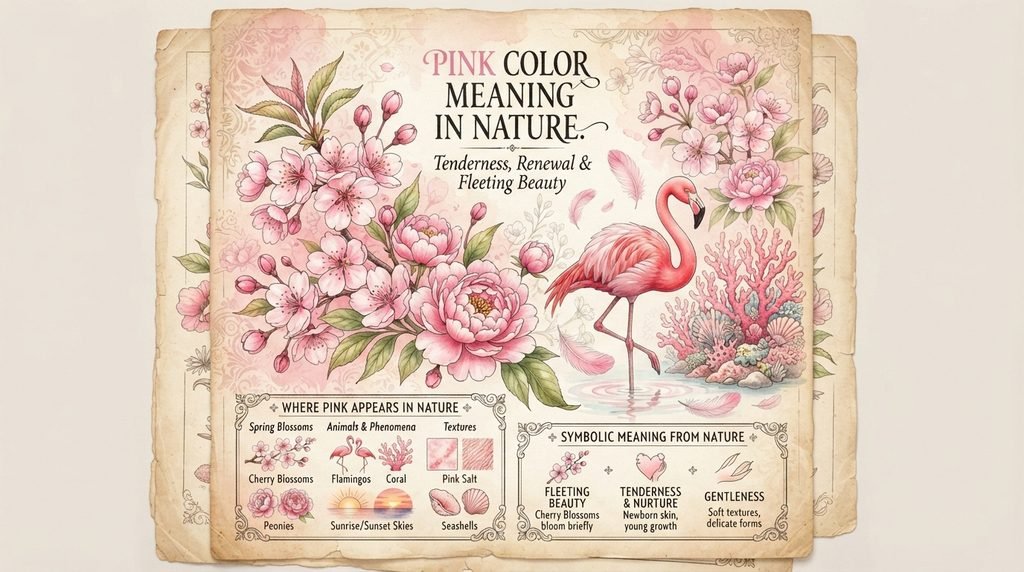
Looking at pink in the wild helps explain why humans associate it with tenderness and renewal.
Where Pink Appears in Nature
Pink shows up across flowers, animals, and skies. Many spring blossoms carry shades of pink before fading into green leaves. It also appears in certain animals and natural phenomena.
Here are a few familiar examples:
- Cherry blossoms and peonies
- Flamingos and certain coral reefs
- Sunrise and sunset skies
- Pink salt and certain seashells
Symbolic Meaning of Pink from Nature
Pink in nature often signals something temporary and delicate. Cherry blossoms bloom brightly for only a short window each year, which is why they carry meanings of fleeting beauty. This temporary quality gives pink a gentle, reflective symbolism.
Pink also appears in nurturing contexts, like the soft pink of newborn skin or young plants. These associations reinforce pink’s link to new beginnings and tender care.
Pink Color Meaning in History
Pink has a history that shifts more than most colors. Its gendered associations are relatively recent, and its earlier meanings were quite different. Tracing pink through time reveals how much cultural trends can reshape a color’s identity.
Historical Significance of Pink
Pink pigments have existed since ancient times, derived from plants, minerals, and insects. However, pink as a named, distinct color became more prominent in European art during the eighteenth century. Painters like François Boucher used soft pinks extensively in portraits of French aristocracy.
During this period, pink was associated with luxury and refinement rather than any specific gender. Both men and women wore pink clothing as a mark of elegance and status.
Pink, Royalty, War, and Class
Pink was embraced by European nobility as a fashionable, high-status color during the eighteenth century. Madame de Pompadour, a prominent figure at the French court, favored pink so strongly that a shade was later named after her. This association tied pink to wealth and sophistication rather than softness alone.
The strict gender coding of pink for girls developed much later, largely through twentieth-century marketing in the United States. Before this shift, pink was sometimes even considered a stronger, more masculine shade compared to pale blue.
Famous Historical Shifts in Pink
The mid-twentieth century saw a major cultural reassignment of pink to baby girls and blue to baby boys, a pattern that had been reversed just decades earlier in some circles. This marketing-driven shift shaped generations of expectations around the color. It shows how quickly color symbolism can be rewritten by commerce and culture.
More recently, movements reclaiming pink as a bold, gender-neutral color have pushed back against these mid-century norms. Public figures and designers now use pink to express confidence rather than softness alone.
Shades of Pink and Their Meanings
Not all pinks carry the same tone. A pale blush feels delicate, while a hot pink feels loud and confident. These shifts in shade completely change the mood pink sends.
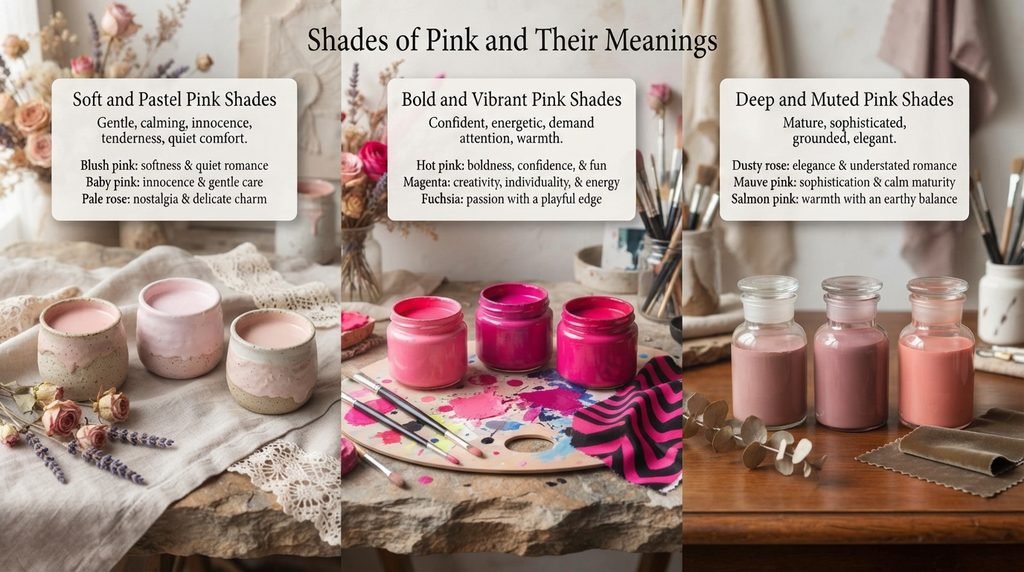
Here are the main families of pink and what each tends to communicate.
Soft and Pastel Pink Shades
Pastel pinks are gentle and calming. They suggest innocence, tenderness, and quiet comfort. They are common in nurseries, weddings, and skincare branding.
- Blush pink: softness and quiet romance
- Baby pink: innocence and gentle care
- Pale rose: nostalgia and delicate charm
Bold and Vibrant Pink Shades
Bright pinks feel confident and energetic. They demand attention while still carrying warmth. They are popular in fashion, pop culture, and youth brands.
- Hot pink: boldness, confidence, and fun
- Magenta: creativity, individuality, and energy
- Fuchsia: passion with a playful edge
Deep and Muted Pink Shades
Darker, dustier pinks feel more mature and sophisticated. They blend pink’s warmth with a grounded, elegant tone. They suit formal fashion and refined interiors.
- Dusty rose: elegance and understated romance.
- Mauve pink: sophistication and calm maturity
- Salmon pink: warmth with an earthy balance
Pink Color Meaning in Branding & Marketing
Pink is a strategic choice for many brands seeking warmth and approachability. It stands out in a market often dominated by blue and red logos. Choosing pink sends a clear, specific signal to consumers.
Let’s look at why companies rely on pink and what it communicates.
Why Brands Use Pink in Logos
Pink creates an emotional, friendly connection with audiences. It softens a brand’s image and suggests care rather than aggression. Beauty, fashion, and lifestyle brands often choose it to feel personal and inviting.
Pink also helps brands stand out from the sea of blue corporate logos. This makes pink color psychology a useful tool for companies wanting to feel distinct and warm.
Famous Brands That Use Pink
Several recognizable brands lean heavily on pink. The color helps them feel playful, bold, or nurturing depending on their shade choice. A few examples include:
- Barbie
- Victoria’s Secret
- T-Mobile
- Lyft
- Baskin-Robbins
What Pink Communicates to Consumers
Pink tells consumers a brand is friendly, youthful, and emotionally engaging. It suggests warmth rather than authority. That is why it works well for beauty, children’s products, and lifestyle brands.
Brands wanting seriousness or trust typically lean toward blue instead.
Pink Color Meaning in Fashion & Design
Pink is a versatile choice in both clothing and interior spaces. It can feel soft or striking depending entirely on shade and styling. Its range makes it a favorite across many design approaches.

The key is matching the right pink tone to the right mood.
What Wearing Pink Signifies
Wearing pink often signals warmth, approachability, and emotional openness. Soft pinks can feel romantic and gentle, while hot pink feels bold and confident. Many people choose pink to express both sides depending on the occasion.
Some studies suggest pink can make a person appear friendlier or more approachable in social settings. The effect likely depends on shade, styling, and context rather than the color alone.
Pink Meaning in Interior Design
In interiors, pink can add warmth without the intensity of red. Soft blush tones work well in bedrooms and living spaces meant for relaxation. Bolder pinks can energize a room meant for creativity or social gathering.
Pink pairs well with neutrals like white, beige, and gray for a balanced look. Overusing bright pink in a space can feel overwhelming, so designers often use it as an accent rather than a dominant tone.
Style Tips for Using Pink
Pink offers flexibility across many styles and occasions. A small addition can shift a look from neutral to warm instantly. Try these simple ideas:
- Use blush pink for soft, romantic outfits or decor
- Choose hot pink for bold, statement-making pieces
- Pair pink with black for a striking contrast
- Mix dusty rose with neutrals for sophisticated elegance
Pink Color Meaning and Personality
Many people feel a strong connection to pink without fully knowing why. Color preference can offer a light, fun glimpse into personality traits. This is not a scientific test, but it remains a popular way to reflect on personal taste.
Personality Traits of People Who Love Pink
People who love pink are often described as warm and compassionate. They tend to value kindness and emotional connection. They may also carry a playful, youthful energy.
Common traits linked to pink lovers include:
- Warmth and empathy
- Playfulness and optimism
- Romantic sensibility
- Nurturing tendencies
What Choosing Pink as a Favorite Color Reveals
A favorite color of pink may suggest someone who values emotional openness. They may prioritize kindness and connection over competition. They often enjoy expressing affection freely.
It can also point to confidence expressed through softness rather than force. Pink lovers may feel comfortable showing vulnerability. That openness is part of pink’s unique charm.
Pink Color Meaning in Dreams
Dream interpretations are personal, and no single meaning applies to everyone. Still, pink often appears when emotions around love or self-care surface. It can show up as clothing, flowers, or a soft glow.
Here are common ways people read pink in dreams.
Positive Meanings of Pink in Dreams
Pink can point to love, friendship, or emotional healing. A pink flower or soft pink light may reflect comfort entering your life. It can suggest a period of gentleness after stress.
Some people see pink in dreams as a sign of self-acceptance. It may hint that you are learning to treat yourself with more kindness.
Cautionary Meanings of Pink in Dreams
Pink can also point to immaturity or avoidance of harder truths. A dream filled with overwhelming pink might suggest you are sidestepping a difficult issue. It may be a nudge to address something you have been softening too much.
Pink can also hint at vulnerability. If a dream feels delicate or fragile, it may reflect concern about being hurt emotionally. Pay attention to how the dream made you feel.
Pink Color Meaning in Astrology, Tarot & Numerology
Pink appears in several mystical systems tied to love and emotional connection. It is linked to gentleness, romance, and the heart. Keep in mind these are belief-based traditions, and sources may vary.
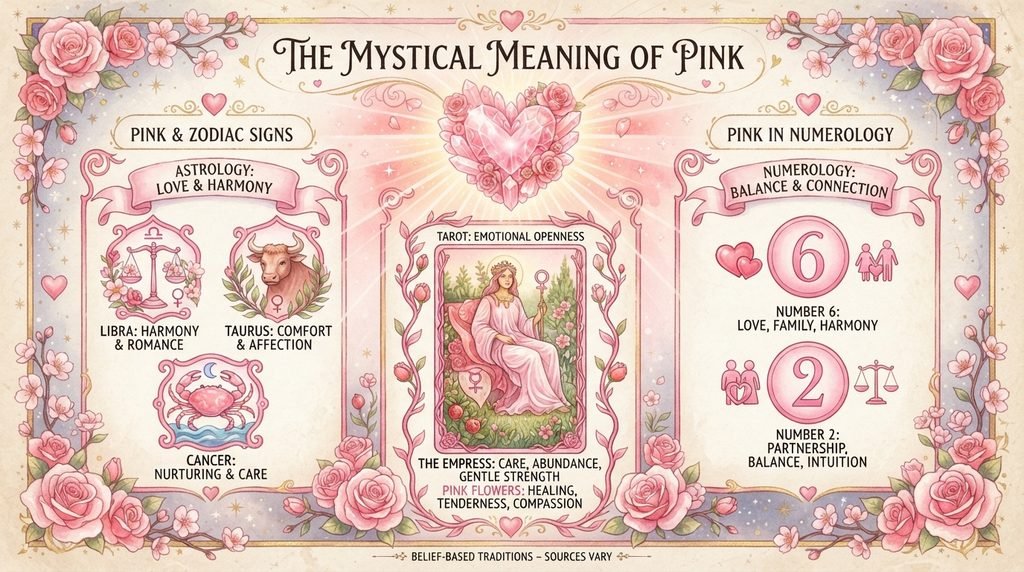
Pink and Zodiac Signs
Pink is most often linked to Libra and Taurus, both ruled by Venus, the planet of love and beauty. Libra’s pursuit of harmony and Taurus’s appreciation for comfort both align naturally with pink’s gentle energy. Cancer is sometimes included too, given its nurturing nature.
These associations connect pink closely to themes of affection and sensory pleasure across astrology.
Pink in Tarot Symbolism
Pink appears in tarot art tied to love, compassion, and emotional openness. The Empress card, often associated with nurturing and abundance, is sometimes shown with soft pink tones. It represents care, fertility, and gentle strength.
Pink flowers and soft backgrounds also appear on cards related to healing and relationships. In tarot, pink often signals emotional growth and tenderness.
Pink in Numerology
Numerology does not have one universally agreed color system. Some sources link pink to the number 6, associated with love, family, and harmony. Others connect it to the number 2, tied to partnership and balance.
Because sources differ, treat these links as a matter of personal interpretation.
Interesting Facts & Trivia About the Meaning of Pink
Pink carries several surprising stories tied to science and culture. These facts highlight how much this color has shifted and shaped human life.
Surprising Science Facts About Pink
Pink is technically not part of the visible light spectrum in the way other colors are. It is created when the brain blends red and violet light wavelengths, which sit at opposite ends of the spectrum. This makes pink a unique “constructed” color rather than a single wavelength.
Flamingos get their pink color from the shrimp and algae they eat, not from their own natural pigment. A change in diet can actually cause their feathers to fade toward white over time.
Surprising Cultural Facts About Pink
Pink was once considered a strong, masculine shade in parts of Europe before the twentieth-century shift toward blue for boys. This reversal shows how arbitrary strict gender-color rules can be. The idea that pink is inherently feminine is a relatively recent cultural invention.
The name “pink” itself originally referred to a flower, not the color. Over time, the flower’s name became attached to the shade we now associate with it.
Frequently Asked Questions About What Does the Color Pink Mean
These are common questions people search for about pink. Each answer stays short and clear.
What does the color pink mean spiritually?
Spiritually, pink represents unconditional love, compassion, and emotional healing. It is linked to the heart chakra in many spiritual traditions. It encourages gentleness toward oneself and others.
What does pink symbolize in general?
Pink symbolizes love, warmth, playfulness, and comfort. It can also suggest immaturity in certain contexts. Its exact meaning shifts with shade and setting.
What is pink color psychology in simple terms?
Pink color psychology suggests this shade feels nurturing and emotionally calming. It can soften tension and boost a playful mood. Some physical claims about pink remain scientifically unconfirmed.
Why do brands use pink in their logos?
Brands use pink to feel warm, friendly, and emotionally approachable. It helps them stand out from common blue branding. It works especially well for beauty and lifestyle products.
Is pink only a feminine color?
Historically, pink was not tied to one gender and was even seen as masculine in earlier centuries. Its strong “girl color” association developed mainly through twentieth-century marketing. Many today use pink freely across genders.
What does pink mean in a dream?
Pink in a dream often points to love, comfort, or emotional healing. It can also suggest avoidance of a harder truth. The surrounding details and your feelings matter most.
Conclusion:
What does the color pink mean comes down to warmth wrapped in softness. It carries love and playfulness, elegance and vulnerability, often within the same shade. Few colors have shifted so dramatically in cultural meaning while keeping their gentle core intact.
From eighteenth-century aristocracy to modern pop culture, pink has always found a way to feel personal and expressive. Its strength lies in proving that softness and confidence are not opposites. The next time you notice pink, consider what quiet message it might be sending.
[…] is a soft, warm shade between pink and red. It looks like a petal in morning light. The rose color meaning blends love, kindness, and […]