
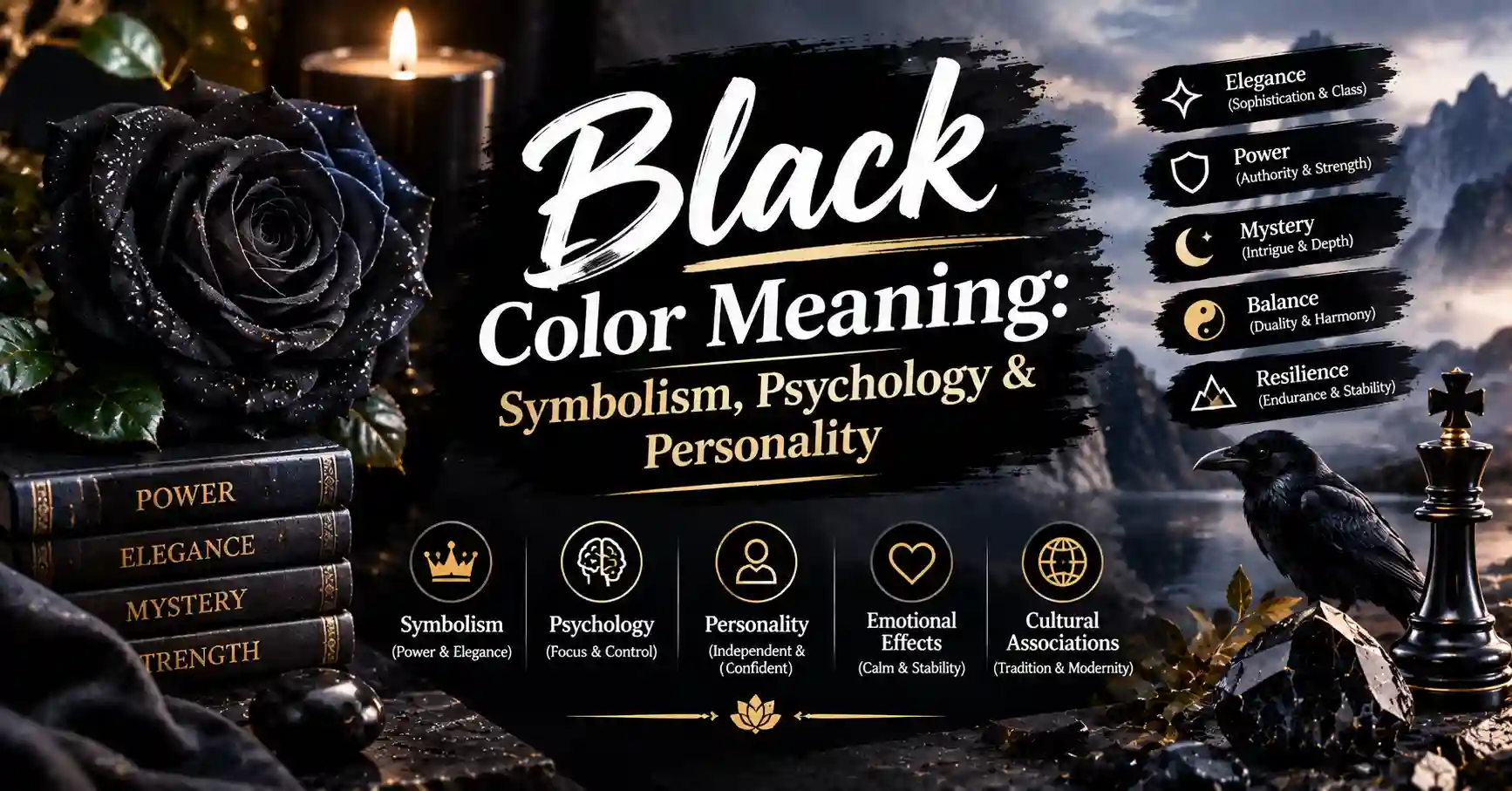

Black is different from every other color. It isn’t part of the visible spectrum at all — it’s the absence of light. Yet despite that, black color meaning carries some of the strongest symbolism of any color, touching everything from fashion to funerals to power.
Black shows up everywhere in daily life, often without us noticing. It’s in our clothes, our cars, our screens, and our language. We say things are “in the black” when they’re profitable, or that someone wore “black tie” to look formal. This article explores black color meaning in full — its symbolism, history, cultural weight, and why it remains one of the most powerful colors humans use.
General Meaning & Symbolism
Black carries some of the most contradictory symbolism of any color. It represents both elegance and mourning, power and fear, sophistication and the unknown. This wide range is exactly what makes black color meaning so complex compared to brighter, simpler colors.
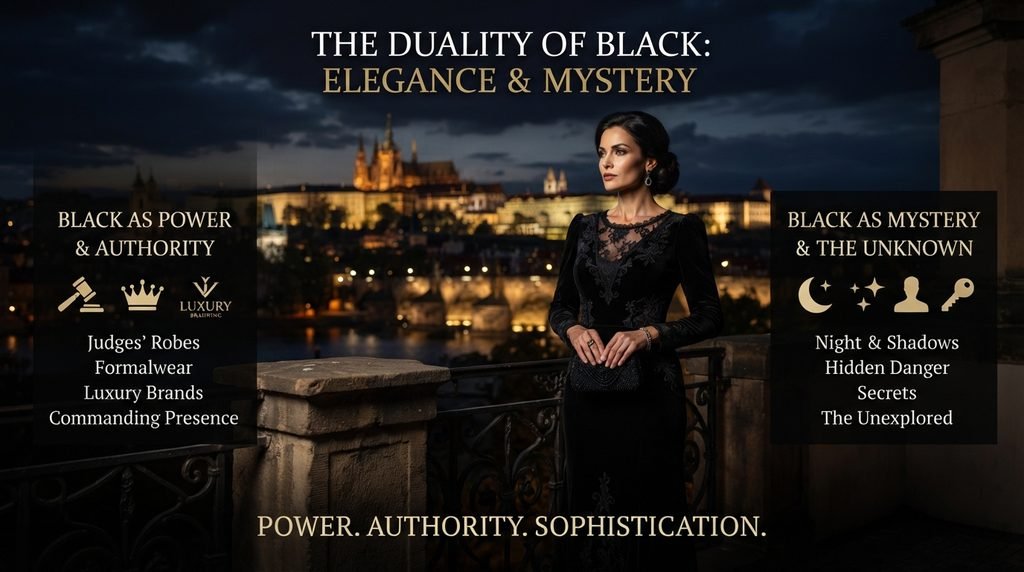
Because black absorbs all light rather than reflecting it, it has always felt a bit mysterious. It hides more than it reveals, which is part of why it carries such deep, layered symbolism across nearly every culture.
Black as a Symbol of Power and Authority
Black is one of the strongest colors associated with power, control, and seriousness. Judges wear black robes, formalwear is traditionally black, and luxury brands lean on black to project authority. It communicates weight without needing decoration.
This association isn’t accidental. Black tends to look commanding in almost any setting, which is why it’s so often chosen when someone wants to appear serious or in control.
Black as a Symbol of Mystery and the Unknown
Night, shadows, and the unknown are all naturally linked to black. This is part of why what does black symbolizes often includes ideas of the unseen or the unexplored.
In storytelling, black is frequently used to represent hidden danger or secrets waiting to be uncovered, reinforcing its mysterious reputation.
3. Psychology of Black
Black color psychology suggests this is a color of control, seriousness, and restraint. Unlike bright colors that stimulate emotion outward, black tends to hold emotion inward. Understanding black color meaning on this psychological level helps explain why the color feels so protective and composed.
Psychologists often note that black doesn’t overwhelm the senses the way red or yellow can. Instead, it creates a sense of boundary — a visual full stop that feels deliberate and controlled.
Black and Emotional Protection
Black is often chosen, consciously or not, as a kind of emotional armor. People sometimes wear black when they want to feel more guarded or less exposed. It creates distance, making it a popular choice during difficult emotional periods.
This protective quality is part of why black clothing is so common at funerals and other emotionally heavy events.
Black and Perceived Authority
Studies on color perception often find that black is associated with competence, strength, and seriousness. People in black are frequently perceived as more authoritative, even in casual settings. This is a key reason black color psychology plays such a big role in professional dress codes.
This perception explains why black is the default color for formalwear, luxury packaging, and high-end technology products.
4. Black in Different Cultures
Black’s meaning shifts depending on cultural context, much like other colors. In some places, it’s almost entirely tied to mourning. In others, it represents elegance, rebellion, or protection. Exploring black color meaning across regions shows just how flexible this color really is.
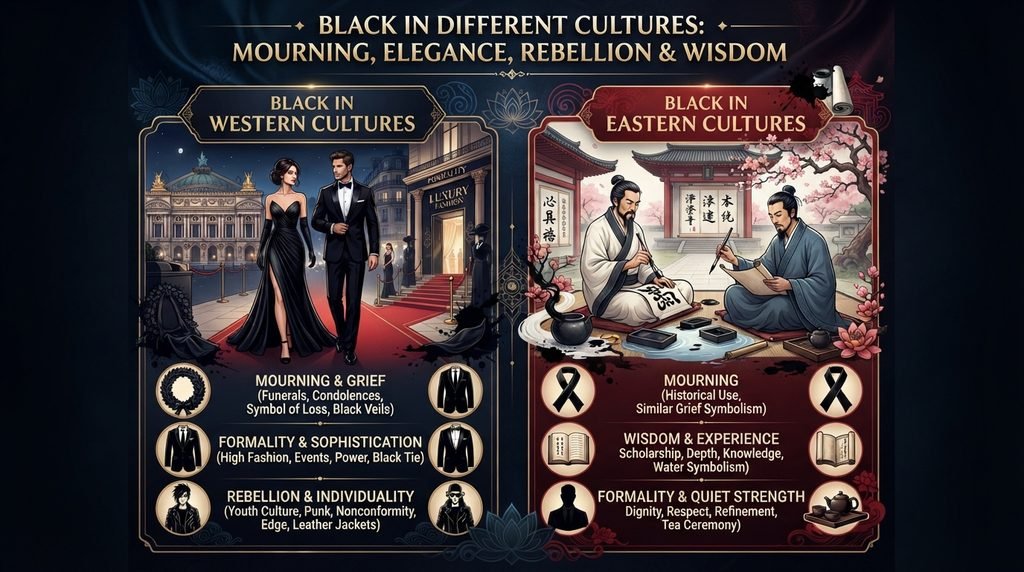
Understanding these cultural differences is especially important for global brands, since black can carry very different emotional weight depending on the audience.
Black in Western Cultures
In Western countries, black is strongly associated with mourning, formality, and sophistication. It’s the standard color for funerals, but also for elegant evening wear and luxury fashion. This dual role — grief and glamour — is unique to how black functions in Western symbolism.
Black is also linked to rebellion and individuality in youth culture, often worn to signal nonconformity or edge.
Black in Eastern Cultures
In several Eastern cultures, black carries similar associations with mourning, but also with wisdom and experience. In China, black has historically been linked to water and the concept of knowledge in certain philosophical traditions.
These interpretations show that while mourning is common, black color meaning often extends into more respected, dignified territory in Eastern contexts.
5. Black in Religion & Spirituality
Black holds significant spiritual weight across many belief systems, often tied to solemnity, humility, or transformation. Its association with night and the unknown gives it a naturally reflective quality. This makes black a common choice in religious clothing and ritual.
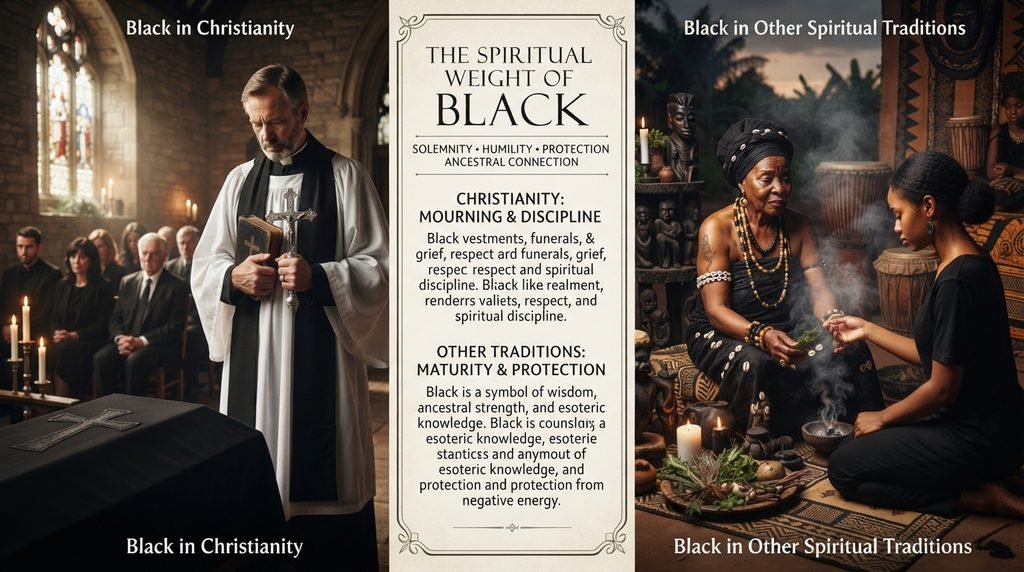
Because black can represent both loss and depth, it’s often used in spiritual contexts to mark serious, meaningful transitions.
Black in Christianity
In Christianity, black is traditionally worn during mourning periods and funerals, symbolizing grief and respect for the deceased. Clergy sometimes wear black to represent humility and spiritual discipline. It’s rarely used to celebrate, but rather to reflect solemn occasions.
This somber symbolism has remained fairly consistent across centuries of religious tradition.
Black in Other Spiritual Traditions
In some African spiritual traditions, black is connected to maturity, wisdom, and ancestral connection rather than solely mourning. In certain esoteric and mystical practices, black is associated with protection against negative energy. It’s often used in rituals meant to absorb or block harmful influences.
This shows that black’s spiritual meaning isn’t limited to sadness — it can also represent strength and protection.
6. Black in Nature
Black appears throughout the natural world, often for very practical reasons. It provides camouflage, absorbs heat, and signals warning in the animal kingdom. This functional role adds a scientific layer to black color meaning beyond pure symbolism.
Unlike purple, which is rare in nature, black is actually quite common — but it almost always serves a clear biological purpose.
Black in Animals
Animals like panthers, ravens, and black widow spiders use black for camouflage, intimidation, or warning. Black fur or feathers can also help regulate body temperature by absorbing sunlight. In many species, black coloring plays a direct role in survival.
This natural function mirrors black’s symbolic association with power and danger in human culture.
Black in Landscapes and Elements
Black appears dramatically in volcanic rock, night skies, and deep ocean depths. These natural settings often evoke both awe and unease, reflecting black’s dual symbolism of beauty and danger. Such landscapes remind us how commanding black can feel, even without any cultural meaning attached.
This natural intensity is part of why black continues to feel so powerful across human symbolism.
7. Black in History
Throughout history, black has represented both punishment and prestige, depending on the era. It’s one of the few colors that has consistently carried serious symbolic weight, rarely used casually until relatively recent history.
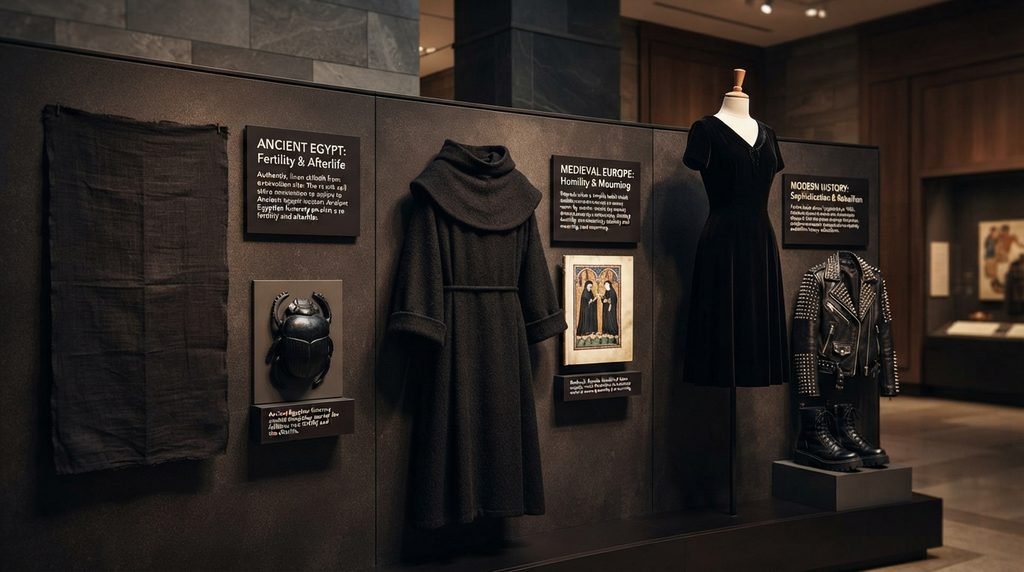
Black dye and fabric production changed significantly over time, shaping how accessible the color eventually became.
Black in Ancient and Medieval Times
In ancient Egypt, black was linked to fertility and the afterlife, largely due to the rich black soil of the Nile. In medieval Europe, black clothing became associated with mourning and, later, religious humility. Monks and clergy often wore black to represent simplicity and devotion.
These early associations laid the groundwork for black’s long connection to both solemnity and depth.
Black in Modern History
Black gained a major fashion shift in the 20th century with the introduction of the “little black dress,” which transformed the color into a symbol of chic sophistication. This shift shows how black color meaning evolved from strictly formal to broadly expressive.
Today, black spans everything from luxury fashion to countercultural identity, showing its incredible range.
[Image caption: The “little black dress” redefined black as a symbol of timeless elegance.]
8. Shades of Black and Their Meanings
While black is often seen as a single solid color, subtle variations do exist depending on material, lighting, and finish. These slight differences can shift how black feels emotionally. Understanding this adds nuance to black symbolism.
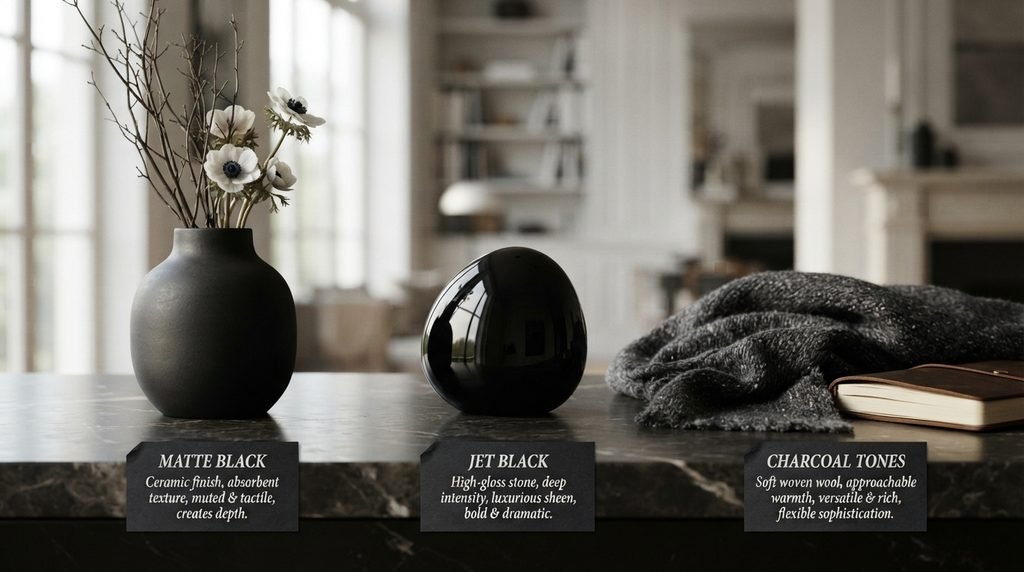
Matte, glossy, and deep black all send slightly different visual messages, even though they’re technically the same hue.
Jet Black and True Black
Jet black is the deepest, most solid form of black, often associated with elegance and intensity. It’s commonly used in luxury design and formalwear because of its rich, uniform appearance. True black feels bold and absolute, with no softness to it.
This shade is often chosen when a strong, unmistakable statement is the goal.
Off-Black and Charcoal Tones
Off-black and charcoal are softer variations, often used to create a slightly warmer or more approachable feel. These shades are common in interior design and casual fashion, since they feel less harsh than true black. They still carry sophistication, but with more flexibility.
This softer range shows that even black has room for subtlety depending on context.
9. Black in Branding & Marketing
Black is one of the most widely used colors in branding, especially for luxury and premium products. It signals sophistication, exclusivity, and confidence without needing much explanation. This makes black color psychology extremely valuable in marketing strategy.
Many brands use black specifically to create a sense of timeless, high-end appeal.
Black in Luxury Branding
Luxury brands frequently use black packaging and logos to suggest exclusivity and refinement. It creates an immediate sense of premium quality, often without needing additional visual elements. Black feels minimal, which pairs naturally with high-end simplicity.
This is why black is so common in fashion houses, perfume bottles, and high-end tech branding.
Black in Minimalist and Tech Branding
Beyond luxury, black is popular in modern tech branding, where it signals sleekness and precision. Companies often use black to appear cutting-edge and serious rather than playful. It creates a strong, confident visual identity.
This modern use shows how versatile black remains across very different industries.
10. Black in Fashion & Design
In fashion, black is considered a timeless, essential color. It’s rarely out of style, which makes it a foundational choice across nearly every wardrobe. Designers often rely on black because it works in almost any setting, formal or casual.

In interior design, black is frequently used to add contrast and grounding to a space.
Black in Clothing and Accessories
Black clothing is often associated with elegance, confidence, and versatility. A black blazer or dress can transition easily from daytime to evening wear. Black accessories, like shoes or bags, are considered classic staples that rarely go out of fashion.
This adaptability is part of why black remains such a dominant color in personal style.
Black in Interior Design
In interiors, black is often used to create contrast, depth, and sophistication. A single black accent wall or piece of furniture can anchor an entire room. Used thoughtfully, it adds drama without overwhelming a space.
Designers often pair black with lighter tones to keep spaces feeling balanced rather than heavy.
11. Black and Personality
People who gravitate toward black often share certain personality traits, at least according to general color psychology patterns. This isn’t an exact science, but it does offer interesting insight into self-expression. Exploring black and personality adds a personal dimension to black color meaning.

Color choice can reflect how someone wants to be perceived by others.
Traits Associated with Black Lovers
People drawn to black are often seen as confident, independent, and a little mysterious. They tend to value control and prefer not to draw unnecessary attention. This preference often reflects someone who is thoughtful and deliberate in how they present themselves.
Such individuals may also be seen as strong-willed, favoring substance over flashiness.
Black in Personal Style Choices
Someone who frequently wears black may be signaling sophistication paired with quiet confidence. It’s often chosen by people who want to feel put-together without extra effort. Even minimal black outfits can convey intention and control.
This makes black a popular choice for those who value simplicity with an edge.
12. Black in Dreams
Dream interpretation isn’t scientific, but black frequently appears as a significant symbol. In dreams, black is often linked to the unknown, hidden fears, or major transitions. This makes black meaning in dreams feel particularly intense compared to lighter colors.
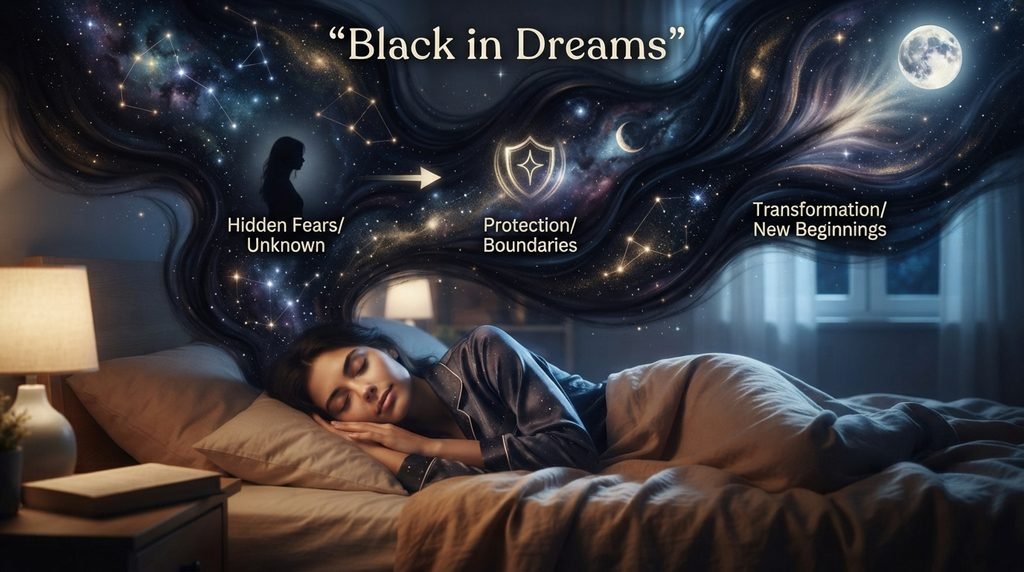
The specific context of black within a dream can shift its interpreted meaning considerably.
Common Interpretations of Black in Dreams
Seeing black in a dream may suggest unresolved fears or a period of uncertainty in waking life. Some interpret it as a sign of protection or a need to set boundaries. Others see it as a symbol of transformation, representing an ending before something new begins.
Because black is so emotionally loaded, dream analysts often treat it as a sign of deep internal processing rather than a simple, neutral symbol.
13. Black in Astrology, Tarot & Numerology
Black holds strong symbolic weight in astrology and tarot, often tied to mystery, transformation, and depth. It’s frequently associated with Scorpio, a sign known for intensity and hidden emotional depth. Black is also linked to Saturn, a planet associated with discipline and life lessons.
In tarot, black often appears in cards symbolizing endings, transformation, or the unknown, such as death or major change cards. In numerology, black is sometimes connected to the number 8, representing power, ambition, and control.
14. Interesting Facts & Trivia
Black carries a surprising number of unique facts beyond its symbolism and psychology. These details add extra depth to an already fascinating color.
- Black is technically not a color in the visible light spectrum — it’s the absence of light.
- “Black tie” events get their name from the traditional black bow tie worn in formalwear.
- Vantablack, one of the darkest substances ever created, absorbs over 99% of visible light.
- Black cats have long been linked to both good and bad luck, depending on the culture.
15. Frequently Asked Questions
What is the black color meaning?
Black color meaning centers on power, elegance, mystery, and mourning, making it one of the most emotionally layered colors.
Why is black associated with mourning?
In many Western cultures, black has traditionally represented grief and respect, especially during funerals.
What does black mean in branding?
In branding, black often represents luxury, sophistication, and authority, making it popular among premium and tech companies.
Is black a negative color?
Not necessarily — while black can represent loss, it’s equally associated with elegance, strength, and confidence.
What personality traits are linked to black lovers?
People who love black are often confident, independent, and value control over flashiness.
What does black mean in dreams?
Black in dreams often reflects hidden fears, major transitions, or a need for emotional protection.
Is black associated with any zodiac sign?
Yes, black is often linked to Scorpio and the planet Saturn, both associated with intensity and discipline.
16. Conclusion
Black remains one of the most powerful and complex colors, capable of representing both loss and luxury at once. From ancient mourning rituals to modern luxury branding, black color meaning has always carried weight far beyond a simple shade. It’s a color that never needs to shout to be noticed.