
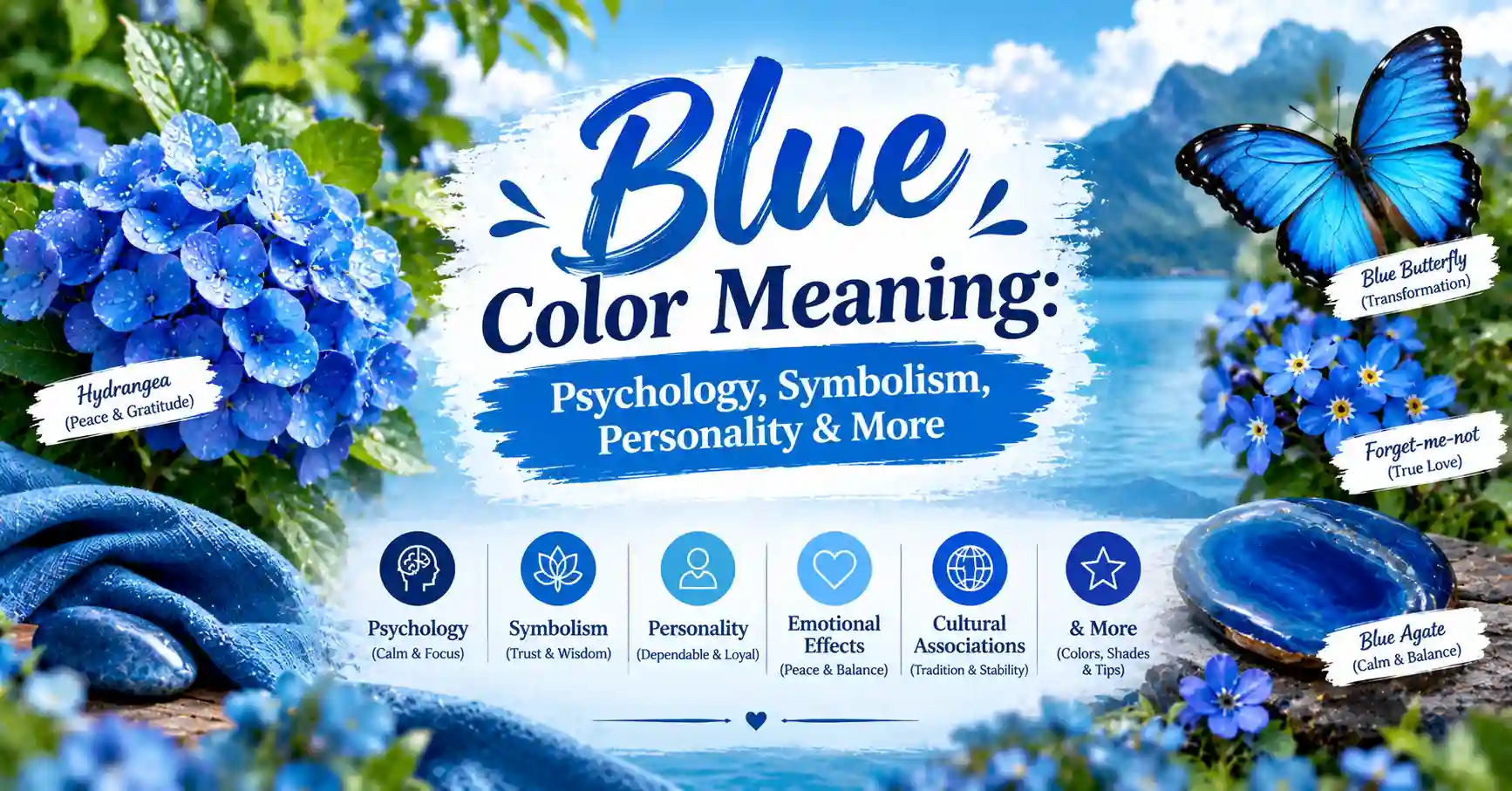

Blue is one of the first colors we notice each day. It fills the sky and rolls across the sea. It sits in jeans, phone screens, and company logos. Few colors feel so familiar and so calm.
The meaning of blue is just as wide. It can point to trust, peace, and wisdom. It can also point to sadness, distance, and cold. That mix makes the meaning of the color blue worth a closer look.
This guide covers the full picture. You will learn what blue symbolizes, how blue color psychology shapes mood, and how cultures and religions read this shade. You will also see blue in nature, history, branding, fashion, dreams, and astrology.
General Blue Color Meaning & Symbolism
Blue is the color of calm and depth. It rarely shouts. Instead, it settles into the background and steadies the mood around it.
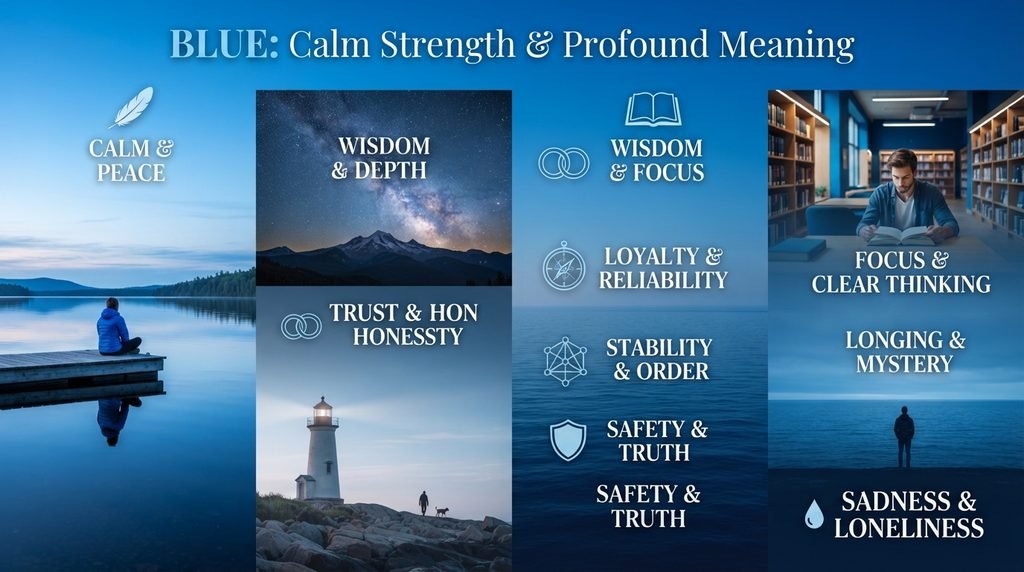
When people ask what blue symbolizes, the answer is often “trust.” Blue also stands for peace, loyalty, and clear thinking. It feels reliable, like a friend who never rushes you.
Core Psychological Associations of Blue
The core blue color meaning is tied to stability and order. Blue feels quiet and steady. It suggests a mind that is clear and a mood that is even.
Most people connect blue with a few main ideas:
- Calm and peace
- Trust and honesty
- Wisdom and focus
- Loyalty and reliability
Positive Meanings of Blue
At its best, blue stands for safety, truth, and patience. It helps people feel relaxed and secure. It also suggests good judgment and steady leadership.
Blue is often used where trust matters most. Banks, hospitals, and schools lean on it for this reason. In these settings, the meaning of blue is calm and dependable.
Negative Meanings of Blue
Blue has a heavier side too. It can suggest sadness, as in the phrase “feeling blue.” It can also feel cold, distant, or lonely.
Too much blue in a space can make it feel chilly. Very dark blue can seem gloomy or stiff. The meaning of blue depends on the shade and the setting.
What Blue Represents Overall
Blue represents calm strength. It links the wide sky with the deep sea. Both feel endless, quiet, and a little mysterious.
That is why blue holds two moods at once. It can bring peace, and it can bring longing. Few colors balance both so well.
Blue Color Psychology: How the Color Affects Mind and Body
Blue color psychology looks at how this shade shapes thoughts and feelings. Researchers have studied it in offices, classrooms, and homes. Some findings are strong, while others are still debated.
What we can say is that blue often feels soothing. It tends to lower the sense of pressure. Here is how it works.
Blue Color Psychology and Mood
Blue can help people feel calm and focused. It is often linked with a slower, steadier pace. That is why many people find it easy to work or read in a blue room.
Blue can also support clear thinking. Some studies link blue settings with more careful, creative thought. Still, results vary by person and by shade.
Blue and the Brain and Nervous System
Many writers say blue slows the heart and eases stress. The evidence for this is mixed, so it is safer to say blue may feel relaxing. Its link to calm is widely reported, even if the science is still growing.
Blue light also plays a role in body rhythms. It helps signal daytime to the brain. That is why bright screens at night can make it harder to fall asleep.
For contrast, red leans toward urgency and heat. Blue does the opposite by slowing things down.
Why Humans React Calmly to Blue
Human reactions to blue may have deep roots. A clear blue sky often meant good weather. Calm blue water often meant a safe place to drink or travel.
Over time, blue may have become tied to safety and space. It rarely signals danger in nature. That gentle message still shapes how we feel about blue today.
Blue Color Meaning in Different Cultures
Blue color meaning changes from place to place. A shade that feels holy in one region may feel corporate in another. Still, most cultures see blue as a color of importance and depth.
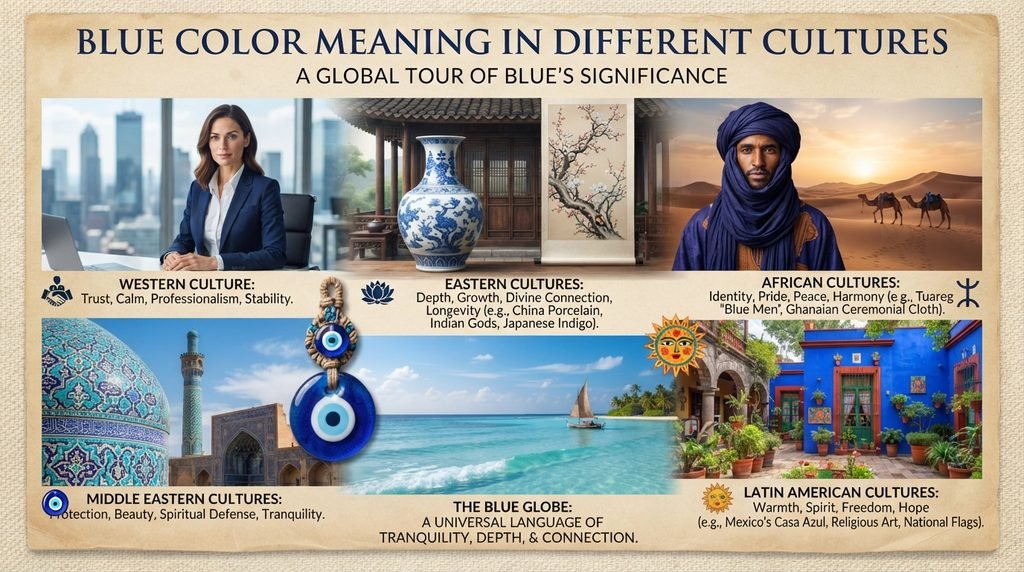
Below is a tour of how blue is read around the world. Keep in mind that every region holds many traditions, so these are broad patterns.
Blue Meaning in Western Culture
In Western countries, blue often stands for trust and calm. It is a top choice for uniforms, banks, and business wear. It is also the color most often named as a favorite.
Blue has softer ties too. “Something blue” is a wedding tradition tied to faithfulness. On the other hand, “the blues” is a music style rooted in sadness and struggle.
Blue Meaning in Eastern Cultures
In much of Asia, blue carries ideas of depth, growth, and the divine. It often appears in art, dress, and sacred stories. Here are a few examples:
- China: Blue and blue-green are linked to spring, growth, and long life. Blue-and-white porcelain is one of the country’s best-known art forms.
- Japan: Blue, especially deep indigo, is tied to craft and everyday dignity. Indigo-dyed cloth has been a tradition for centuries.
- India: Blue is linked to the divine. The gods Krishna and Shiva are often shown with blue skin to suggest the vastness of the sky and the sea.
Across these traditions, blue feels rich and respected. It points to something larger than daily life.
Blue Meaning in African Cultures
Blue holds meaning across Africa, and the message varies by region. Among the Tuareg of the Sahara, indigo-dyed veils and robes have long been a mark of pride. The dye often leaves a faint blue tint on the skin, which gave the Tuareg the nickname “blue men.”
In Ghana, the Ewe and other communities use blue cloth in ceremonies. It is often linked to peace, love, and harmony. This shows how one color can signal both identity and goodwill.
Blue Meaning in Middle Eastern Cultures
Blue is a color of protection in much of the Middle East. The blue “evil eye” charm is a common sight in homes, shops, and markets. Many people believe it guards against envy and bad luck.
Blue also shines in the region’s art and buildings. Glazed tiles cover many domes and walls with rich blues and turquoise. In these places, the meaning of blue blends beauty, peace, and protection.
Blue Meaning in Latin American Cultures
In Latin America, blue often stands for the sky, the sea, and spiritual calm. It appears in religious art, painted homes, and folk crafts. It also shows up on many national flags, where it suggests freedom and hope.
Mexico’s famous “Casa Azul” in Coyoacán shows how blue can feel warm and lively. There it is bold, artistic, and full of character. This shows blue is not always cool or quiet.
Cultural Contrasts in Blue Color Meaning
One big contrast is between calm and sorrow. In the West, blue can mean peace and also sadness. In parts of the Middle East, it is mainly a color of protection.
Another contrast is between the sacred and the everyday. In India, blue can point to the divine. In many offices and airports worldwide, it simply means order and trust. These shifts show that the meaning of the color is shaped by culture.
Blue Meaning in Religion & Spirituality
Blue plays a quiet but steady part in faith and ritual. Many traditions link it to the heavens, water, and truth. Its calm tone suits moments of prayer and reflection.
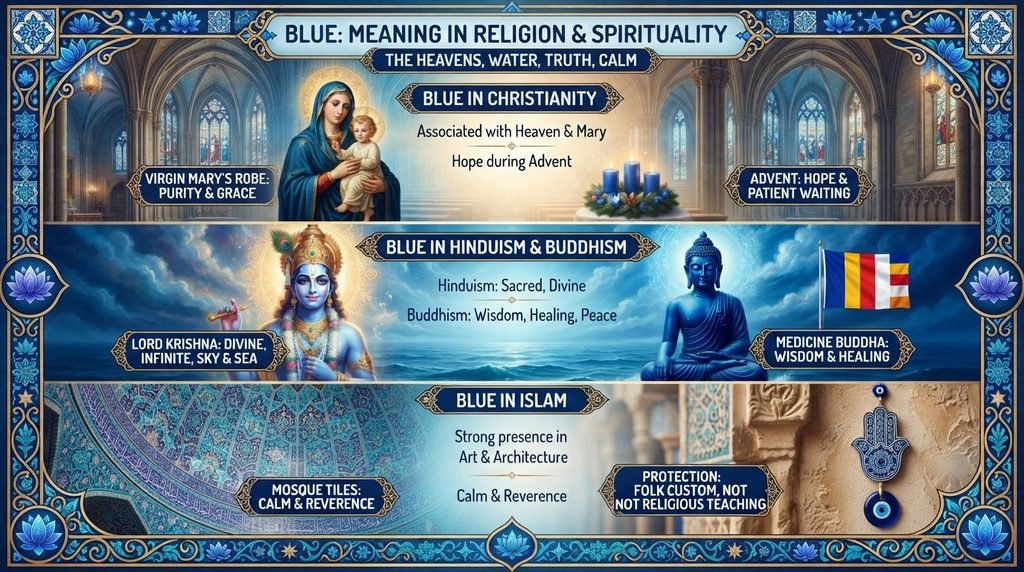
Different traditions use it in different ways. Here is what blue symbolizes in several of them.
Blue in Christianity
In Christian art, blue is tied to heaven and to the Virgin Mary. Painters often gave Mary a deep blue robe to show purity and grace. This habit started in medieval times, when blue pigments were very precious.
Blue is also used in church seasons such as Advent in some traditions. There, it suggests hope and patient waiting. In this setting, the meaning of blue blends devotion with calm.
Blue in Hinduism and Buddhism
In Hinduism, blue is a sacred color. Krishna and Vishnu are shown with blue skin, which suggests the endless sky and the sea. It points to the infinite and the divine.
In Buddhism, blue is linked to wisdom and healing. The Medicine Buddha is often shown in deep blue.
Blue in Islam
Blue and turquoise tiles decorate many famous mosques, especially in Iran, Turkey, and Central Asia. They create a sense of calm and reverence.
Blue is also linked to protection in many Muslim-majority regions. The blue eye charm is one example, though its meaning comes from culture and folk custom. It is not a matter of religious teaching.
Blue in Other Spiritual Traditions
In Judaism, a blue-toned thread called tekhelet was traditionally used in prayer garments. Blue there reminds the wearer of the sea, the sky, and the divine. Blue also appears in the Star of David on the Israeli flag.
Many folk traditions use blue for protection and peace. Blue doors, beads, and paint are believed by some to keep harm away. In these settings, blue is a gentle guardian.
Blue Chakra and Aura Meaning
In chakra teaching, blue belongs to the throat chakra. This energy center is tied to speech, honesty, and self-expression. A balanced throat chakra is said to help a person speak clearly and listen well.
In aura reading, a blue aura is often linked to calm, truthfulness, and a caring nature. Believers describe such people as steady and wise. These ideas come from spiritual practice, not from scientific testing.
Blue Color Meaning in Nature
Nature is full of blue, but it is less common than green or brown. The blue we see often comes from light instead of pigment. That makes blue feel a little rare and special.
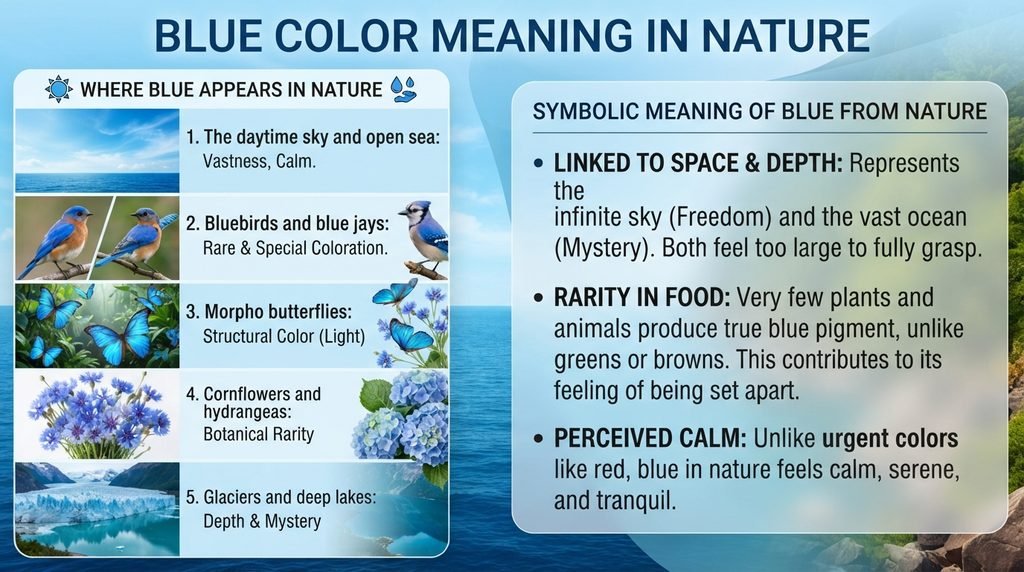
Looking at blue in the wild helps explain why humans see it as vast, calm, and mysterious.
Where Blue Appears in Nature
Blue shows up in the biggest parts of our world. The sky and the ocean are the most obvious. It also appears in flowers, birds, insects, and ice.
Here are a few familiar examples:
- The daytime sky and the open sea
- Bluebirds and blue jays
- Morpho butterflies
- Cornflowers and hydrangeas
- Glaciers and deep lakes
Symbolic Meaning of Blue from Nature
Blue in nature is linked to space and depth. The sky suggests freedom, while the deep sea suggests mystery. Both feel too large to fully grasp.
Blue is also rare in food. Few plants and animals make true blue pigment. This may be why blue feels calm and set apart, not tempting or urgent like red.
Blue Color Meaning in History
Blue has a long and surprising history. Some ancient cultures made blue early, while others barely named it. Its story is tied to art, trade, and status.
Following blue through time shows why it became a symbol of value and trust.
Historical Significance of Blue
Ancient Egyptians created one of the first man-made pigments, called Egyptian blue. They used it in tombs, statues, and jewelry. Blue also mattered to them because of the Nile and the sky.
Blue was hard to make in many places. Lapis lazuli, a deep blue stone from Afghanistan, was ground into a pigment called ultramarine. In medieval Europe, it could cost as much as gold.
Blue, Royalty, War, and Politics
Because true blue was costly, it became a color of high rank. In Europe, kings and queens wore it, and painters used it for holy figures. The phrase “blue blood” grew from the idea of noble status.
Blue also entered war and public life. Navy uniforms, police uniforms, and many national flags use blue for order and discipline. In modern times, the blue flag of the United Nations stands for peace and cooperation.
Famous Moments Tied to Blue
In the 1800s, a chemical called synthetic indigo replaced natural plant dye. This made blue cheap and easy to produce. It also helped make blue jeans a global habit.
In 1856, a young chemist named William Perkin created the first synthetic dye by accident. His discovery was a purple, not a blue. Still, it opened the door to the colorful, affordable dyes we know today.
Shades of Blue and Their Meanings
Not all blues feel the same. A light blue can feel airy, while a dark blue can feel serious. Small changes in tone shift the whole mood.
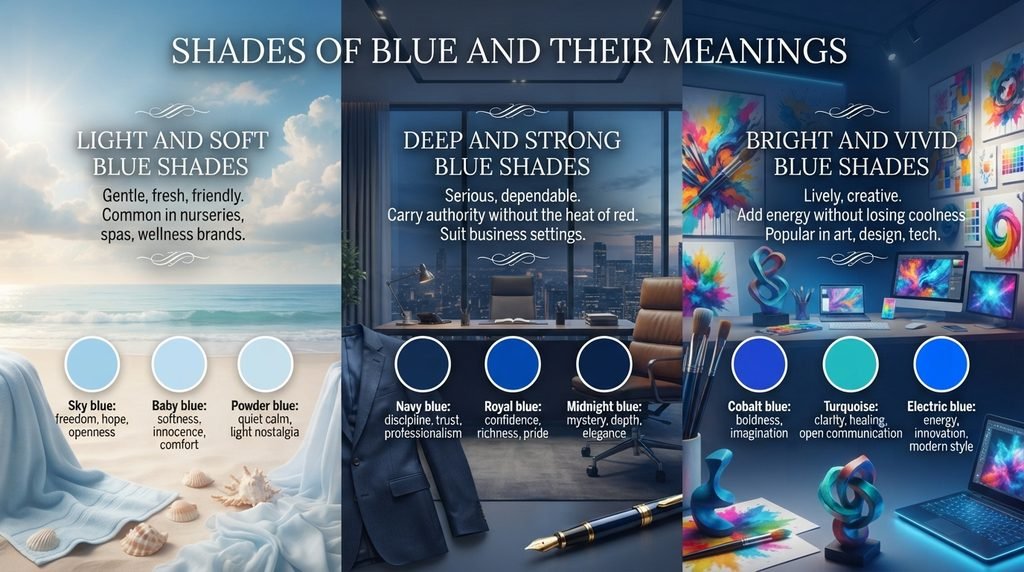
Here are the main families of blue and what each one tends to communicate.
Light and Soft Blue Shades
Light blues are gentle and open. They feel fresh and friendly. They are common in nurseries, spas, and wellness brands.
- Sky blue: freedom, hope, and openness
- Baby blue: softness, innocence, and comfort
- Powder blue: quiet calm and light nostalgia
Deep and Strong Blue Shades
Dark blues feel serious and dependable. They carry authority without the heat of red. They suit business settings and formal events.
- Navy blue: discipline, trust, and professionalism
- Royal blue: confidence, richness, and pride
- Midnight blue: mystery, depth, and elegance
Bright and Vivid Blue Shades
Vivid blues feel lively and creative. They add energy without losing coolness. They are popular in art, design, and tech.
- Cobalt blue: boldness and imagination
- Turquoise: clarity, healing, and open communication
- Electric blue: energy, innovation, and modern style
Blue Color Meaning in Branding & Marketing
Blue is one of the most popular colors in business. Brands choose it because it builds confidence. It feels safe, clear, and professional.
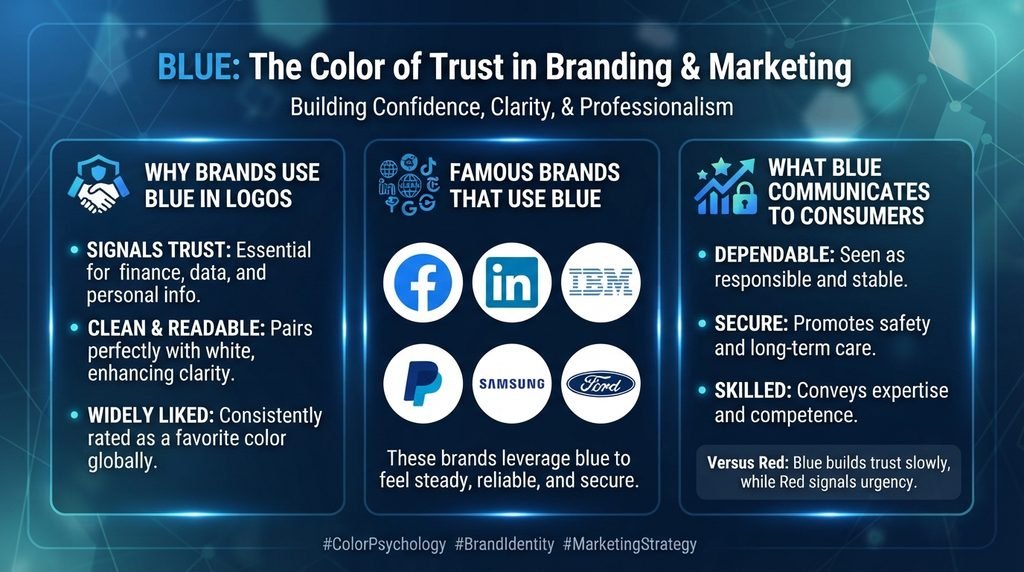
Let’s look at why companies rely on blue and what message it sends to buyers.
Why Brands Use Blue in Logos
Blue signals trust before a word is read. That matters for companies that ask people to share money or personal data. It also pairs well with white, which keeps designs clean and easy to read.
Blue is also widely liked. Surveys often place it at the top of favorite color lists. This makes blue a safe pick for global brands. It is a key reason blue color psychology matters in marketing.
Famous Brands That Use Blue
Many well-known logos are built on blue. The color helps them feel steady and easy to trust. A few examples include:
- IBM
- PayPal
- Samsung
- Ford
What Blue Communicates to Consumers
Blue tells customers that a brand is dependable, secure, and skilled. It suggests calm confidence and long-term care. That is why finance, tech, and health companies use it so often.
Brands that want urgency or excitement usually pick red instead. Blue works best when the goal is to build trust slowly.
Blue Color Meaning in Fashion & Design
It suits many skin tones, moods, and settings. Used well, it brings calm and polish to a look or a room.
The key is choosing the right shade for the moment.
What Wearing Blue Signifies
Wearing blue often signals calm confidence and reliability. It can make a person seem approachable and steady. Many people choose it for interviews, meetings, and first impressions.
Navy suggests authority, while light blue feels relaxed. Denim blue says casual and easygoing. Each shade tells a slightly different story.
Blue Meaning in Interior Design
In interiors, blue adds a sense of peace and space. It works well in bedrooms, bathrooms, and home offices. Soft blues can make a small room feel open and airy.
Very dark or cool blues can feel cold if used everywhere. Warm woods, cream tones, and soft lighting can balance them. This keeps the room calm without feeling chilly.
Style Tips for Using Blue
Blue is a friendly color to work with. You can use it in small touches or in big statements. Try these simple ideas:
- Wear navy for formal or work settings
- Choose sky blue or denim for relaxed days
- Pair blue with white for a crisp, clean look
- Add warm accents like tan or gold to soften cool blues
Blue Color Meaning and Personality
Many people feel a deep bond with blue. They may not know why, but it just feels right. Color preference can offer a light look at personality.

Keep in mind that this is a fun guide, not a scientific test.
Personality Traits of People Who Love Blue
People who love blue are often described as calm and thoughtful. They tend to be loyal and steady. They may also value peace and honest talk.
Common traits linked to blue lovers include:
- Reliability and loyalty
- Calmness and patience
- Careful thinking
- A love of harmony
What Choosing Blue as a Favorite Color Reveals
A favorite color of blue may suggest someone who values trust and stability. They may prefer thinking before acting. They often enjoy quiet, meaningful time.
It can also point to a rich inner life. Blue lovers may feel things deeply but express them gently. That quiet depth is part of blue’s charm.
Blue Color Meaning in Dreams
Dream meanings are personal, and no single answer fits everyone. Still, blue often appears when the mind seeks calm or clarity. It can show up as water, sky, clothing, or a soft glow.
Here are the common ways people read blue in dreams.
Positive Meanings of Blue in Dreams
Blue can point to peace, hope, and clear thinking. A calm blue sea or bright sky may reflect emotional balance. It can suggest you are ready to let go of stress.
Some people see blue in dreams as a sign of truth or honest speech. It may hint that you are ready to speak up.
Cautionary Meanings of Blue in Dreams
Blue can also stand for sadness or distance. A dark, stormy blue sea might reflect feelings you have not faced. It may be your mind’s way of asking for rest or care.
Blue can suggest loneliness too. If a dream feels cold or empty, it may point to a need for connection. Pay attention to how the dream made you feel.
Blue Color Meaning in Astrology, Tarot & Numerology
Blue appears in many mystical systems. It is linked to intuition, truth, and calm insight. Keep in mind these are belief-based traditions, and different sources may disagree.
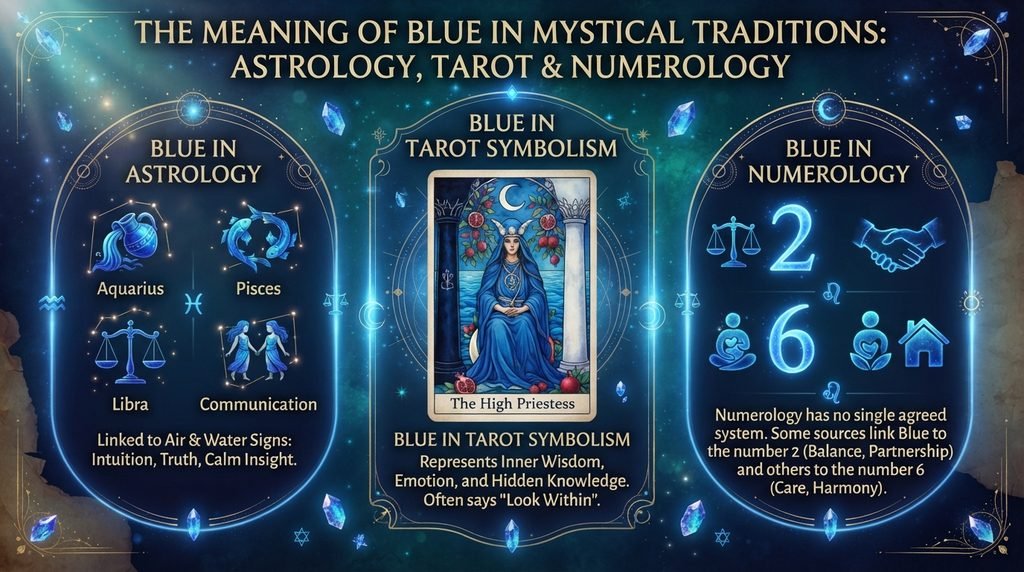
Here is how blue is commonly used in each.
Blue and Zodiac Signs
Blue is often linked to air and water signs. Aquarius, Pisces, and Libra are among the most common matches. Aquarius is tied to ideas, Pisces to intuition, and Libra to balance.
Some traditions also link blue to Gemini, thanks to its love of communication. The link is loose but often mentioned.
Blue in Tarot Symbolism
Blue appears often in tarot art. It usually stands for intuition, emotion, and hidden knowledge. The High Priestess card, for instance, is filled with blue and represents inner wisdom.
Blue water and blue robes also appear on cards about feeling and reflection. In tarot, blue says “look within.”
Blue in Numerology
Numerology has no single agreed system for colors. Some sources link the color blue to the number 2, which represents balance and partnership. Others link it to the number 6, tied to care and harmony.
Because sources differ, treat this as a matter of personal meaning.
Interesting Facts & Trivia About the Meaning of Blue
Blue has plenty of surprising stories behind it. Some come from science, while others come from language and culture. These facts show how much this color has shaped human life.
Surprising Science Facts About Blue
The sky looks blue because the atmosphere scatters shorter, bluer wavelengths of sunlight more than longer ones. It is a trick of light, not a coat of paint. The ocean looks blue for a related reason, since water absorbs red light first.
Many blue animals have no blue pigment at all. Their feathers or wings use tiny structures that bend light. That is why the color can seem to shift as they move.
Surprising Cultural Facts About Blue
Some ancient languages had no separate word for blue. Scholars often point to early Greek texts, which describe the sea in other ways. This suggests that naming a color can come after learning to make it.
Blue is also often named as the world’s favorite color. Surveys across many countries keep pointing to it. Its calm and open feel seems to win people over.
Frequently Asked Questions About Blue Color Meaning
These are the questions people search most often about blue. Each answer is short and clear.
What does the color blue mean spiritually?
Spiritually, blue stands for truth, peace, and higher wisdom. In chakra teaching, it belongs to the throat chakra. It is tied to honest speech and calm expression.
What does blue symbolize in general?
Blue symbolizes trust, calm, loyalty, and depth. It can also suggest sadness or distance. Its meaning depends on context and culture.
What is blue color psychology in simple terms?
Blue color psychology says blue tends to feel calm and trustworthy. It can support focus and ease stress. Research on some effects is still mixed.
Why do brands use blue in their logos?
Brands use blue because it builds trust fast. It feels safe, clear, and professional. It also appeals to many people around the world.
Is blue a lucky or protective color?
In the Middle East and parts of the Mediterranean, blue is seen as protective. The blue evil eye charm is a common example. In other places, its luck is less central than its calm.
What does blue mean in a dream?
Blue in a dream often points to calm, clarity, or sadness. It may reflect your mood or a need for rest. The details and your feelings matter most.
Conclusion
Blue color meaning is rich and layered. It carries calm and sadness, trust and distance, wisdom and mystery. Few colors hold so much depth in so quiet a voice.
From ancient blue pigments to modern logos, blue has always signaled something steady and true. Its power comes from how gently it speaks to us. When you next look at a blue sky, take a moment to notice how it makes you feel.